WE’VE ALL SEEN IT: the church social media feed that looks like a glossy vacation brochure. Sunsets, perfectly staged coffee cups, and quotes about “living your best life” in a font that’s a little too bubbly for a Monday morning.
For years, we’ve leaned into a brand of digital positivity that feels, frankly, a bit thin. We thought that to attract people, we had to show them a version of the Church that was perpetually winning. But as we scroll through our feeds in the spring of 2026, that “everything is fine” narrative is hitting a wall.
Between the surge in the cost of living, the complexities of our local housing crisis here in Ontario, and a general sense of algorithm fatigue, people are developing a sharp nose for anything that feels manufactured. They aren’t looking for a “vibe” anymore; they are looking for Realistic Optimism. They don’t want a faith that ignores the struggle; they want a faith that knows how to get through and survive struggles.
Toxic positivity, the idea that we should maintain a positive outlook no matter how tough the circumstances, is the enemy of genuine evangelism. When we only post the “shiny” parts of parish life, we inadvertently send a message to our neighbours throughout the Diocese of Huron: You only belong here if you’re doing well.
Evangelism in 2026 isn’t about being the loudest cheerleader in the feed. It’s about being the most honest witness.
Realistic Optimism is a grit-filled hope. It’s the theology of the Resurrection viewed through the reality of the Saturday before. On our social media, this means moving away from the broadcast of success and toward the witness of presence. For instance:
Instead of just a photo of the finished Easter flowers, post a photo of the muddy boots of the people who planted them.
A 30-second video of a parishioner talking about how they found peace during a stressful week at work is infinitely more powerful than a stock photo with a Bible verse.
Show the church at work in the local context. Whether it’s the Walking Group in Grand Bend or the community meal prep in Kitchener, show the effort. Show the sweat. Show that we are a community that rolls up its sleeves.
This “Realistic Optimism” isn’t new. It’s the foundational DNA of the Church. In Acts 11:19-26, the church was scattered not because things were going well, but because of persecution. They were displaced, uncertain, and likely exhausted.
Yet, it was in that very scattering that the Gospel took root in Antioch. They didn’t have a marketing budget or a shiny digital brand. They had their presence and their persistence. They didn’t ignore the tragedy of Stephen’s death; they simply refused to let it be the final word. It was their “realistic optimism” that was so compelling that it earned them a new name. It was in Antioch, amidst the grit of their reality, that the disciples were first called Christians.
So, as we post our updates from Waterloo, London, or the shores of Lake Huron this month, let’s remember that our most evangelistic asset isn’t our ability to look like we have it all together. It’s our ability to show that even when life is hard, the “hand of the Lord” is still with us (Acts 11:21).
In a world that is doomscrolling through a dark valley, let’s offer a different kind of feed. Let’s be the ones who post the muddy boots, the honest prayers, and the small, local victories. Let’s show the world that hope isn’t a glossy filter, it’s a practice of grit. Because in 2026, the most radical thing a Christian can be is a person who is realistically optimistic in a fractured world.
In the Japanese tradition of Kintsugi, when a piece of pottery breaks, they don’t throw it away or hide the cracks. Instead, they repair the fractures with gold. The philosophy, known as Wabi-Sabi, suggests that the object is actually more beautiful for having been broken. Its history, its scars, and its imperfections are exactly what make it valuable.
We are currently living through a period of AI fatigue. Our feeds are flooded with synthetic perfection, AI-generated faces with perfect white teeth, AI-written prayers that never stumble, and AI-designed church graphics that look like they were made in a lab. But people are pushing back. We are developing a visceral hunger for something that AI simply cannot fake: the human factor.
For too long, we’ve treated our digital presence as polished front doors. We only post the best photos, the best choir anthems, and the most together versions of ourselves. But the world doesn’t need a museum right now; it needs a hospital.
If we want to reach the seekers of 2026, we need to stop airbrushing our faith. We need to embrace Wabi-Sabi Evangelism. This is the art of finding the holy defect, the beauty in our rough edges, and the repaired brokenness.
What does this look like in practice? It looks like moving from performance to presence. A low-light, slightly shaky video of a parishioner lighting a candle for a loved one is infinitely more evangelistic than a high-def stock photo of a “praying person.” Why? Because it’s real. It has the weight of actual human prayer behind it.
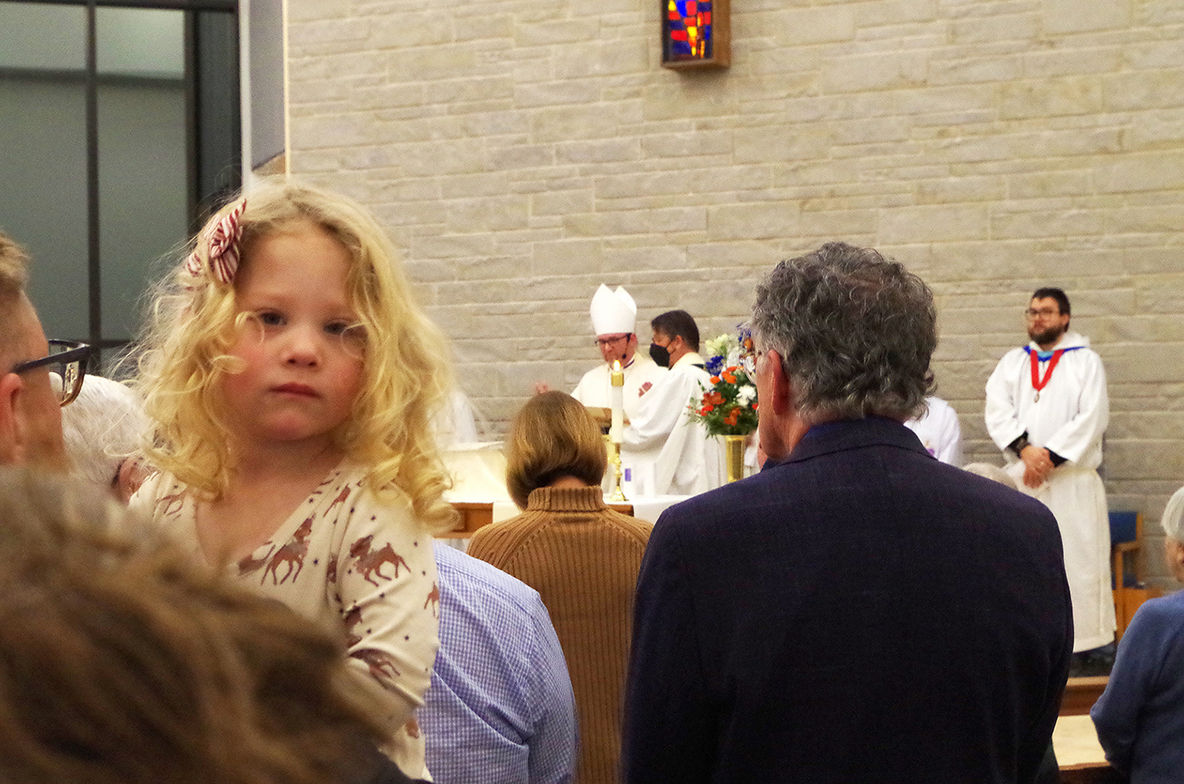
Likewise, don’t edit out the sound of the toddler shouting during the sermon or the priest losing their place in the liturgy. These aren’t “mistakes” to be hidden; they are proof that the Church is a living, breathing family of fallible people.
And instead of posting Everything is great at All Saints’, try posting: “It’s been a heavy week in our neighbourhood. We don’t have all the answers, but we have a seat at the table for you.”
AI can mimic our language, but it cannot mimic our struggle. It can generate a sermon on grief, but it has never sat at a bedside or felt the weight of a hand on a shoulder.
When we lead with our imperfections, we lower the barrier for the seeker who feels “not good enough” for the church. If the priest has a crack in his armour, maybe the seeker can bring their brokenness into the sanctuary, too.
In a world of digital slop and manufactured perfection, the most radical thing we can offer is our authenticity. We aren’t here to show the world how perfect we are; we are here to show them how loved we are despite our flaws.
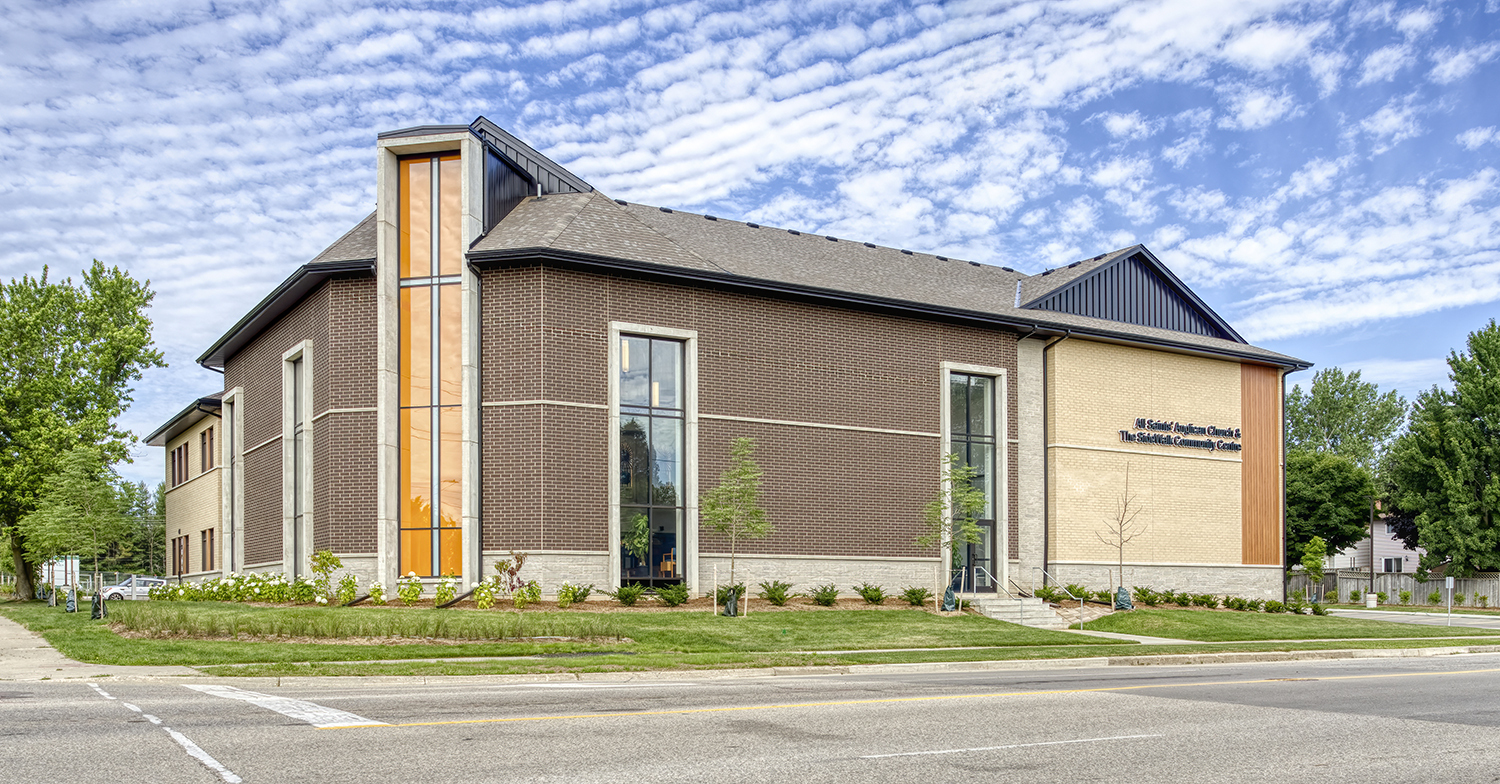
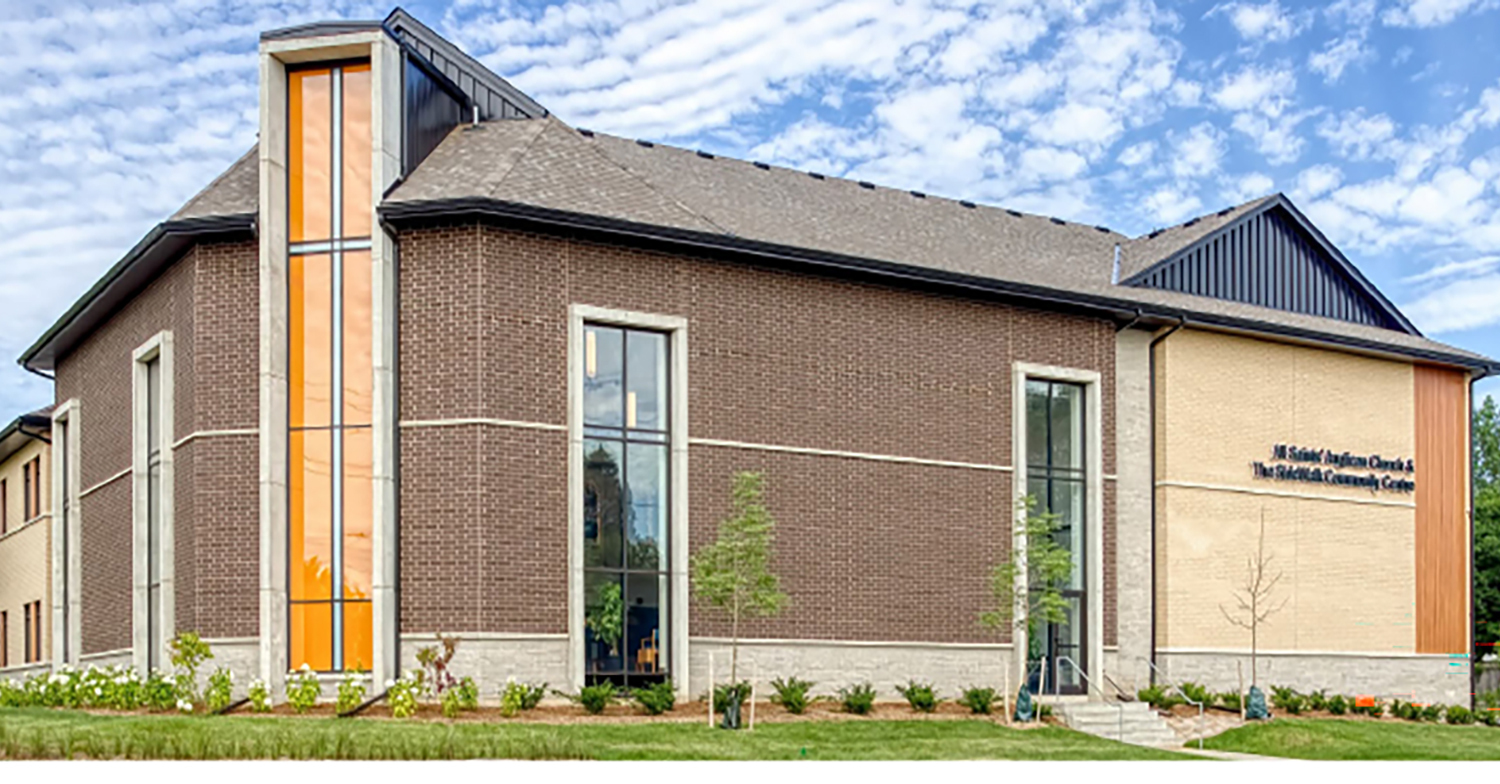
IF YOU READ my Media Bytes column regularly, you know we talk a lot about “Micro-Communities” and “Digital Front Porches,” but eventually, the digital must become flesh. In the heart of Waterloo, that flesh and blood reality lives at the SideWalk Centre (sidewalkcentre.ca).
SideWalk is the main outreach ministry of All Saints, Waterloo, but if you walked in on a Tuesday evening or during the changing of the seasons, you might see something that doesn’t look like a traditional Anglican Church.
Besides all sorts of sports groups, SideWalk has become home to an incredible array of cultural and spiritual activities that reflect the true diversity of our region. Between the Mugara Temple, Golden Triangle Marathi Association, the Persian Unity and Heritage group, and others have found a home at SideWalk.
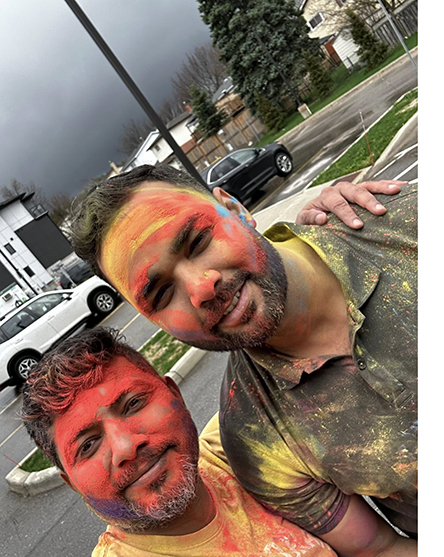
Think about that for a second: a Hindu temple making its home within an Anglican outreach centre! This isn’t just tolerance, it’s radical hospitality. It’s the realization that in 2026, the Church’s role in the community is often to be the convener. By hosting annual celebrations like Diwali (the Festival of Lights) and the Holi Festival, SideWalk becomes a space where the neighbourhood doesn’t just “see” diversity; they live it.
You might ask: “How is hosting a Hindu temple part of Anglican evangelism?” In a fractured world, the most powerful witness we have is our ability to be a center of peace. We are saying that despite the global headlines of division, right here on a sidewalk in Waterloo, we can share a roof, celebrate light, and throw colours of joy together.
This is the ultimate front porch. When a seeker or a neighbour sees the church building as a hub for the whole community and not just a gated club for the initiated, the barriers to entry begin to melt away. They see a church that is for the whole city, and that makes them curious about the “why” behind our “how.”
The beauty of what happens at SideWalk is that it allows us to follow the Way. You don’t need a marketing script when you have photos of Holi colours against the backdrop of our community space or the quiet glow of Diwali lamps. These aren’t just events; they are shareable moments of communities journeying together and learning from each other that tell a story of a church that is vibrant, inclusive, and deeply rooted in its local context.
Evangelism in 2026 isn’t about winning an argument; it’s about winning the trust of your neighbourhood. And sometimes, that starts with sharing a sidewalk.
We’ve spent countless hours trying to master the Facebook algorithm, polishing our websites, and ensuring our YouTube thumbnails look professional. We’ve treated our church social media accounts like institutional billboards, official channels where we broadcast our “brand”.
But here is the hard truth: people are becoming “brand-blind.”
In 2026, the average person scrolls past a polished church graphic as quickly as they scroll past a car commercial. We’ve entered an era of deep skepticism toward institutions, where the “Official Voice” of a church often carries less weight than a casual recommendation from a friend.
If we want to reach the “mission field” of the digital age, we have to stop acting like media moguls and start acting like talent scouts. The most powerful media ministry in your parish isn’t the person running the live stream; it’s the person sitting in the third row with a smartphone in their pocket.
We need to stop worrying about our “reach” and start empowering our Micro-Influencers.
In the world of marketing, a micro-influencer isn’t a celebrity with millions of followers. It’s a regular person with a small, dedicated circle—perhaps 200 or 500 friends and family—who trusts what they say. In church terms, we used to call this “personal witness.” Today, we call it a post.
When a parishioner shares a photo of the light hitting the incense during a mid-week service or tags the church in a video of the community garden, they are infiltrating a digital space where the “Official Church” is rarely invited.
Equipping your congregation doesn’t require a workshop; it just requires intentionality. Here are four ways to help your parishioners find their voice:
The “Check-In” Ritual: One of the simplest forms of evangelism is the Facebook or Instagram “Check-In.” When a parishioner checks in at your church, it’s a signal to their social circle that church is a place where they belong. It’s a digital “open house” that costs nothing.
The “Aesthetic of Grace”: We are blessed with beautiful spaces, but we often forget to look up. Create “Photo Ops” by highlighting the small things: the sunlight on the font or the spread at a parish potluck. Explicitly tell your congregation: “If you see something beautiful today, share it.”
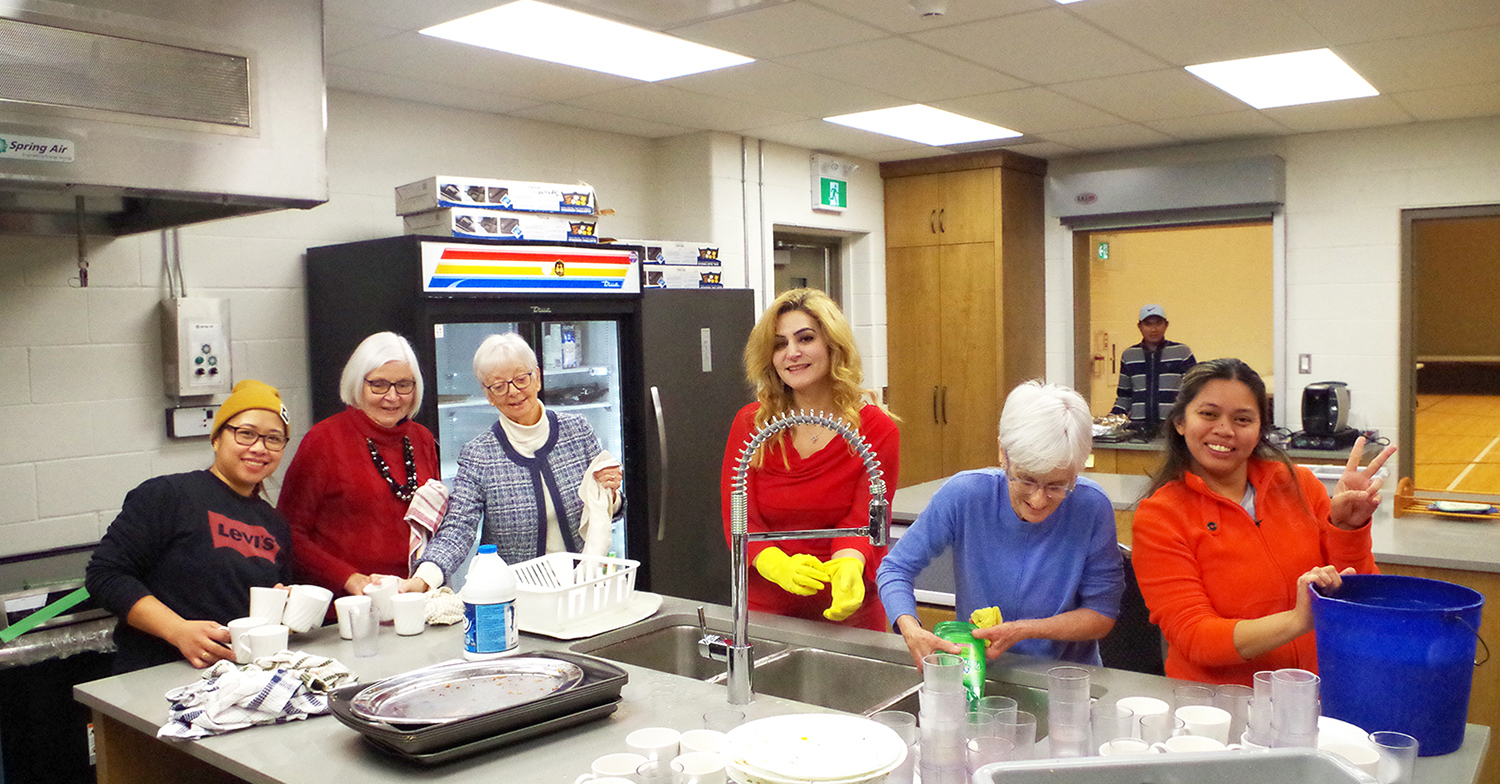
The “POV” (Point of View) Post: A photo of a messy kitchen after a community meal or a “behind the scenes” shot of the choir warming up is far more engaging than a flyer. These “unpolished” moments prove the church is a living, breathing community, not a museum.
The “Why I’m Here” Prompt: Once a month, give the congregation a simple question to answer on their own feeds. “What’s one thing from today’s service that gave you hope?” When people share their own answers, they aren’t just promoting an event; they are sharing their journey.
The biggest hurdle for most parishioners is the fear of “getting it wrong.” As leaders, our job is to permit them to be imperfect. In a world of AI-generated perfection, the “Micro-Influencer” evangelist wins because they offer the one thing people are starving for: the truth.
At the end of the day, evangelism hasn’t changed; only the medium has. In the early Church, the Gospel didn’t spread because of official decrees from Rome; it spread because people sat at kitchen tables and told their neighbours about a man named Jesus who changed their lives. Today, those kitchen tables are digital.
Our job is to empower the people in the pews to realize that their digital footprint is a sacred path. When we stop trying to “run” a media department and start encouraging a movement of micro-witnesses, we find that the Good News travels faster, deeper, and further than any boosted post ever could.
FOR THE BETTER PART of a decade, we’ve been told that every parish needs a “digital strategy.”
We’ve spent countless hours trying to master the Facebook algorithm, polishing our websites, and ensuring our YouTube thumbnails look professional. We’ve treated our church social media accounts like institutional billboards, official channels where we broadcast our “brand”.
But here is the hard truth: people are becoming “brand-blind.”
In 2026, the average person scrolls past a polished church graphic as quickly as they scroll past a car commercial. We’ve entered an era of deep skepticism toward institutions, where the “Official Voice” of a church often carries less weight than a casual recommendation from a friend.
If we want to reach the “mission field” of the digital age, we have to stop acting like media moguls and start acting like talent scouts. The most powerful media ministry in your parish isn’t the person running the live stream; it’s the person sitting in the third row with a smartphone in their pocket.
We need to stop worrying about our “reach” and start empowering our Micro-Influencers.
In the world of marketing, a micro-influencer isn’t a celebrity with millions of followers. It’s a regular person with a small, dedicated circle—perhaps 200 or 500 friends and family—who trusts what they say. In church terms, we used to call this “personal witness.” Today, we call it a post.
When a parishioner shares a photo of the light hitting the incense during a mid-week service or tags the church in a video of the community garden, they are infiltrating a digital space where the “Official Church” is rarely invited.
Equipping your congregation doesn’t require a workshop; it just requires intentionality. Here are four ways to help your parishioners find their voice:
The “Check-In” Ritual: One of the simplest forms of evangelism is the Facebook or Instagram “Check-In.” When a parishioner checks in at your church, it’s a signal to their social circle that church is a place where they belong. It’s a digital “open house” that costs nothing.
The “Aesthetic of Grace”: We are blessed with beautiful spaces, but we often forget to look up. Create “Photo Ops” by highlighting the small things: the sunlight on the font or the spread at a parish potluck. Explicitly tell your congregation: “If you see something beautiful today, share it.”
The “POV” (Point of View) Post: A photo of a messy kitchen after a community meal or a “behind the scenes” shot of the choir warming up is far more engaging than a flyer. These “unpolished” moments prove the church is a living, breathing community, not a museum.
The “Why I’m Here” Prompt: Once a month, give the congregation a simple question to answer on their own feeds. “What’s one thing from today’s service that gave you hope?” When people share their own answers, they aren’t just promoting an event; they are sharing their journey.
The biggest hurdle for most parishioners is the fear of “getting it wrong.” As leaders, our job is to permit them to be imperfect. In a world of AI-generated perfection, the “Micro-Influencer” evangelist wins because they offer the one thing people are starving for: the truth.
At the end of the day, evangelism hasn’t changed; only the medium has. In the early Church, the Gospel didn’t spread because of official decrees from Rome; it spread because people sat at kitchen tables and told their neighbours about a man named Jesus who changed their lives. Today, those kitchen tables are digital.
Our job is to empower the people in the pews to realize that their digital footprint is a sacred path. When we stop trying to “run” a media department and start encouraging a movement of micro-witnesses, we find that the Good News travels faster, deeper, and further than any boosted post ever could.
THE INTERNET is a very loud place, and lately, it’s been getting louder between the frantic pace of the 24-hour news cycle and the pressure to post content that goes viral; our digital lives have become an endless cacophony.
Even the Church has fallen into this trap. We often feel the need to pump up the volume to be heard, filling our feeds with bright graphics, “Join Us!” countdowns, and busy productions.
But what if the most evangelistic thing we can do isn’t to add to the noise, but to offer a sanctuary from it?
In a world of digital chaos, silence isn’t just a spiritual discipline; it’s a magnet. If our goal is to reach a world that is exhausted, anxious, and over-stimulated, sometimes the best way to point to the Word made flesh is to give them a moment where they don’t have to process any words at all. Let’s talk about slow media.
In marketing, you need to grab attention in the first three seconds. Usually, that means loud music or fast cuts. But you can also grab attention with a digital oasis. When a seeker is doomscrolling through their feed of outrage and ads, and they suddenly hit a post that is nothing but a flickering candle or the sound of wind in the churchyard trees, they stop. Not because we shouted, but because we offered them room to breathe.
Offering a “slow” presence doesn’t require a large budget; it requires the courage to be minimal. Here are a few ways your parish can practice “Slow Media” as a form of outreach:
The “One-Minute Sanctuary”: Post a single, unedited minute of video. It could be sunlight hitting a stained-glass window, incense rising, or the sound of church bells. No background music, no voiceover, just sixty seconds of sacred space.
The Visual Fast: Our feeds are usually cluttered with busy graphics. Try a minimal approach: a black-and-white photo of a single object like a stone, a prayer book, a cross and pair it with a single sentence of Scripture.
Audio-Only Moments: We spend our lives staring at screens. Offer your community eyes-free media. A thirty-second voice recording of a prayer, or a single verse of a hymn, recorded in the natural acoustics of your church allows people to engage with their hearts while keeping their eyes closed.
We often think that to reach the modern world, we must be louder than the world. But we forget that God wasn’t in the wind or the earthquake; He was in the still, small voice. By offering a Slow Media presence, you aren’t just managing a Facebook page. You are providing a digital porch where weary, over-stimulated people can finally sit down and be quiet. When we stop trying to sell the church and start offering a space for the Spirit to speak, we find that the quietest posts often have the loudest impact.
The Diocese of Huron is home to six of the twelve ministries funded through the Anglican Foundation of Canada’s (AFC) 2025 Request for Proposals: Community Ministry Partnerships—more than any other diocese in the country.
With projects spanning youth leadership, seniors’ support, mental wellness, community arts, and multi-partner outreach hubs, Huron’s collaborative spirit made it a standout during this year’s national grant cycle.
“These proposals from Huron showed a deep attentiveness to the needs of their communities,” says Dr. Scott Brubacher, Executive Director of AFC.
“What set them apart was not just the number of applications, but the quality of the partnerships behind them—parishes working with musicians, frontline agencies, mental-health practitioners, youth networks, and local service groups. It is the kind of ministry that begins with listening, and that’s where the strongest community work always starts. I also want to acknowledge the remarkable work of our Diocesan Representative, Diane Dance, whose outreach and encouragement played a key role in raising awareness about this RFP across Huron.”
Through the RFP process, AFC awarded more than $80,000 to ministries across Canada—releasing additional funds beyond the original $50,000 envelope due to the strength of the applications. Huron received $47,500 of that total, supporting:
The SideWalk Centre at All Saints’, Waterloo
Creek-top Choral Sessions at Grace Church, Brantford
Hats & Mats at St. George’s, Goderich
Seniors’ digital literacy at St. Mark’s-by-the-Lake, Tecumseh
Recovery and neighbourhood wellness at St. Mark’s, London
Intergenerational community gatherings at St. Matthew’s, Florence.
Diane Dance, AFC’s Diocesan Representative for Huron, says she is deeply encouraged by the response from parishes across the region:
“Huron has always had a strong heart for community ministry, but this year’s RFP took that commitment to a new level. Our parishes showed enormous creativity and courage in naming the needs around them and building partnerships to meet those needs. I’m incredibly proud that Huron led the country in this work.”
In addition to the RFP, several Huron students received support through AFC’s 2025 bursaries, which provided $65,000 nationwide to 31 recipients discerning calls to ministry, pursuing theological studies, or serving in Indigenous, lay, and diaconal formation programs.
Across Canada, AFC’s Q4 grants supported more than 30 ministries, including large-scale capital projects, diocesan system upgrades, youth formation, community wellness, and climate education.
Huron’s strong representation in two of these categories reflects the diocese’s ongoing investment in community partnerships and leadership development.
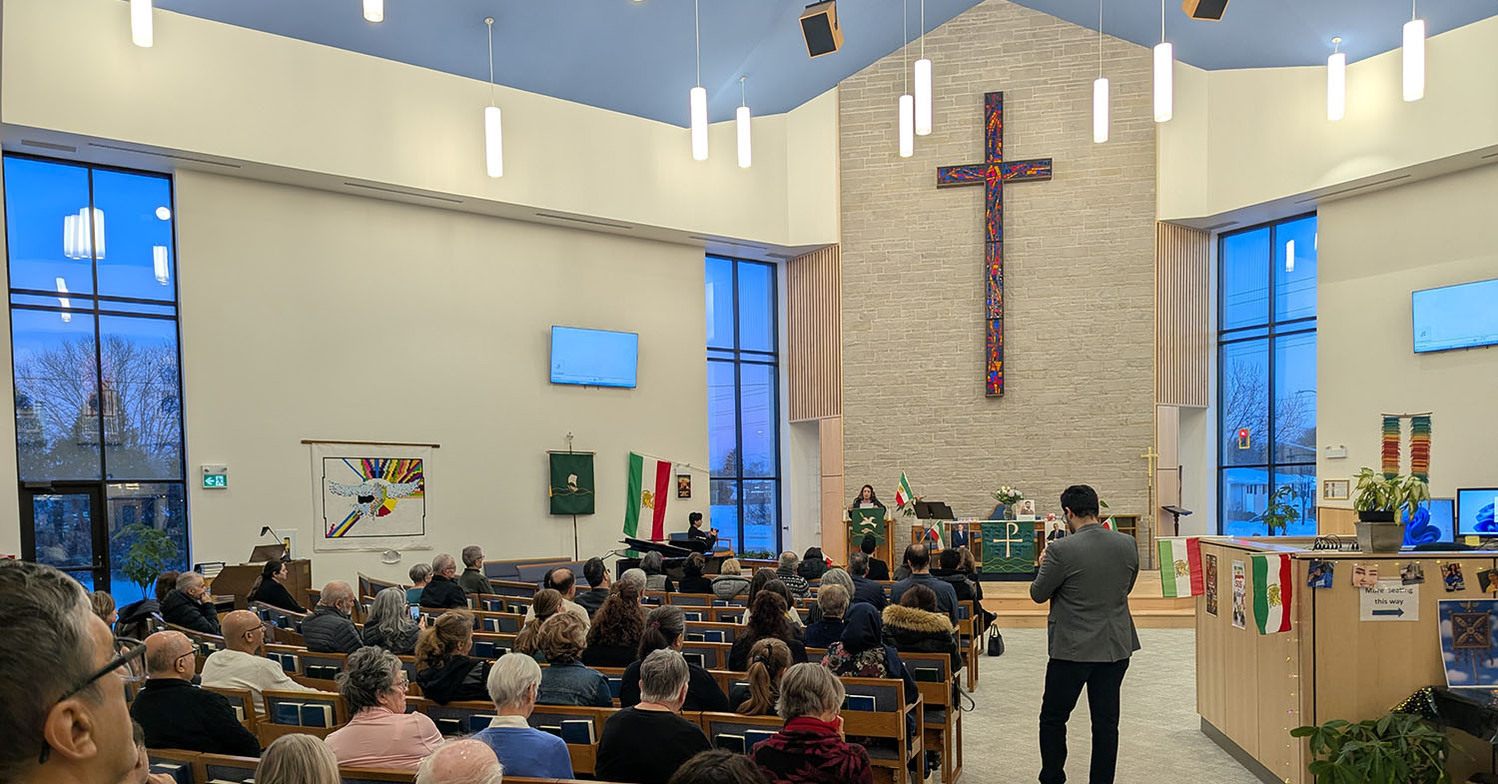
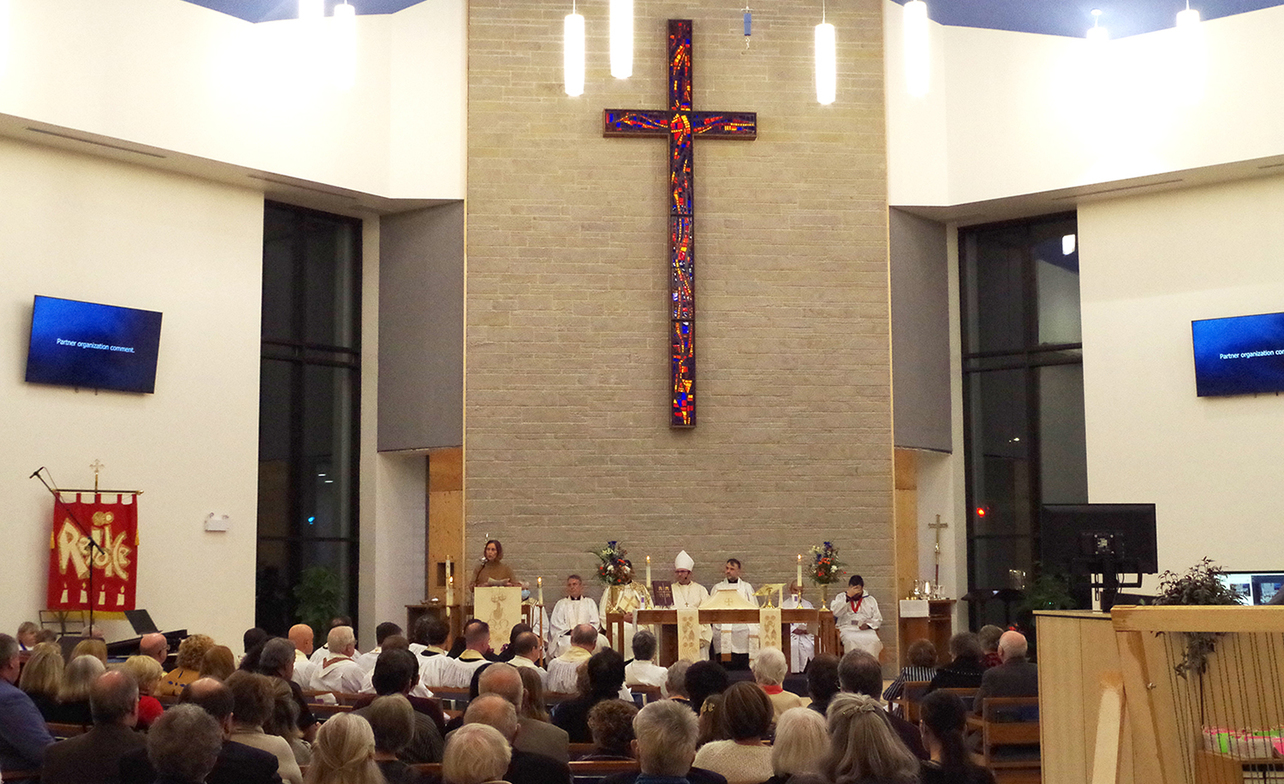
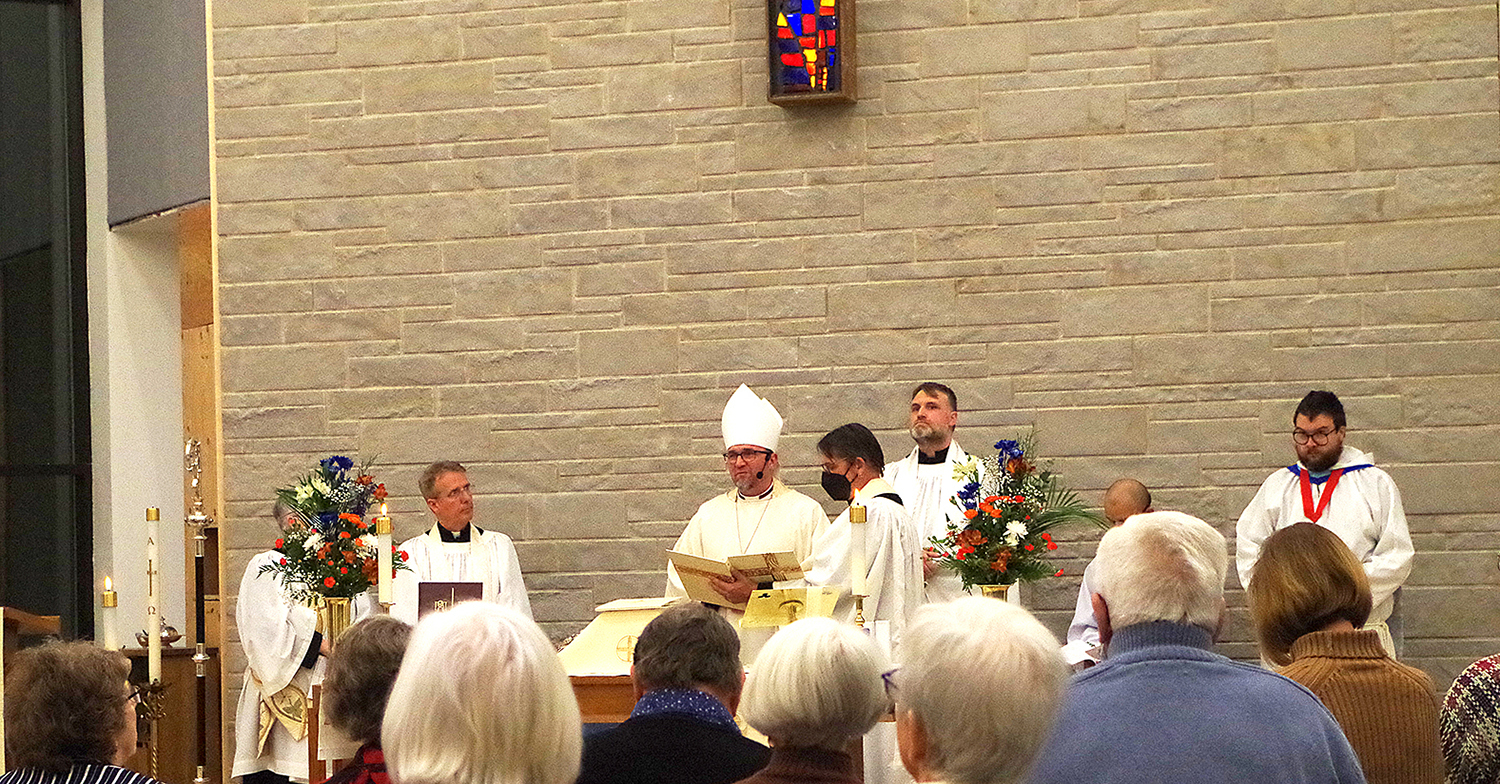
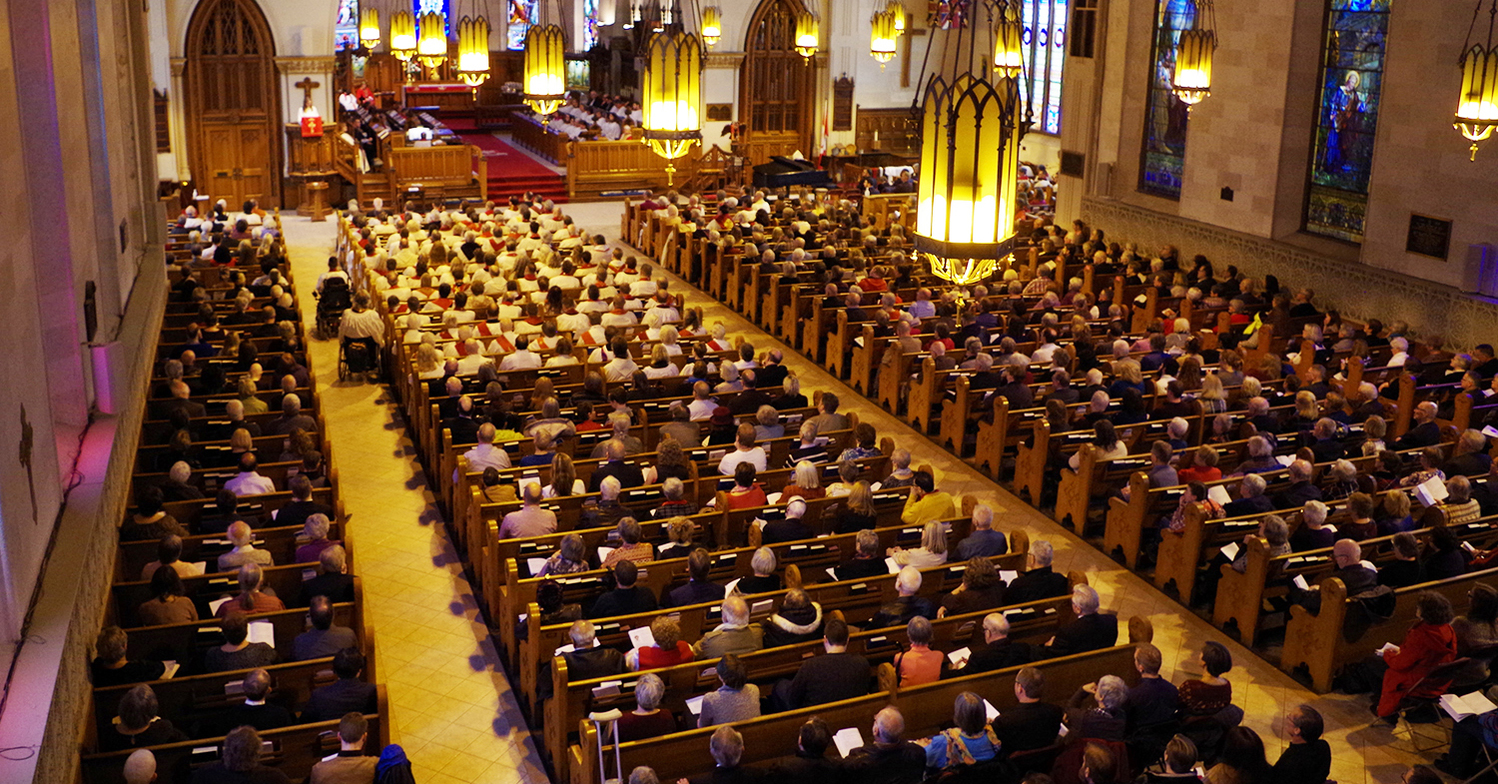
SATURDAY, JANUARY 31, the sanctuary of All Saints’ Anglican Church was filled not just with prayer, but with the beautiful melodies of Farsi song.
More than 100 people gathered for a memorial service to honour those who have lost their lives in the ongoing struggle for freedom and human dignity in Iran.
While the music reflected the deep roots of the Persian community, the spoken words bridged the gap between neighbours in Waterloo and family members thousands of miles away.
For All Saints’, this wasn’t a matter of international politics, but a matter of family. Many members of the parish community are of Persian decent who recently immigrated, with loved ones still living through the uncertainty in Iran.
The atmosphere was one purposeful solidarity. Bardish Chagger (MP), Tim Louis (MP), and Catherine Fife (MPP) were in attendance, making it clear that Canada wants to see an end to the violence.
“We aren’t here to pick a side,” one participant noted, “we are here to stand with people.”
In a world that often feels divided by borders and headlines, the gathering served as a reminder that the “Great Cloud of Witnesses” includes those standing in the streets of Tehran just as much as those sitting in the pews in Waterloo. As the candles faded and the music faded, the message remained clear: when one part of the body hurts, the whole body feels it.
IN 2026, the broad shift in church social media will continue to be a move from broadcasting (talking at people) to discipleship (walking with people).
This means moving away from simply advertising events towards building a digital front porch where community happens.
Here are the key ways these trends are reshaping church life more broadly:
The Shift from Broadcast to Engagement.
For decades, churches have employed a “broadcast” mindset, using radio, TV, or newsletters to disseminate a message or advertise events. In 2026, people expect two-way engagement. Social media is no longer just a digital billboard. It’s a place where people ask questions, request prayer, and participate in the life of the church mid-week.
Authenticity Over Aesthetics
The era of the “perfect church” with high-gloss graphics and stage lighting is fading in favour of “Imperfect by Design” content. As AI-generated content floods the internet, people are hungry for what is real and human. Photos and videos that look like they were taken by a parishioner on an iPhone often perform better because they feel “real” and trustworthy.
AI as a Co-Pilot, Not a Pilot.
AI adoption in churches is reaching over 90%, but the trend is toward ethical and transparent use. AI is being used to “buy back time” for pastors and wardens so they can focus on people instead of paperwork. AI tools are used to transcribe vestry meetings, generate social media captions from sermons, or translate newsletters into other languages to reach a more diverse local community. The “rule” for 2026 is: Use AI for efficiency, but never for empathy.
Social SEO (Search Engine Optimization): The New Phone Book
People are no longer just searching Google; they are searching TikTok and Instagram for terms like “church near me” or “support for grief in Waterloo”. Write captions that act as “Social SEO” keywords. Instead of a poetic title like “The Light Shines,” a post for your Blue Christmas service would be captioned: “Struggling with grief this Christmas in Waterloo? Join our Blue Christmas service at All Saints…” This ensures the post appears when someone in your local area searches for grief support through their social media platforms.
In summary, the trend for churches is Mission over Marketing. It’s about using these tools not to look cool, but to ensure that the lonely, the searching, and the grieving in your community can actually find you in the digital noise.
AS THE CALENDAR turns to January and February, parishes across our diocese are preparing for the annual tradition of Vestry. It’s a time for reflection, electing new wardens and councils, and, critically, approving the parish budget for the year ahead.
While most of our discussion rightly focuses on core pillars, such as salaries, facilities, and outreach ministries, there is one line item that demands a new level of scrutiny in our digital age: Media and Communications.
How much resources go into sharing your good news with the wider community? And are you treating this expenditure as a cost, or as an essential investment in the future growth of your church and ministry?
When financial advisors look at a healthy church budget, they typically focus on major categories:
Salaries Costs: Often 40-50% of the budget.
Facilities (Maintenance, Utilities, Mortgage): Often 20-30% of the budget.
Ministries, Outreach, and Missions: Generally, 10-20% of the budget.
Yet, a dedicated line for “Media and Advertisement” is often non-existent, or is scattered under administration, a one-off for a Christmas banner, or buried in a generic “supplies” category.
In the secular business world, a rule of thumb for marketing is to spend 5% of revenue just to maintain your current position, and 10% to achieve significant growth. While the Church is not a business, we are called to actively grow God’s Kingdom. How does our investment in communication stack up against this idea of intentional growth?
As you review the draft budget for 2026, consider raising these questions with your Vestry:
Audit the Hidden Costs: Where are we already spending money on communication (website hosting, bulletins, copier lease, online giving fees)? Gather these into one visible “Communications & Technology” line item.
Align Budget to Mission: If our mission is to welcome new people and engage our neighbours, is 1% or less truly enough for the primary tool that facilitates that initial connection?
Invest for the Future: Could a dedicated, small but significant budget (even 2-3%) for proactive media and communications be the most effective outreach money we spend this year? This could cover a website overhaul, a new microphone for the livestream, or even a small, targeted social media ad to promote a Lenten program.
Vestry is a moment to not just reflect on what we did, but to make a courageous, intentional plan for what God is calling us to do next.
Let’s ensure our budget reflects the value we place on sharing the good news of our parish with a world that is searching for it.
All Saints’ Anglican Church in Waterloo won the best Shared Spaces project award at the annual competition hosted by the School of Cities at University of Toronto and the Canadian Urban Institute.
The results were presented at the Canadian Urban Institute’s State of Canadian Cities Summit in Ottawa on December 3 and 4, 2025.
Around 150 projects were submitted for the competition in this category and 89 were selected to be presented as the examples of successful local solutions from across Canada.
Each December, the Summit brings together hundreds of urban professionals, policy makers, business leaders, community advocates, and academics to assess the health of Canadian cities and shape their future.
Detailing All Saints’ success as the “spotlighted solution”, the organizers presented SideWalk Community as part of an extensive redevelopment of the church’s property to provide one of the only in-neighbourhood community centres in the city.
“The creation of the community centre stemmed from the realization that there was a lack of spaces for recreation and connection in this rapidly changing neighbourhood with a large percentage of new Canadians, visible minorities, and families with limited disposable income.”
By thoughtfully repurposing church property and listening to local voices, community champions and church volunteers created an essential community amenity in the SideWalk Community Centre.
As stated in the “spotlighted solution”, All Saints’ example “demonstrates how churches can fill gaps in ‘third places’ and strengthen community life at the neighbourhood level.”
It’s November. The scent of decaying leaves is in the air, which in church-land means only one thing: we’re already behind on Christmas.
Every year, we do the same dance. We boost a few Facebook posts with a nice picture of a poinsettia, we email our list (twice), and we hope that the “Christmas magic”—that potent mix of nostalgia and obligation—will fill our pews.
And every year, we’re surprised when the pews are full of the same familiar faces, plus a few visiting relatives. We lament that the “C&E” (Christmas and Easter) crowd is dwindling.
Here’s the hard truth: we’re fishing with the wrong bait, and often in the wrong pond. People aren’t looking for another event to add to their overstuffed holiday calendar. They are drowning in noise, chaos, and commercialism, and they are desperately searching for peace, connection, and a moment of genuine wonder.
Our social media can’t just be a flyer. It has to be an invitation to that peace. It has to be the connection. If you want to move beyond the “same old” this year, here are a few tips when working in digital spaces.
The single most powerful tool on social media today is the short-form vertical video (Reels, TikTok, YouTube Shorts). But not the slick, over-produced “Come to our service!” ad.
Ask your rector, your music director, your warden, or even a long-time parishioner to film a simple 30-second video on their phone. No polish. No fancy graphics. Just an honest, authentic, human invitation. Post it. “Boost” it for $50 to people in your postal code. This cuts through the noise because it’s not an ad; it’s a person.
Your social media copy (the text in your posts) is probably focused on the features of your service: “Join us at 7 PM for carols and communion. Music by the choir.” People are coming to church at Christmas to solve a problem. They are feeling lonely, stressed, nostalgic, or empty. Speak to that.
Better copy: “It’s been a hard year. If you’re carrying a heavy heart, or just feel a little lost in the chaos, come be with us. Let’s sing Silent Night together and remember there is still light in the darkness. You belong here. 7 PM, Christmas Eve.”
One is an event listing. The other is a pastoral promise.
Also, don’t wait until the week before Christmas to start posting. Start now. Your goal isn’t just to get “bums in pews” on one day; it’s to build a relationship.
Post a time-lapse video of your Altar Guild decorating the sanctuary.
Do a “Meet the Organist” Reel as they practice a big Christmas piece.
Post a “Carol of the Day” and ask people what their favourite is.
Share a photo from last year’s pageant practice.
This creates a sense of community and anticipation. It shows a living, breathing church that people want to be a part of, not a cold building that only opens for “business” on the 24th.
This Christmas, let’s stop being event planners and start being digital evangelists. Let’s stop posting flyers and start extending the same radical, personal welcome online that we do IRL.
YOU NEED a different voice for different communications because effective communication is about connecting with your audience.
The way you speak, write, and present information must be tailored to the specific group you’re addressing. Using a one-size-fits-all approach often fails because different generations have unique communication styles, values, and expectations.
Consider stewardship, stewardship appeals and capital campaigns. The way you appeal to a Boomer is fundamentally different from how you approach a Millennial or a member of Generation X.
Boomers (born 1946-1964) often value tradition, respect for institutions, and a clear sense of purpose. A fundraising appeal to a Boomer should be formal and direct. It should emphasize the credibility of your particular church, its long-term impact, and the tangible results of their donation to the parish. The letter might be a traditional, physically mailed letter, and the language should be respectful and professional, focusing on the legacy they can leave.
Generation X (born 1965-1980) is often described as independent and pragmatic.
Gen X is known for its skepticism and a desire for authenticity. A stewardship appeal to Gen X should be concise and to the point. They don’t want fluff; they want to know the “why” and the “how.” The message should highlight the efficiency and transparency of the church, focusing on how their contribution will solve a specific, identifiable problem. Emails and targeted social media campaigns can be effective here in addition to a written letter.
Millennials (born 1981-1996), as digital natives, are highly connected and often motivated by social causes and personal impact. An appeal to a Millennial should be authentic, relatable, and visually engaging.
It should tell a compelling story, often through video or social media posts, and emphasize the community aspect of the ask. They want to see how their contribution can make a big difference and be part of a larger movement. Peer-to-peer fundraising and mobile giving options are often successful with this group.
Ultimately, mastering the art of adapting your voice is about empathy and coming alongside parishioners. It requires you to understand your audience’s perspective, their values, and their preferred mode of communication.
By tailoring your message, you ensure it resonates, leading to a more effective and meaningful connection and ultimately a successful stewardship campaign.
AS CHRISTIANS, we’re navigating a fast-changing digital landscape. AI is everywhere, shaping what we see online and how we communicate. The big question for the church: How do we utilize AI to foster genuine community, not just broadcast into the noise?
AI can be a powerful ally. Think of it as your co-pilot, not the preacher or teacher. AI can help you brainstorm sermon ideas, draft social media captions, or even outline blog posts. It’s a starting point to get your own unique voice flowing.
But beware, over-reliance on AI carries risks. AI-generated content can feel generic. We risk losing the unique, human connection that defines true ministry. Algorithms favour quick engagement, not deep relationships. So we need to remember that likes aren’t discipleship. And please be mindful of AI biases. Much of AI has been trained and favours white voices.
So, how do we stay smart and authentic in an AI-driven world? Prioritize real stories, real faces, and real interactions over purely AI-generated content. Your people are your best content. Respond to comments and foster genuine conversations. And make your digital spaces feel like a true gathering. Always use online interactions to point to offline connections: a coffee, a service, or a small group. Digital is a bridge, not the destination.
AI is a tool. Its power is in our hands. As Christians, let’s use it to amplify our human touch, to build genuine relationships, and to share the timeless message of the Gospel.
GENERATION ALPHA, born after 2010, is growing up in a world fundamentally shaped by digital technology.
A recent glimpse into their career aspirations reveals a striking reality: their dreams are increasingly intertwined with the online world. When asked what they want to be when they grow up, the top answers aren’t solely traditional roles; topping the list are YouTuber (32%) and TikTok creator (21%). Combined, over half aspire to roles defined by online content creation and social media platforms.
Other digital-centric careers like mobile app/video game developer (19%) and professional online streamer (15%) also feature prominently, alongside more traditional aspirations like doctor/nurse (20%) and teacher (14%). Even roles like artist, musician, and entrepreneur are now heavily reliant on digital platforms for visibility and success.
What does this mean for the church?
It signals an urgent need to embrace social media not just as a communication tool, but as a primary space for connection, community, and outreach. If the future generation dreams of creating content and building communities on platforms like YouTube and TikTok, the church must be present and active in those same spaces. It’s the modern equivalent of setting up in the town square; it’s meeting people where they naturally gather, learn, and aspire. Ignoring these platforms means potentially missing a vast opportunity to connect with Gen Alpha on their terms.
The desire to be a YouTuber or TikTok creator reveals a value placed on visual storytelling, authenticity, short-form communication, community building, and creative expression. Churches can learn from this. Effective engagement won’t come from simply broadcasting services, but by creating content that resonates with these values – content that is engaging, relatable, offers value, and fosters genuine interaction.
As Gen Alpha navigates the complexities of the online world, the church has a role to play in modelling positive, ethical, and faith-filled digital citizenship. By actively participating and creating meaningful content, churches can demonstrate how faith intersects with online life, offering guidance and a spiritual anchor in the digital realm.
These aspirations hint at future ministry roles. Imagine church tech teams led by former aspiring game developers, or online ministry programs spearheaded by those skilled in video creation and streaming.
The career dreams of Generation Alpha are a clear indicator of where their attention and energy are focused. For the church to continue its mission of outreach and discipleship with this emerging generation, a robust, authentic, and engaging social media presence isn’t just helpful – it’s essential. It’s time to log in and meet the future, right where they are.
LET ME TELL YOU a story about a guy and twelve friends.
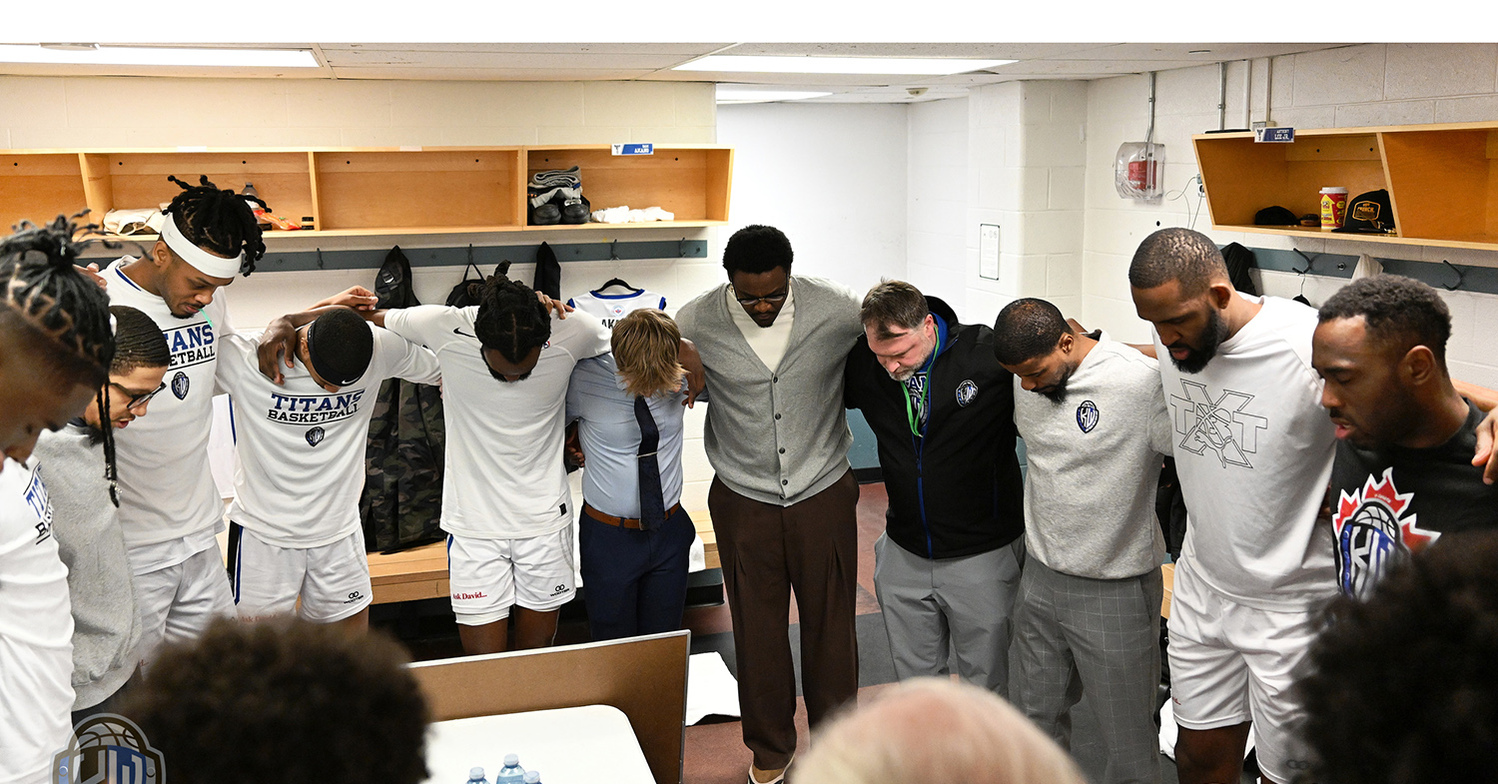
A community partner, Camino Well-Being, reached out to the SideWalk Community Centre in the spring of 2024, wondering if we could help one of the pro basketball players from the KW Titans with a location for skills development camps. The Rev. Dan Bowyer arranged the meeting with forward Anthony Lee Jr. of the KW Titans, who plays in the Basketball Super League. A partnership formed, Anthony began teaching youth basketball skills in the gym at the SideWalk Community Centre and became fast friends with All Saints’ Waterloo.
But as Dan reminds All Saints often, one community connection often leads to another and opportunities for ministry. The Basketball Super League emphasizes chaplaincy to support their players who come from diverse and sometimes difficult backgrounds. Through Anthony, Dan learned that the Titans were looking for a team chaplain. Dan’s eight years of chaplaincy experience with the Stratford Warriors of the Greater Ontario Junior Hockey League proved to be an asset. “I didn’t anticipate God integrating team chaplaincy into my wider ordained ministry once, let alone twice. I now see that through my time as a chaplain with the Stratford Warriors, God was preparing me for chaplaincy with the Titans” Dan shares.
Dan began his role as team chaplain of the KW Titans at the start of the 2024/2025 season. He formed quick bonds with the players, praying before games, dropping off snacks for the players to assist in breaking their Ramadan fast and being a supportive presence to the players to help keep them grounded through the ups and downs of the season. “Walking alongside professional athletes pastorally requires a particular skill set as the ministry context is very distinct,” Dan says. “I am the team chaplain for the whole team, so I need to meet players who share my faith, practice a different faith or are of no faith where they are at. It is incumbent upon me as a Christian to love my neighbour as myself”. Kate Schooley, one of the team’s owners, remarked early on that Dan was “the missing piece we didn’t know we were missing and needed.”
Point Guard Antoine Mason says, “It’s a good spirit to have, especially, you know, me taking my religion seriously, somebody that I could lean on and just ask for references, and you know, guidance during certain times in the season. You have ups and downs, and it’s good to have somebody that, like I said, has positive energy and insight.”
Shooting Guard Devon Baulkman attends the monthly character-building sessions based on scripture offered by Dan. “Once a month, we all get together, and I’m all in. We’ll have a topic for the month, and I believe they help us come together, even off the basketball court. People go through stuff, and, like, life happens, and we come together as a team to understand everybody’s feelings, and I think it brought us closer as a team.”
Shooting Guard Dee Barnes remembers how instrumental having a chaplain at school was for him. “It was always good having someone around who keeps the Word heavy on your heart and heavy in your life. It’s good having Dan around when you’re away from home. You can lean on him and kind of just get the Word.”
James Robinson, the Lead Assistant Coach for the Titans, remarked, “Having Dan around helps with building team unity. Honestly, having Dan as a secondary safe space for the guys outside of the coaches gives them another voice or another person they could come to who is unbiased, so that way, it keeps their emotions under control and keeps their mental game sharp.”
Additional duties for Dan as the team chaplain are to assist with player appearances and connect with the broader community. SideWalk has been fortunate to welcome the Titans to our own Youth Basketball initiative in North Waterloo. Watching these young men run drills and mentor youth is manna for the soul.
Dan’s presence with the team is captured by members of the Titans in a few words: unique, easy-going and honest. It’s a ministry of grace, love, and acceptance that is transforming the lives of the players and has made Dan quite the basketball fan. It is the ministry of one man with 12 friends. And it is good to see Dan in the right shade of blue and white.
SOCIAL MEDIA has amplified our awareness of global and local crises, sparking an outpouring of support. However, how we engage with these issues online reveals a crucial distinction: charity versus solidarity.
Often prevalent on social media, the charity model manifests as viral donation campaigns and “awareness” posts. While these efforts can provide immediate relief, they often perpetuate a “saviour” narrative, where those with platforms offer aid to passive recipients. Think of the trending hashtag that raises money for a specific cause but fades when the next crisis hits.
Solidarity, on the other hand, demands a deeper engagement. It’s about using social media to amplify marginalized voices, challenge unjust structures of society, and build lasting communities. It moves beyond fleeting donations to fostering sustained dialogue and action.
A solidarity-focused approach might involve platforming affected communities and sharing their stories, rather than filtering them through a privileged lens. Solidarity moves beyond the superficial and challenges misinformation through critically analyzing narratives and exposing the root causes of inequality.
Solidarity builds online and offline networks and connects with local organizations and movements working towards long-term systematic change through promoting education and critical thinking for privileged communities. Social media allows the sharing of resources that empower users to understand complex social issues.
Social media’s potential for connection can be a powerful tool for solidarity. It allows us to transcend geographical barriers and build global movements. However, it requires a shift from passive consumption to active participation, from fleeting charity to sustained solidarity. By leveraging social media to amplify marginalized voices and challenge unjust structures of society, we can move beyond performative activism and build a more equitable and just world and fully live into our baptismal vows
LENT, the 40 days of reflection and preparation for Easter, is a time for many Christians to engage in acts of self-denial or intentional reflection. This year, consider a “Social Media Diet” as a unique way to deepen your spiritual connection and rediscover the joys of real-life interaction with friends, family, and neighbours.
But what precisely is a social media diet?
A Social Media Diet can involve limiting social media use or completely abstaining from social media platforms for the season of Lent. This could mean complete abstinence, deleting apps from your phone and avoiding social media altogether. Or it could mean limited access. Setting strict time limits for social media use, such as first thing in the morning, or just an hour at noon.
You may wish for a Platform-specific abstinence. Choosing to abstain from certain platforms while continuing to use others. Such as avoiding X, while still using TikTok. And finally, there is the “Mindful” use option. Pay attention to how social media makes you feel and consciously choose to disengage when it’s negatively impacting your mood or well-being.
But what are the benefits of a Social Media Diet During Lent? First, reduced stress and anxiety. Constant social media exposure can contribute to feelings of inadequacy, comparison, and anxiety. Stepping away allows your mind to rest, recharge, and focus on the things that truly matter in your life, such as your faith, family, and friends.
Distractions from social media can significantly impact your ability to concentrate on work, studies, and other important tasks. A social media diet can help increase focus and productivity as well as improve the quality of sleep as the blue light emitted from screens can interfere with sleep patterns.
But more importantly, freed from the digital world, you’ll have more time and energy to connect with loved ones face-to-face and deepen relationships. Also, by disconnecting from the constant stream of information and opinions, you create space for introspection, prayer, and a deeper connection with Christ.
A Social Media Diet during Lent offers a unique opportunity for spiritual growth and self-discovery. By embracing this challenge, you may find that you rediscover the joys of real-life connections and cultivate a healthier relationship in real life and with technology.
OFTEN, we think of social media as a service we use. While in fact, we are the content creators that social media platforms monetize and rely upon. We share thoughts, insights, and pictures of our food and vacations and keep in touch with people nationwide.
But make no mistake, you are the product that is being monetized. The more eyeballs a platform can curate, the more advertising dollars pour in as brands seek to put their product in front of the most people.
As such, we should consider the platforms we use and whose fortunes we are contributing to. We should seriously consider whether we loan our voices as a church and disciples to each platform.
Have the platforms abandoned their DEI (Diversity, Equity and Inclusion) initiatives? Are they a place where hate speech is fostered? Do they contribute to individuals and organizations getting doxed, harassed, threatened with violence and even death threats? Has the platform led to real-world violence?
As followers of Jesus, it is up to us to embrace certain ethical standards as informed by the two greatest commandments: love the Lord your God with all your heart, mind, soul and strength, and love your neighbour as yourself.
No platform is perfect, but some are far worse than others. This is the case with X, formally known as Twitter. Twitter has become a cease pool of hate. But more so, it is a platform that Elon Musk uses to further the MAGA agenda. And since that agenda now includes direct threats to Canada to become the 51st state and looming tariff threats designed to destroy our economy and livelihoods, Twitter is no longer something that I or my church, All Saints Waterloo, can support. By the time you read this, both my personal account and the church’s account will be no more.
I would, therefore, encourage every church and diocese to delete their Twitter accounts and for individual disciples to also delete their accounts.
Twitter is no longer a safe space, and we should not loan our voices, and increase the fortunes of those who profit from hate. We need to stop feeding the beast.
ARTIFICIAL INTELLIGENCE (AI) has made significant strides in image generation in recent years, creating hyper-realistic images that can be incredibly difficult to distinguish from real pictures.
While this technology has exciting applications in art and entertainment, it also raises concerns about the potential for misinformation and deepfakes. It is key that churches and users of social media protect themselves from these deepfakes and misinformation.
Here are some key indicators to help you spot AI-generated images:
Unrealistic Details: Pay close attention to the eyes. AI often struggle with rendering realistic eyes, resulting in pupils that are too large or small. Hands and fingers are notoriously difficult for AI to generate accurately. Look for unnatural shapes, missing fingers, or digits that appear fused. While AI has improved in rendering hair, there may still be inconsistencies in the way hair flows or appears too uniform. Backgrounds in AI-generated images can sometimes appear blurry (especially any signs in the background), unrealistic, or contain strange out-of-place artifacts.
Unusual Patterns and Textures: AI sometimes generate repeating patterns or textures that appear unnatural or overly uniform. Does the tablecloth match the dress? Also, pay attention to the way light interacts with objects in the image. Shadows may appear unnatural, or the overall lighting may seem inconsistent or overly dramatic.
Technical Artifacts: AI models may sometimes struggle to render fine details, resulting in blurring or a lack of sharpness in certain areas of the image. This is especially true in the background artifacts. Restaurant signs or street signs are often blurred out.
Contextual Clues: If you suspect an image is fake, use reverse image search tools to see if the image appears elsewhere online. If it appears on multiple websites or in different contexts, it most likely is AI-generated. And be wary of images from unverified sources or social media accounts known for sharing misleading content.
Remember, as AI image generation technology continues to evolve, it will become increasingly difficult to distinguish between real and AI-generated images. By being aware of these potential indicators and using a combination of critical thinking and available tools, you can better navigate the evolving landscape of social media and protect yourself and your church.
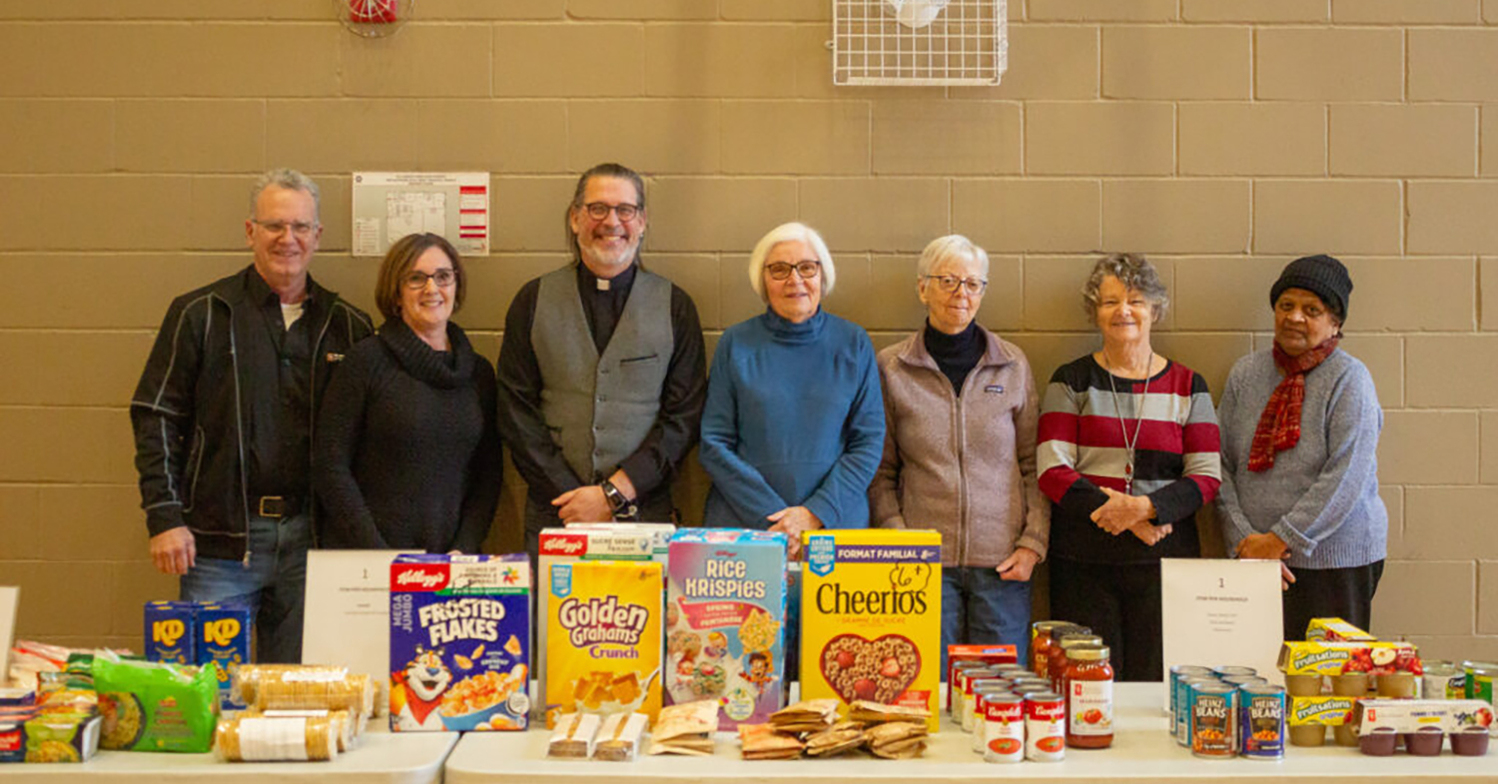
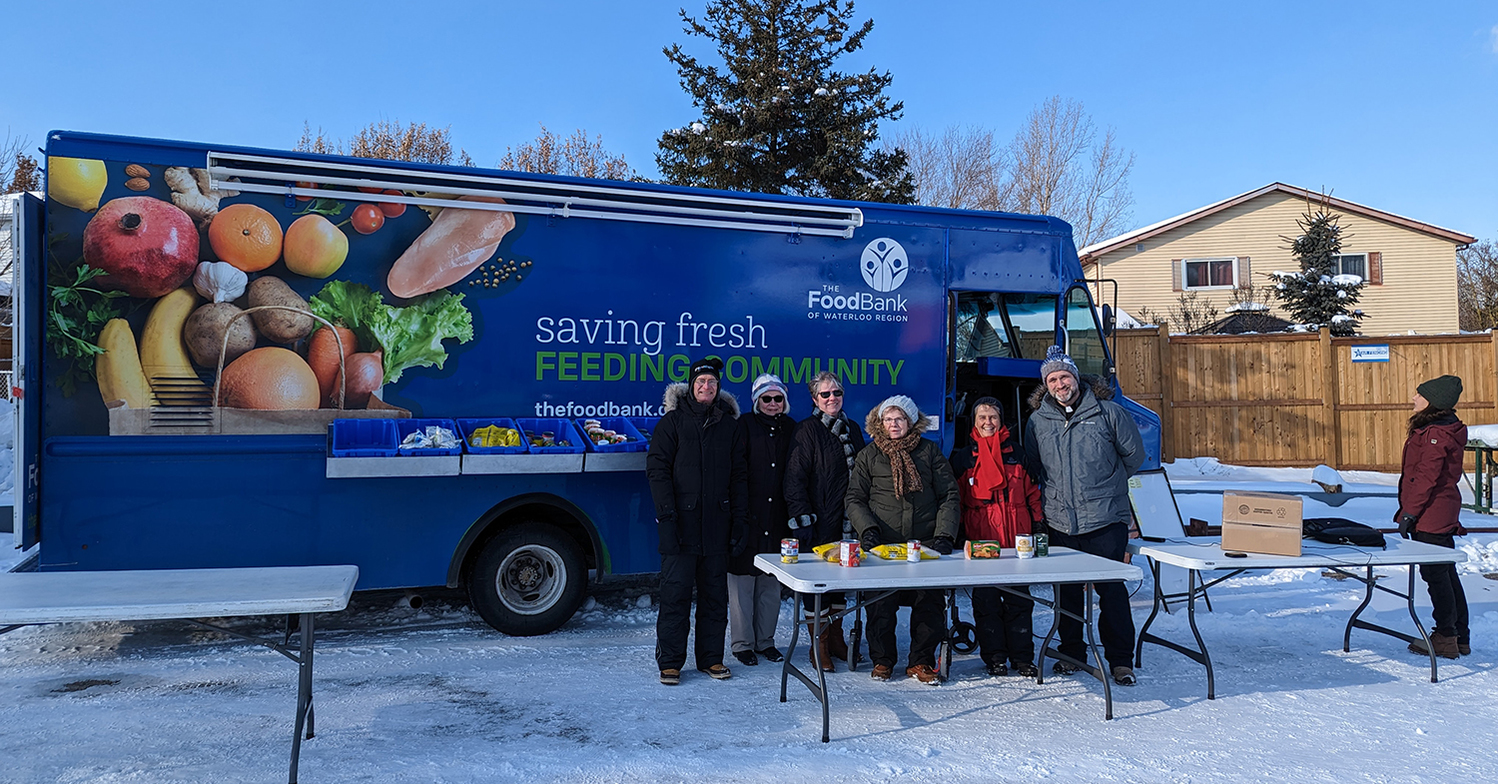
EVERY WEDNESDAY from 2:30 to 3:30 p.m., community members living within the neighbourhood boundary and in need of food can pick up a hamper at All Saints’ Anglican Church in Waterloo. The program, run through the church’s SideWalk Community Centre, receives fresh, frozen, and non-perishable food from The Food Bank of Waterloo Region.
“We have a volunteer waiting at the gym door, where the food is set out, who walks alongside the guest and answers any questions about products,” explains Jane Bender, one of the volunteer coordinators of the food hamper program.
“Products are arranged in various categories, and once guests move through the non-perishable section, they pick up fresh produce before heading to the frozen food counter.”
“We organize everything as if it were a grocery store, ensuring it’s dignified and presentable for our guests,” adds Ron Bender, who also helps coordinate the program.
Rice, pasta, pasta sauce, and halal food are among the most-requested items at the program. Each week, volunteers from the church and community serve around 40 households, building meaningful connections with everyone who accesses the program.
“We make sure we’re on the same side of the table as them, so there’s no barrier between us,” says Marty Levesque, the lead pastor at All Saints’ Anglican Church. “They are our guests. We walk with them and get to know all their names.”
In addition to food, people can also access non-food items like toilet paper, Kleenex, diapers, and period products once a month.
“Toothpaste and toothbrushes are always the first to go,” notes Rachel Prichard, the volunteer coordinator of the program’s non-food section.
Marty says that the food hamper program has reshaped the church’s approach to helping those in need.
“It’s allowed us to make a structural shift within our organization—from a charity model to a solidarity model,” he explains. “Instead of me standing at the front of the church collecting for the food bank, now volunteers come together here, walking alongside people. We have conversations and build relationships with them. This mutual transformation helps us see one another, and we grow as Christians and as people. It’s a deeper connection where we no longer view people accessing The Food Bank as ‘other;’ we see them as our neighbours.”
Marty adds that while he’s glad they can support people in need, he wishes that this type of assistance wasn’t needed in the first place.
“If the program grows, we’re going in the wrong direction,” he says. “The goal, ultimately, is for food banks to no longer be needed. That’s the dream.”
Though the long-term vision remains a world without food banks, the team is still grateful for the immediate difference they’re able to make for those struggling to afford to put food on the table.
“Being able to provide food to so many people… having them come in and leave with something is really good,” Rachel says.
“I’m thankful that we’re meeting a need that’s so prevalent in our community and that we can make one, two, or even three meals easier for a family,” Jane agrees.
All Saints’ Anglican Church is one of 54 organizations in the Community Food Assistance Network. Visit allsaintswaterloo.ca to learn more. If you’d like to help The Food Bank support Network partners like All Saints’ Anglican Church, visit our Get Involved section on our website to learn more about donating food, funds, or time.
Melissa Bender is Communications Specialist at The Food Bank of Waterloo Region.
THE FALL of the Bro-man empire has been quick, but Blue Skies are ahead. Over a million people sign up for Bluesky every day, and an equal number or more are fleeing X, formerly known as Twitter.
The downfall of Twitter has been predicted since the first day Elon Musk walked in with a sink after purchasing the company. The lack of privacy controls or discourse moderation has turned Twitter into an ugly, almost usable place. And as reality finally sinks in, individuals have had enough.
This does not mean that Bluesky is the new social media platform that we all should flock to. In fact, the downfall of Twitter ought to be properly lamented. Twitter was the last Public Square where ideas could be shared and discussed.
There will be societal repercussions to the loss of Twitter as the siloing of individuals will continue. Echo chamber platforms allow like-minded individuals to connect, but dialogue and civil discourse are nonexistent among those who disagree.
For the church and evangelism, this presents a new and distinct problem. How do we find seekers now? Are we to split time between Twitter, Facebook, Bluesky, Mastodon, Instagram, Threads, TikTok and YouTube? To name just a few platforms.
The answer, I believe, is missional. There will not be one right answer, but rather an answer for your specific community. Even with the fracturing of the social media landscape communities and neighbourhoods tend to find one another and form. And while the Public Square may be no more, pockets of community will form and continue to exist.
These will be different for each neighbourhood and city. Some neighbourhoods will have large Facebook Groups, while others connect via Bluesky or Twitter, and others have migrated to Threads. The key takeaway though, is really getting to know your neighbourhood, micro-targeting your church’s offerings to the mission field and letting go of the larger meta-narratives that Twitter filled as the Public Square.
We are in a time of transition with social media yet again. This time, we are returning to smaller, niche neighbourhood groups. And while the loss of the Public Square is worth lamenting, there is also an opportunity for the church to focus aggressively on its particular and individual mission field.
By doing so, and being intentional about being local, we can and will reach people in our neighbourhoods with the love of Christ.
CHURCHES ARE increasingly turning to digital marketing tools, such as Google Ads and Google Ad Grants, to expand their online presence and connect with potential congregants and seekers.
These powerful platforms offer unique opportunities to reach people searching for spiritual guidance, community, and worship services.
Google Ad Grants provides eligible nonprofit organizations, including churches, with up to $10,000 per month in free advertising. By utilizing this valuable resource, churches can:
Increase visibility and reach a wider audience by appearing in Google search results for relevant keywords like “church near me,” “Sunday service,” or Anglican.
Drive website traffic and attract visitors to your church website, where they can learn more about your congregation’s beliefs, upcoming events, and community outreach programs.
Generate leads and encourage potential members to sign up for email newsletters, attend services, or volunteer.
To maximize the impact of Google Ads, churches should consider the following strategies:
Keyword Optimization: Identify relevant keywords that align with their target audience’s search intent, such as “Bible study,” “youth group,” or “Christian counseling.”
Compelling Ad Copy: Craft persuasive ad copy that highlights the unique benefits of attending your church, such as a welcoming community, inspiring sermons, or meaningful worship experiences.
Targeted Landing Pages: Create dedicated landing pages that provide specific information about the service or event being advertised rather than landing on the home page.
By effectively utilizing Google Ads and Google Ad Grants, churches can enhance their online presence, connect with a broader audience, and ultimately fulfill their mission of sharing the Gospel and building a stronger faith community.
Running a community centre is a rewarding but challenging endeavor. It requires a combination of passion, organization, and resourcefulness to create a vibrant hub that serves the needs of the mission field. From managing various programs and activities to maintaining the physical space, there are many factors to consider when allocating limited resources.
There is essential equipment and supplies for sports, arts and crafts, and other activities. Maintenance and upkeep of the facility are essential to keep everything in good condition. And volunteer management to recruit and train help in the delivery of programs. All this requires resources.
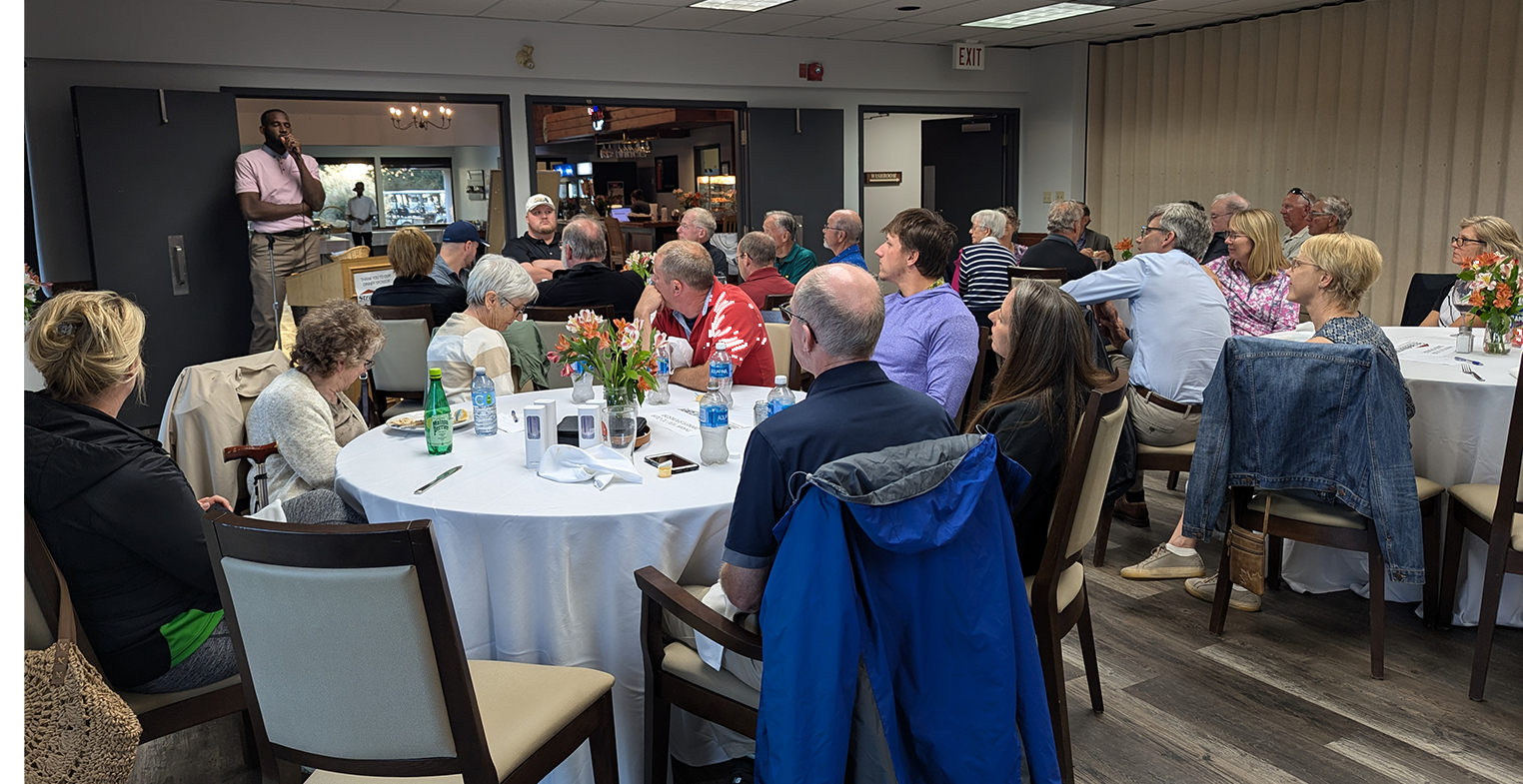
To help fund the ongoing operations of the SideWalk Community Centre, All Saints Waterloo hosted its first annual Golf Tournament in support of this vital new ministry in North Waterloo.
Over 50 golfers and friends who joined for dinner, gathered at Foxwood Golf Course on September 9, 2024. The scramble format was followed by dinner and a silent auction. The day concluded with Anthony Lee Jr of the KW Titans professional men’s Basketball team speaking to those gathered about the importance of community centres and community space for youth and the positive downstream effects community spaces have on the development of the next generation. Anthony closed his talk with some of his Christian rap, celebrating our Lord and Saviour.
The day was a great success raising significant funds for the SideWalk Community Centre. A special thank you to Rev Dan Bowyer and his entire team for organizer a great event.
The day was a great success raising significant funds for the SideWalk Community Centre. A special thank you to Rev Dan Bowyer and his entire team for organizer a great event.
MOST CHURCHES have a Facebook profile, whether a FanPage or a private group. Often churches use these platforms to promote upcoming events, either in the parish, deanery or the diocese.
Using Facebook as a broadcast medium is not wrong, but it is only half the power of a page or group. Celebrating parishioners and your community can go a long way in making individuals feel connected.
Here are some tips to foster a positive and supportive atmosphere in your private Facebook group or page:
Recognize Achievements and milestones. Celebrate members’ birthdays, anniversaries, graduations, or career advancements. The church is a family and families celebrate together. Also, you may wish to highlight members’ successes, whether it’s a personal achievement or a contribution to the church they recently made such as, “Thanks to Mrs. Smith for her leadership in organizing the Fall Food Drive.”
Encourage Interaction rather than simply disseminating information. Ask open-ended questions and prompt members to share their thoughts and experiences. You may want to create polls or quizzes as these encourage participation and engagement.
Show Appreciation and express gratitude. Thank members for their contributions and support to the church and its many ministries and events. Let members know how much you appreciate their presence in the group.
Create a Sense of Community and don’t be afraid to share personal stories: Open up about your experiences to build connections. Your humanity will be a comfort to others and will encourage members to share as well. But remember, it is also necessary to create a safe space for members to share their thoughts and feelings.
Maintain a Positive Tone and be respectful: Avoid negativity or conflicts and enforce group rules. Ensure that members adhere to the group’s guidelines and if necessary, address concerns privately. If there are issues, address them directly with the individual.
By following these tips, you can create a welcoming and supportive environment for your group members and Fans that reflects the beautiful mosaic that is the Body of Christ.
THE IDEA that social media is on its deathbed is a recurring theme in many circles; the chaos of Twitter, the emergence of TikTok and the general malaise of Facebook. Platforms will rise and fall, but social networking remains a fundamental aspect of human interaction.
The misconception that social media is dying stems from a few factors.
1) Platform Fatigue: As new platforms emerge, users may become overwhelmed and tired of existing ones. However, this doesn’t necessarily mean the end of social networking.
2) Privacy Concerns: Data breaches and privacy scandals have raised concerns about the safety of personal information on various platforms. While these issues are valid, the data shows they haven’t deterred users entirely.
3) Changing Trends: The popularity of platforms can fluctuate over time. For example, MySpace once dominated social media, but its decline didn’t lead to the death of social networking. Rather, the decline of Twitter leads to the rise of others, like TikTok.
While the landscape of social media may evolve, the underlying need for connection and community remains constant. People continue to use social media for various purposes such as building relationships and connecting with friends and family.
Social media allows for information sharing, and the dissemination of news, ideas, and experiences. Pinterest blogs have replaced the classic Church Cookbook. Substacks have replaced the newsletter, and blogs.
And of course, social media still provides much opportunity for entertainment. The general consumption of content, such as videos, memes, and games. And there are clear business and marketing opportunities for reaching and engaging with seekers and parishioners.
As technology advances, social media platforms will likely adapt to new trends and challenges. While specific platforms may come and go, the concept of social networking is here to stay. After all, the story of Jesus Christ has been Liked and Shared for 2000 years.
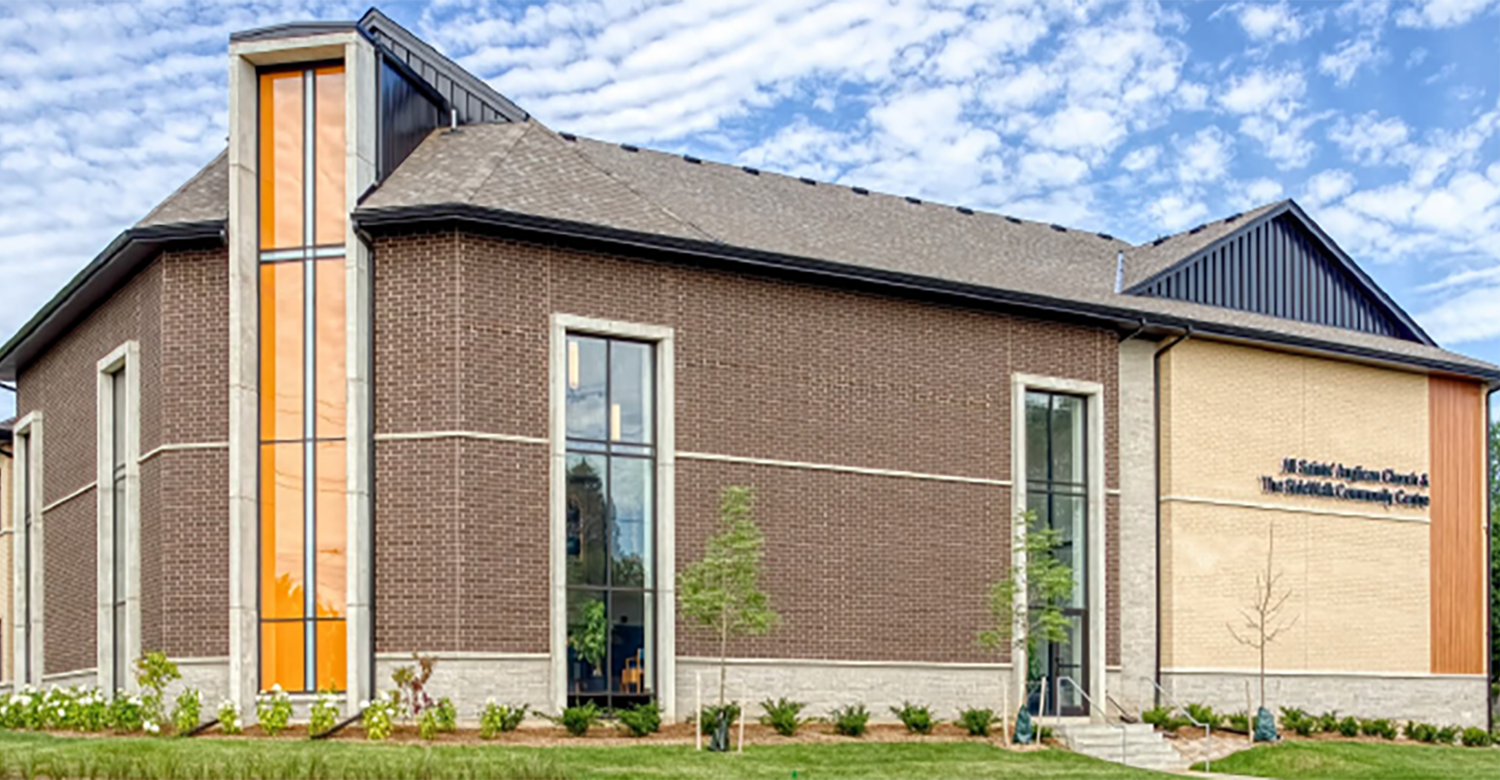
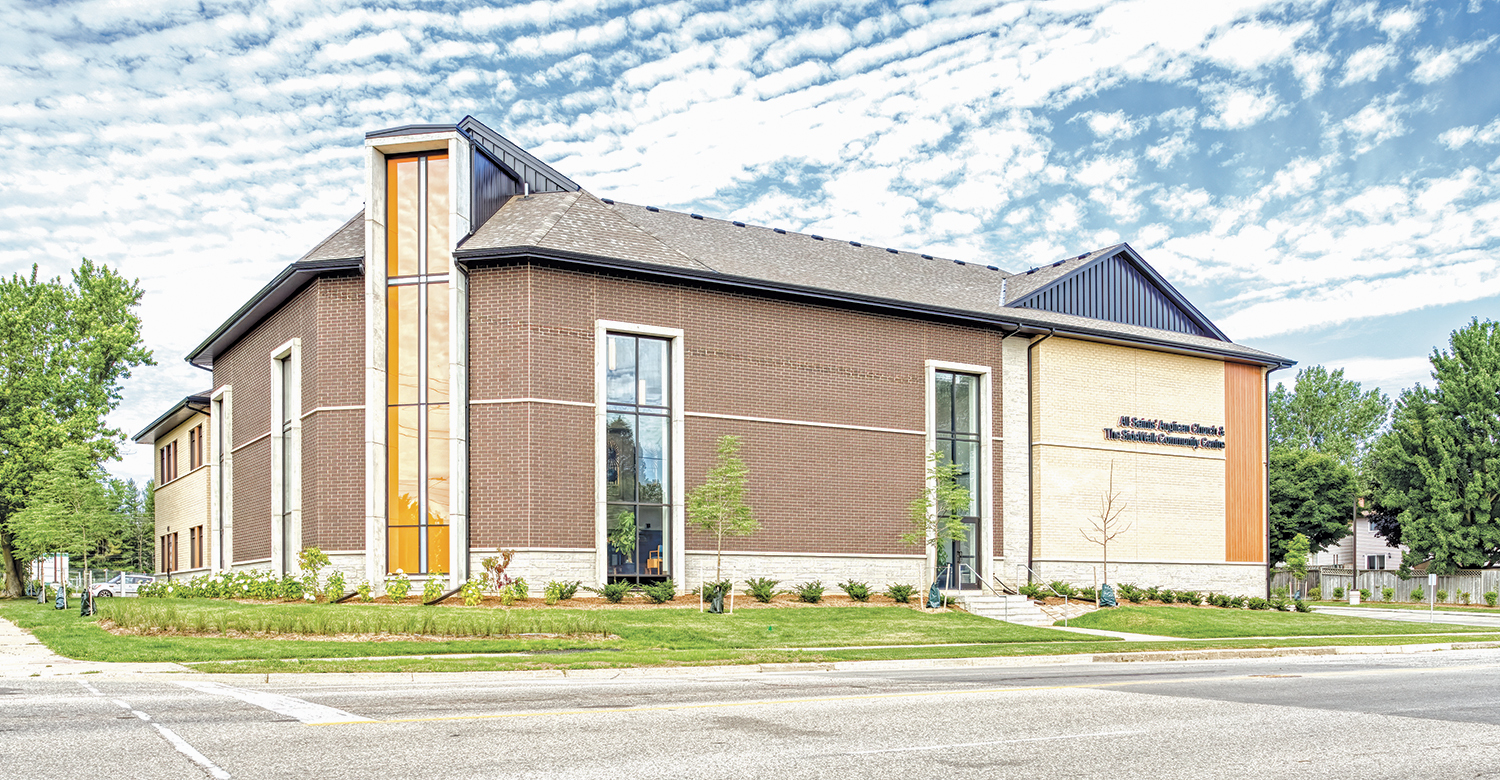
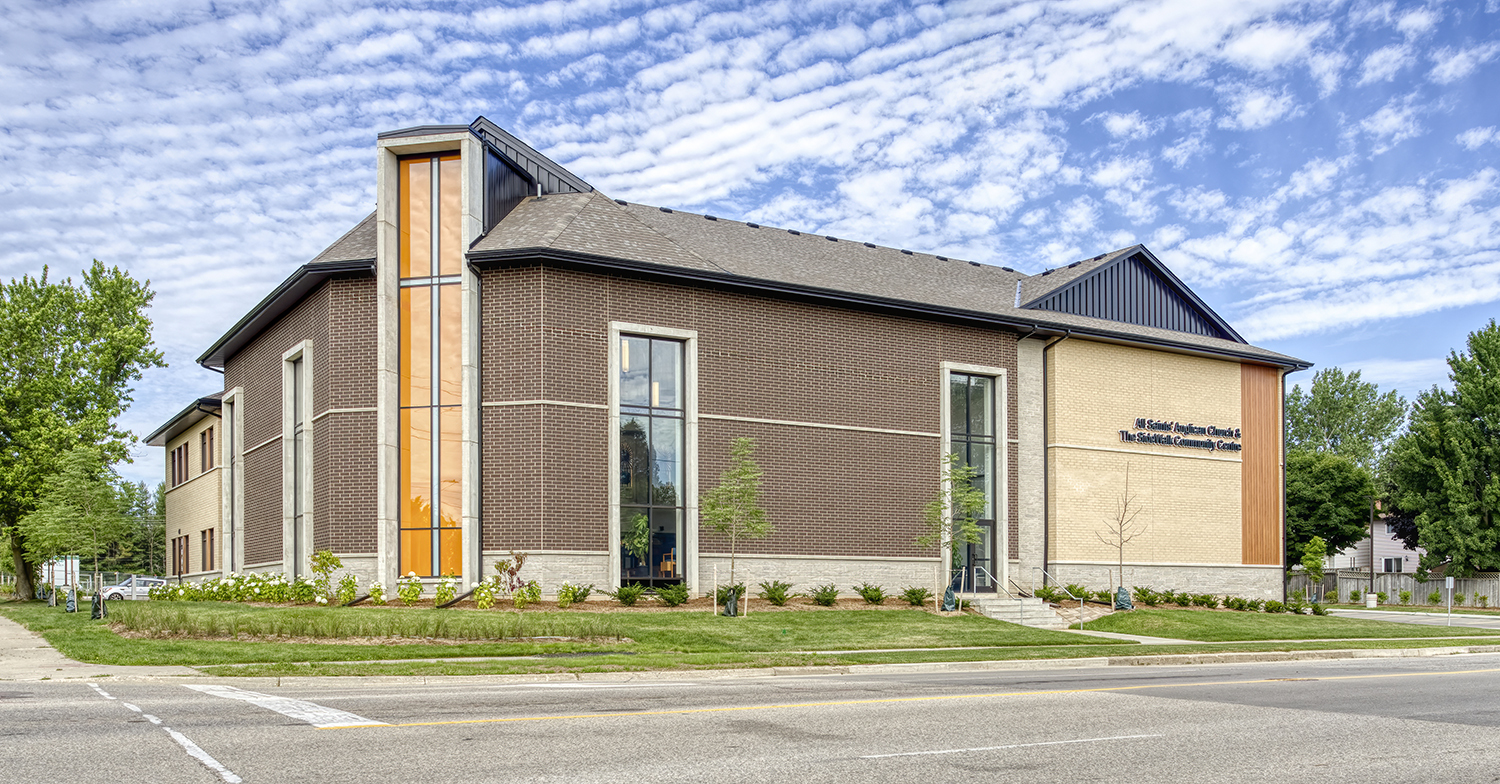
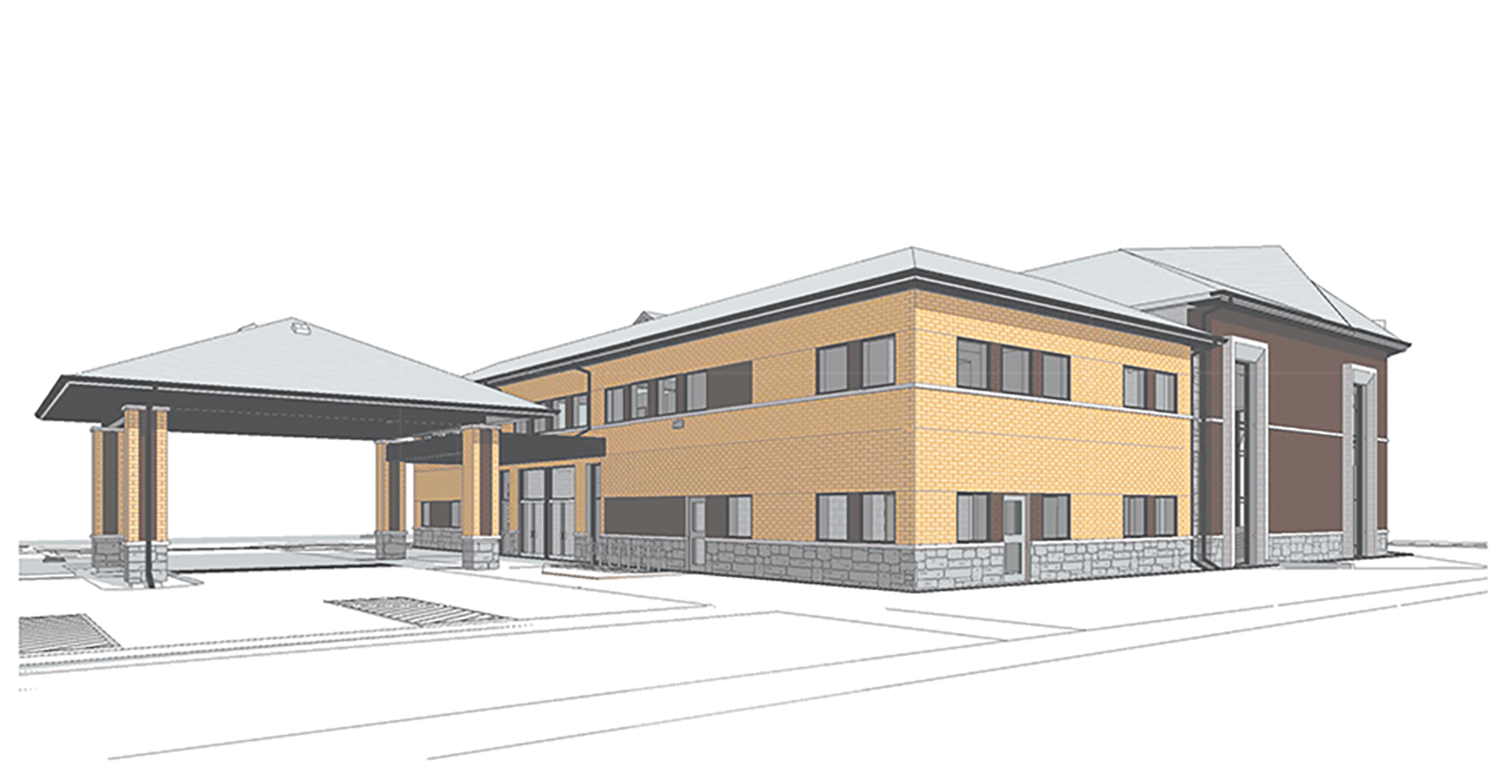
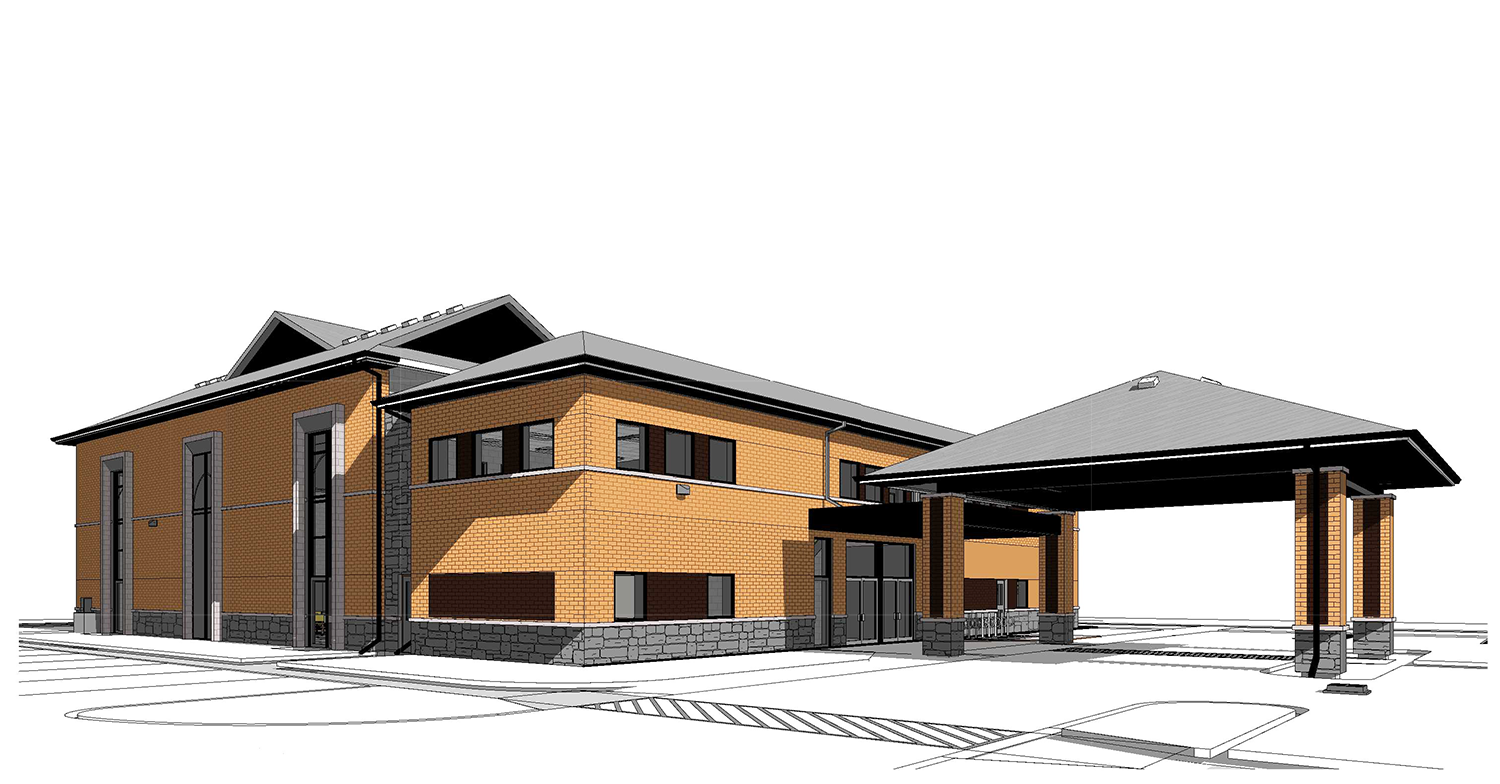
All Saints Anglican Church in Waterloo moved into our new building in November of 2023 and began operations of the SideWalk Community Centre January 2024.
The impetus behind developing a community centre in Waterloo was born from our missional listening exercises and assessing the needs of the mission field. As recreation services are the responsibility of the municipality, the City of Waterloo takes a central delivery model to fulfilling this responsibility. Simply put, there are no neighbourhood community centres in Waterloo. There are larger central complexes that residents must drive or commute to.
As such, large swathes of the city have been abandoned for recreational services. The City of Waterloo relies on non-profit organizations, like All Saints, to fill these gaps. As the only community centre in North Waterloo, the Sidewalk Centre is uniquely positioned to support and create opportunities for our neighbours in the Columbia/Lakeshore area of North Waterloo, which according to Waterloo Public Health is:
in the highest category for proportion of visible minorities, by neighbourhood
in the highest category for proportion of the population that is low income and of families without disposable income, by neighbourhood
in the lowest category for proportion of families experiencing social cohesion, by neighbourhood.
For the first six months of 2024, from January to the end of June, SideWalk Community Centre has had more than 5200 visits from individuals not connected to the church thus far. The 5200 individuals do not represent members of the All Saints community or any of our various parish activities. These visits include Girls Guides, Boy Scouts, Various Yoga Groups, Art Classes, Garden Club of KW, Pickleball, Volleyball, food bank services, and various birthday parties and baby showers.
The next six months look to be getting even busier with Music Together, Taekwondo, basketball skills camp with Anthony Lee Jr from the KW Titans, Suzuki Talent and Education of Waterloo and much much more.
As All Saints continues to develop the SideWalk Centre, we are reminded that we are called to “love one another” (John 13:34). SideWalk Community Centre is a tangible expression of that love in action, providing a safe and welcoming space where All are Loved, All are Welcome, and All are Saints.
Edu-tainment is a growing trend in education, and churches are beginning to incorporate this approach into their outreach efforts.
One of the most popular platforms for edu-tainment is TikTok, a social media platform that allows users to create and share short-form videos. Instagram Reels is a very close second as the preferred platform.
But what is Edu-tainment?
Edu-tainment is a term used to describe the practice of combining education and entertainment to create engaging learning experiences. This can take the form of liturgical explanations, short form bible studies or what is happening this week at your church.
TikTok or Reels can be a powerful tool for outreach and engagement for Christian communities. Churches can reach new audiences and connect with their existing followers in a more meaningful way. Here are a few tips for using TikTok or Reels for edu-tainment:
Keep it short and sweet: TikTok or Reels videos are short by nature, so it’s important to keep your content concise and to the point. Focus on sharing bite-sized pieces of information that are easy to understand and remember.
Be creative: TikTok is all about creativity, so don’t be afraid to think outside the box. Use music, humour, and other creative elements to make your content more engaging and memorable.
Share your message: While TikTok is a platform for entertainment, it’s important to remember that your goal is to share your message with your followers as well as seekers. Cross-share your videos on the rest of your platforms.
Stay on brand: Your TikTok content should be a reflection of your church’s mission and values.
TikTok and Reels can be a powerful tool for edu-tainment and outreach in any church setting. By using the platforms to create creative and engaging content, churches can reach new audiences and connect with their existing congregants in a more meaningful way.
According to Albert Mehrabian, Professor Emeritus of Psychology at the University of California, Los Angeles only 7% of a message is conveyed through words, whether in person or on social. The remaining 93% comes from nonverbal cues, with a massive 55% attributed to body language, including facial expressions.
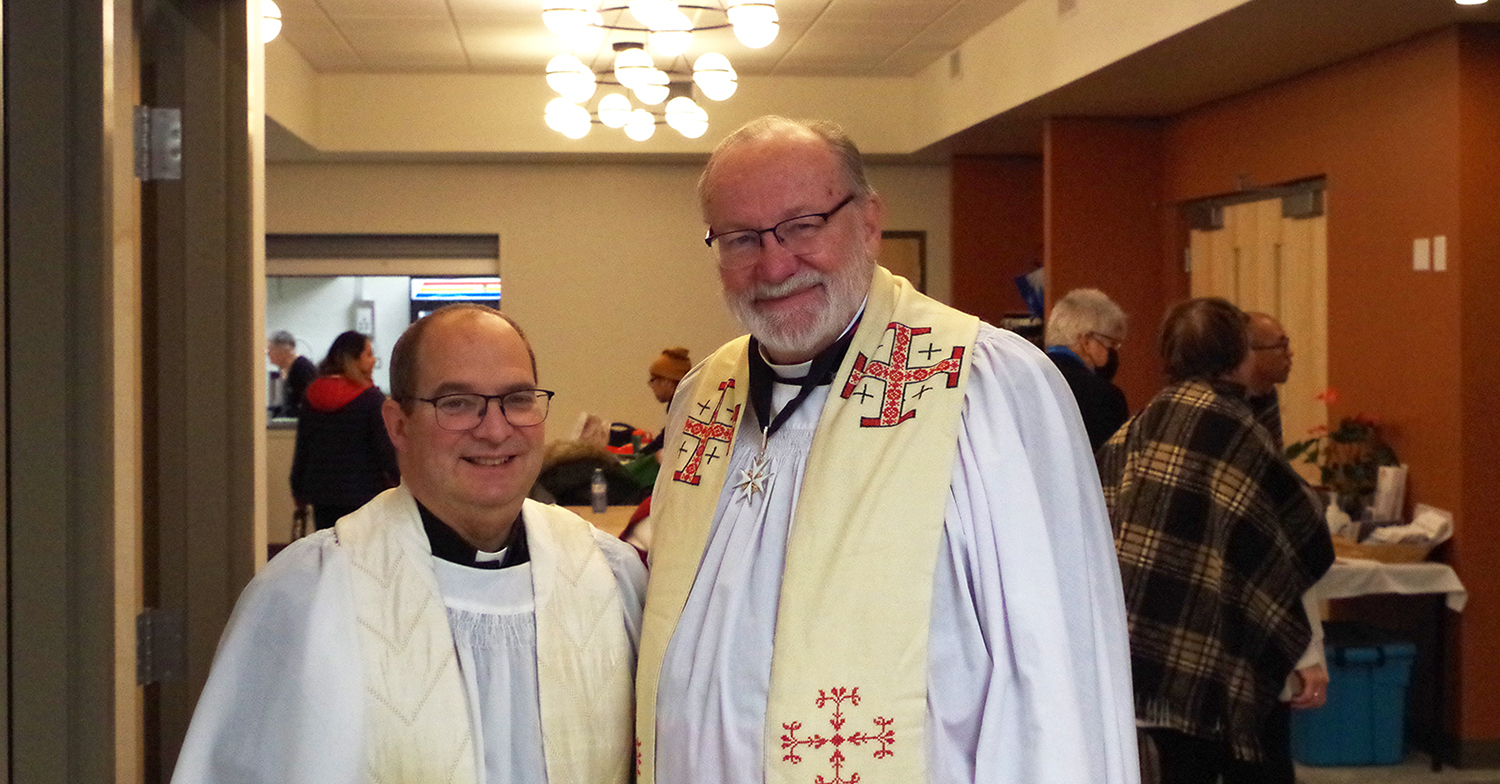
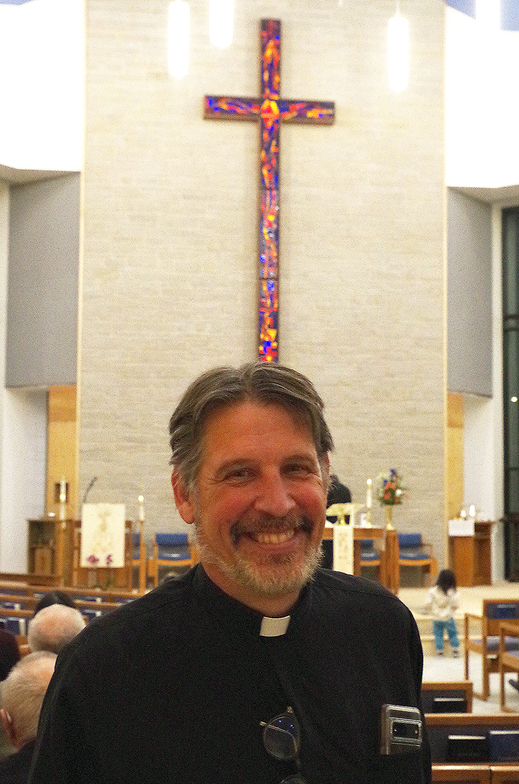
A simple image of a clergy member with a genuine warm smile can instantly create a sense of approachability and connection.
This image, without a single word, conveys warmth, welcome, and spiritual guidance. It might even spark a feeling of welcome and community.
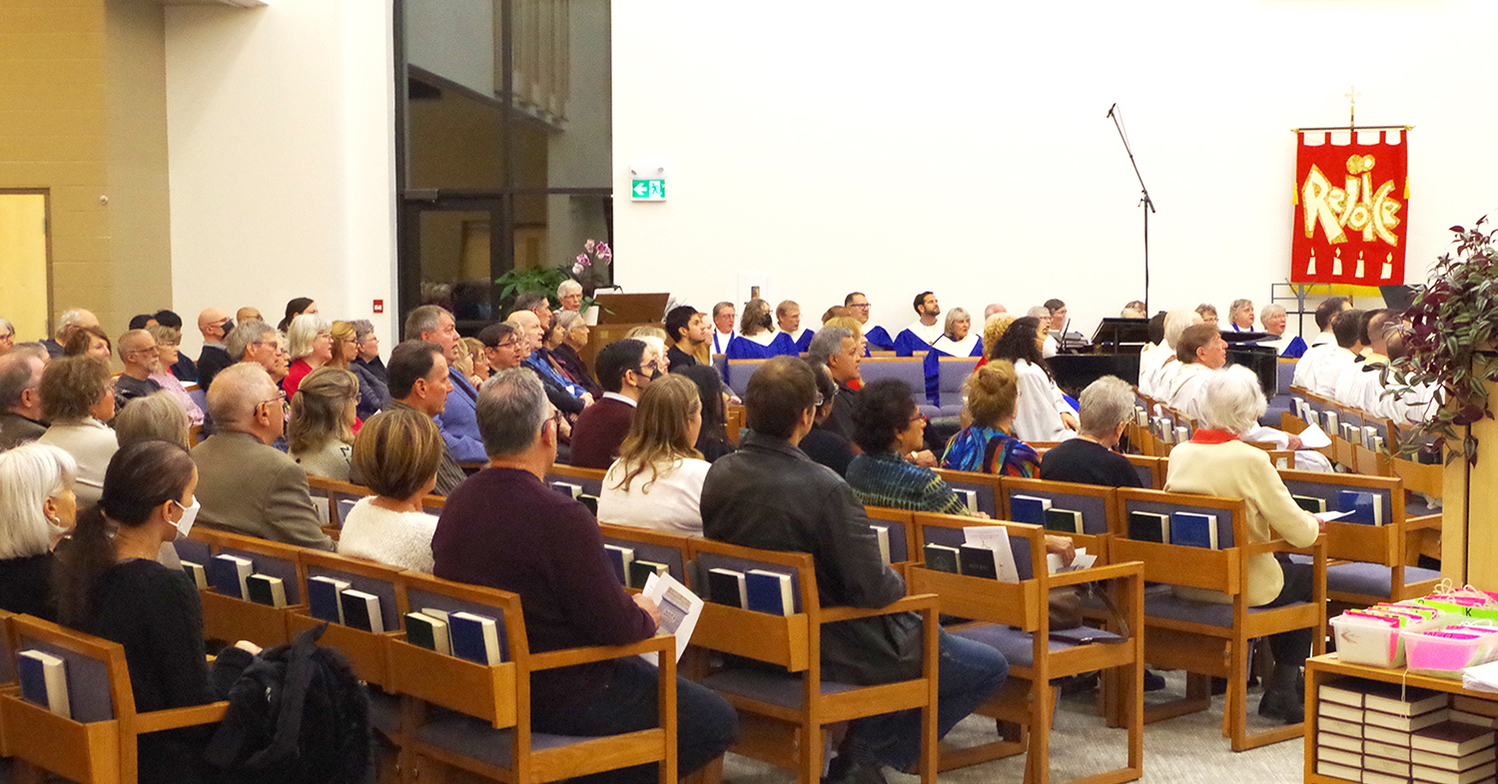
Likewise, a photo of a diverse congregation celebrating holy days with joy or reverence, depending on the day, speaks volumes. Vibrant colours, shared expressions of joy, and the overall atmosphere of unity creates a powerful message of community, perfect for Easter Sunday.
Meanwhile, during other seasons like Lent and Holy Week, images ought to take a more reflective tone or risk communicating unintended messages.
The tone of a message can also be conveyed visually, 38% of communication according to Mehrabian. A peaceful image of a church bathed in warm sunlight evokes feelings of serenity and contemplation. This can be particularly effective for promoting prayer services or quiet reflection during Holy Week.
By harnessing the power of images, church communities can foster deeper connections with their followers online. A well-chosen photo can not only inform about upcoming holy days or parish events, but it can also evoke emotions, inspire reflection, and strengthen the bonds of faith.
In the fast-paced world of social media, negativity can feel like an unavoidable nuisance.
Negative comments, from mild criticism to outright attacks, can be disheartening and tempting to simply delete. However, ignoring these comments might not be the best strategy. Engaging with them, when done thoughtfully, can offer valuable benefits for the church.
Firstly, responding to negativity demonstrates transparency and accountability. It shows your audience that you’re willing to listen and address concerns, even if they’re critical. This can foster trust and build stronger relationships with your followers so long as we resist the impulse to respond in an equally uncharitable manner.
Secondly, engaging with negativity allows you to clarify information or rectify mistakes. If a comment highlights a genuine misunderstanding about your work or mission, addressing it directly can clear the air and prevent further confusion. This proactive approach demonstrates your commitment to providing accurate information and improving your practices.
Furthermore, engaging with negativity can humanize the institutional church or your personal presence on social media. Responding with empathy and professionalism shows that there’s a real person behind the account, fostering a sense of connection and authenticity with your audience.
However, it’s crucial to remember that not every negative comment requires engagement. Some comments might be solely intended to provoke or disrupt, and responding to them can amplify their negativity. It’s important to discern genuine concerns from malicious attacks and prioritize your mental well-being.
Ultimately, engaging with negative comments on social media allows you to take control of the narrative around your church and turn negativity into a positive opportunity. By fostering open communication, addressing concerns, and demonstrating professionalism, you can strengthen your online presence and build lasting connections with your parishioners and seekers.
In the age of digital interconnectedness, one might assume that social media would be a unifying force. However, reality tells a different story, as the rise of siloed social media contributes to greater societal division.
Silo social media refers to the tendency of individuals to engage with platforms that reinforce their existing beliefs and interests, creating isolated echo chambers. This phenomenon has been fueled by algorithms designed to show users content based on their preferences, leading to a personalized online experience that often excludes diverse perspectives.
One of the most concerning aspects of silo social media is its role in deepening ideological divides, whether political or religious.
Users are frequently exposed to content that aligns with their pre-existing views, reinforcing biases, and creating an environment where alternative perspectives are marginalized.
This polarization not only fosters animosity between different groups but also impedes constructive dialogue, mutual understanding, and the fostering of the kingdom of God.
Addressing the silo effect requires a multi-faceted approach. Social media platforms need to re-evaluate their algorithms to promote diverse content and facilitate exposure to different perspectives. But users, too, play a crucial role by actively seeking out information that challenges their views and engaging in open-minded discussions to learn from one another.
Furthermore, fostering digital literacy is essential to equip individuals with the skills needed to critically evaluate information and discern fact from fiction. By encouraging a more thoughtful and discerning online community, we can begin to break down the silos that contribute to division and work towards a more understanding society.
Perhaps it is time for the church to play a more active role to help mitigate the silo social media effect as part of Sunday School and Youth curriculum design at the local level, diocesan level and national church.
With the rise of AI, Artificial Intelligence, individuals need to be weary and media savvy now more than ever. AI allows for deep fakes to be rapidly produced and disseminated widely.
A deep fake refers to a type of artificial intelligence (AI)-generated content, typically in the form of audio, video, or images. In the context of deep fakes, images, audio, and video are used to manipulate or generate new media content that appears realistic but is synthetic.
So here are a few tips that will help spot a deep fake.
1) Look for odd details. It’s important to always analyze the details in images and look out for discrepancies when something feels off. Manipulated images typically lack realistic lighting, and the hands are often digitally mangled.
2) Unnatural or blurred-out images. Faces of the people often have unnatural skin tones and waxy or blurred-out features. These are strong indications that the images are fake.
3) Is anything strange in the background? Are the words blurred out on street signs? AI struggles with creating natural streetscapes with complete signs for streets or restaurants.
4) Botched hands and writing. AI struggles to write words correctly on uniforms. And often hands are at weird angles or have 6 fingers.
5) Deep fake videos tend to have a couple of main features: unnatural eye movements and the audio seems just out of sync.
These tips should help in the near term, however, as AI technology improves, it will become harder to detect discrepancies between real and fake content online. For this reason, the most important way to spot deepfakes and avoid misinformation is to fact-check and question the reliability of the sources sharing the content.
It is important to get information from official and trusted sources such as official government agencies, and credible news platforms. In most cases, a quick search online, using reliable news sources or fact-checking organizations such as Snopes.com can help identify whether something is true or not.
“The wise are cautious and turn away from evil, but the fool throws off restraint and is careless.” Proverbs 14:16
Building your church’s social media channels is vitally important for maintaining connections with current parishioners and helps to attract new ones.
This year-long activity can pay dividends at various times of the year. Especially when sharing special services at Christmas and Easter and other big parish events.
Here are a few simple strategies to help build your online presence.
1) Send direct invitations from your social media channels to parishioners. Don’t wait for them to join your church’s Facebook page or group, be proactive and invite them.
2) Advertise which channels your church uses in the bulletin, on welcome screens and announcements before and after the service.
3) Make sure your website has social media links to all your channels, so it is easy to find you.
By tending to social media channels throughout the year you will be able to increase your reach to possible new parishioners. Also, it’s not uncommon for church members to become inactive over time due to life circumstances such as work, school, or family commitments.
But, with social media, you can easily reach out to these individuals and invite them back to church for events or special services. By staying in touch with inactive members, you can help them feel like they’re still a part of the church community and make it easier for them to return when they have more time.
On December 6, 2023 – the Commemoration of St. Nicholas – Bishop Todd Townshend presided at a Service of Consecration of All Saints’ Anglican Church in Waterloo.
This is a question I have asked myself many times recently. Livestreaming of worship services was a response to our buildings being closed during the pandemic. Many of us have continued our livestreams in a new hybrid format (livestream and in-person simultaneously) long past re-opening until today.
Livestreaming puts many constraints on worship. The presider must always be conscious of the camera angle. For instance, did I just walk out of the camera shot? Is my microphone on? Is it off during congregational singing so as not to overpower the stream with just my voice?
Livestreaming offers yet another layer of complexity to our services. And if I am being honest, it requires so many considerations that draw me out of a prayerful focus to stage direction. And its negative spiritual effect spills over to the congregation.
This fractures the body of Christ in some pretty significant ways. Enjoying our coffee while watching church sounds lovely, but it means we do not see our fellow parishioners as often or at all. Relationships suffer and we fail to notice the person a pew or two over who may be having a difficult time and really could use a hug or a prayer from a friend.
Part of what makes church a church is the gathering of the community, that where two or three are gathered Christ is in our midst. But more so, it allows us to be attentive to each other and our needs as a church family. And families need to gather together.
So, when is the time to turn off your livestream?
I am not sure. But more and more, I question whether the hybrid formula should stay long-term. Or perhaps we need a conversation on a diocesan level where we have specified livestream sites, such as the Cathedral Church of St Paul’s that provides livestreaming services to shut-ins throughout the diocese.
Deciding where to spend your advertising dollars, whether on Google or Facebook depends on various factors, including most obviously your target audience and your goals.
Both platforms offer distinct advantages, so it’s essential to assess which platform aligns better with your specific needs and goals.
Google is a search engine, and Google Ads allows you to target users actively searching for interests or information related to your church. This means you can reach an audience already interested in what you offer and can make it easier to convert a seeker to a visitor.
Because Google search is intent-driven, keyword targeting is an essential skill with Google Ads. Using these resources, you can target specific keywords relevant to your church or ministry that will be displayed prominently in a search. This precision can help you reach additional users at different stages of the seeker’s journey.
Meanwhile Facebook excels in demographic targeting marketing, allowing you to reach users based on age, gender, location, interests, and behaviour. And because Facebook is a highly visual platform, this makes it ideal for churches with community events, especially if you have images of the community in action. Ads here will display to a target demographic and may require more impressions to convert a seeker into a visitor.
In many cases, a balanced approach may be the best strategy. Allocating a portion of your ad budget between Google and Facebook can help you reach a broader audience and achieve different marketing objectives simultaneously. Ultimately, the right choice depends on your unique needs and goals.
When designing the new church and community centre at All Saints’ Anglican Church in Waterloo we began first by listening to the needs of the neighbourhood. We allowed the neighbourhood to heavily influence the design of the new facility. And to achieve this outcome we engaged in the practice of missional listening. But what is missional listening?
Well, it includes but is not limited to, listening to God and culture, observing your neighbourhood, asking questions and listening to the answers, asking more questions, doing research and following hunches where the Spirit will lead.
We intentionally observed our neighbourhood and walked the sidewalks each day from planned routes to observe seasonal changes but also deviated now and then to experience something new. We became aware of our local culture. Every neighbourhood is different, and every neighbourhood has its own culture. We read every local paper, blogs, and listened to podcasts. We followed closely local Facebook groups and when possible, we would chat and interview neighbours. We asked simple questions like, What brings you to the rink/field/church today? Name one thing that would improve the quality of your life? What can the church do to help you?
We sought out and interviewed community leaders and potential partners (other not-for-profits). We met with other local Christian leaders to understand their impressions of the mission field, and we had many meetings with our elected officials to gain their insights from a government perspective and leaders in the community.
We were prepared with many questions for our civic leaders, such as: What demographic shifts are underway? What kind of problems exist in this community? What divisions are there in the community? How is Christianity perceived in the community? How could the church assist? Who else can you connect me with?
We asked other Christian denominational leaders who are the different types of people living in our neighbourhood? Do people in the neighbourhood interact with each other? What is your prayer for those living in the neighbourhood? What do you think is on the mind of your typical neighbour?
And of course, we interviewed as many neighbours as possible asking them to tell us about their average weekday in their life. What is their average Saturday or Sunday like? What bothers them/ keeps them awake about their life today? How have they seen the neighbourhood change? What do they love about living here? What is their dream for the neighbourhood? How could we help them realize that dream? Where do you meet with people from this area?
Over many years and many conversations, interviews, and missional listening, the needs of the neighbour influenced and eventually drove the design of the new church and community centre. We are extremely grateful to each person who spent time with us and who helped us understand how best to serve the neighbourhood and we look forward to meeting them all again at one of the many programs that will be offered at All Saints’ Anglican Church and the SideWalk Community Centre.
Twitter, once a vibrant and accessible platform, has gradually become a victim of its new owner’s chaotic whims, making it increasingly difficult for users to engage and communicate effectively.
After Elon Musk’s purchase of the platform, it introduced various features and changes that have contributed to its dwindling usability, leaving many users frustrated and disenchanted.
Twitter’s struggle with misinformation and the spread of fake news has further deteriorated its usability. After firing most of its staff, efforts to curb the dissemination of false information, misleading tweets are finding their way onto the platform in greater quantity, sowing confusion and mistrust among users. This issue has made it increasingly challenging for individuals to discern between reliable and unreliable sources of information.
The rise of bots and automated accounts has also impacted Twitter’s usability negatively. These automated accounts often engage in spammy behaviour, flooding the platform with repetitive, irrelevant, and often hateful content. As a result, genuine user interactions are buried under a barrage of automated messages, making it difficult for users to have authentic conversations.
Needless to say, Twitter or X’s best days are behind us now. It is time to start looking forward to where the new Agora will be to genuinely connect with the mission field and seekers. Three new platforms are moving to fill the space left by Twitter’s impending demise.
The first is Bluesky. Jack Dorsey who founded Twitter and left the company when Musk finalized the purchase has backed this alternative social networking platform. Much like when Twitter itself launched those many years ago, the site is for members only but is growing regularly as a player in this space.
The next is Mastodon, which is a decentralized open-sourced federated social media platform, to which anybody can contribute code, and which anyone can run on their own server infrastructure, if they wish, or join servers run by other people within the fediverse network. The learning curve is a little steeper for the average user and uptake on the platform has been slow.
Finally, there is Meta’s Threads, linked to an Instagram account. And while the transition to Threads is much easier, especially if you are already familiar with Instagram, I worry about one company owning all the social media platforms. Facebook, Instagram and Threads would all be under the one banner of Meta and Mark Zuckerberg.
It will be interesting over the next year to see which platform will become the preferred destination. For the church at this moment, the most logical action is to migrate to Threads. But a word of warning, the landscape may shift quickly, especially once Bluesky moves from members only to an open platform.
The key to this shifting landscape is adaptability, be ready to shift your church’s social media presence to be where the mission field is going rather than where it has been.
In the past decade, social media has revolutionized the way people connect, share information, and engage with each other.
Platforms like Facebook, Twitter, Instagram, and YouTube have become household names, providing spaces for people and churches to express themselves, form online communities, and share the Gospel. However, the social media landscape is again undergoing a seismic shift, characterized by the fragmentation of the main players and the rise of niche platforms.
Traditional social media giants have dominated the digital space for years, but their one-size-fits-all approach is losing ground. Facebook daily users are for the first time declining. Niche platforms offer a tailored experience, enabling users to find like-minded individuals. Platforms like TikTok, Reddit, Twitch, and Discord have gained significant popularity with certain demographics.
The fragmentation of the social media landscape does bring many benefits. Firstly, it allows individuals to escape the noise and echo chambers often associated with mainstream platforms. Niche platforms provide an opportunity for diverse voices and opinions to flourish and come to the forefront.
Secondly, the rise of specialized platforms has created new spaces for communities to thrive. Users can find dedicated spaces to explore their passions, fostering creativity and collaboration within these niche communities.
While the fracturing of the social media landscape has its advantages, it also presents other challenges. One of the major concerns is the creation of echo chambers, where individuals are only exposed to information and viewpoints that align with their pre-existing beliefs. This can lead to polarization, misinformation, and a lack of understanding between different groups.
Also, as users migrate to niche platforms, it becomes increasingly difficult to maintain a sense of cohesion across platforms. The shared experiences and collective conversations that once occurred on mainstream platforms are now scattered across multiple platforms making it much more difficult to create a consistent message.
Engaging with diverse platforms can help the church overcome echo chambers, exposing congregants to a wider range of perspectives. Critical thinking and media literacy skills become essential tools for churches to consider and therefore ought to invest in training.
As we navigate this new terrain, it is crucial to strike a balance between the benefits of specialization and the need for a consistent message across all platforms. By embracing diverse platforms and fostering media literacy, we can navigate the fractured social media landscape and still share the Good News of Jesus Christ. It will just require more effort, and yes, more time.
“Full immersion” – with a helmet and a shovel for now… Rev. Marty Levesque entering baptismal font in All Saints’, Waterloo new church. The font will be placed below the altar platform making it the centre of the community: “We want people to experience baptism the way our Lord experienced it in the river Jordan”.
Go big or go home!
This all-out philosophy puts all of one’s effort into an enterprise, to experience something to its fullest, to be extravagant.
Go big or go home is a Gen-X philosophy that encourages one to be bold. And it is one taken to heart at All Saints’ Anglican Church in Waterloo as we continue through the construction of the new church and the SideWalk Community Centre.
Many years ago, while a student at Huron University College, one of my professors, Ven Jay Koyle, encouraged us to always go big with the sacraments. He advocated that not a little dab would do in baptism, but to make a big splash so to speak. And Jay was not the only mentor of mine that spoke of the abundance of the sacraments frequently. Both Canon Greg Smith and Rev Rae Fletcher, may they both rest in peace and rise in glory, always taught me that more was better. Help the symbol of the sacrament tell the story of God’s abundant, great, and endless love for the world. Don’t just have a little water or a little bit of oil in baptism but make a holy mess!!
One of the new features in the new church is a full immersion baptismal font, the first permanent full immersion font in the Diocese of Huron (aside from Lake Huron itself). Sitting below the altar platform, the new font is in the centre of the community.
Most fonts find their place at the back of the church, symbolizing baptism as a requirement for entrance into the church and worship of our Lord. Ancient churches even had separate baptistries so that candidates wouldn’t even enter the church until ritually joined to the community in the waters of new birth. At All
Saints, we wanted to make initiation into the community of believers a central focus of the community and as such the font needed to be front and centre. We want people who join the community or renew their vows to experience baptism the way our Lord experienced baptism in the river Jordan, fully immersed.
We are looking forward to many years of welcoming newcomers to God’s family in the new font and giving praise to God for the many who will renew their vows in the water of new life each year when celebrate St. Jean Baptiste each June.
All Saints’, Waterloo monthly church build update: Firmly grounded in the mission field
In the year 1519, Hernán Cortés arrived on Turtle Island with 600 men, and upon arrival, made history by “burning his ships.” This sent a clear message to his men. There is no turning back!
Progress continues on All Saints Waterloo’s new church and community centre.
There have been many milestones along this journey. The vote to sell the building and property to fund the new build. The closing date and transfer of funds to complete the sale. The ground-breaking of the new facility. Moving to a temporary location. And of course, the continued construction and excitement we feel watching the new building take shape.
This month though it felt a little more real and a little different. Yes, we have moved out of the old church and said our collective goodbyes. But the demolition of the old church has begun to pave the way for a new housing development on the old site.
For some, this closed a chapter from when they first arrived at the Northfield site in 1981. For others, they have only known this place as church. And for those, like me who are relatively new to the community, it represented a time to give thanks to God for all those that have come before and all that happened in this place and space.
In this building, the sacraments were celebrated, and new Christians were joined to the body of Christ. Youth came to faith. Marriages were blessed. And we said goodbye to family and friends who have gone to be with our Lord. But this is not the end, rather is a turning of the page. And we have great hope and excitement for our new space when complete, but today we give thanks for a space where so many came into a deeper relationship with our Lord, where tears were shed, and laughter roared. This space was sacred to us and even as we go forward to something new, we still grieve what was.
Well done, good and faithful servant. Thank you for being a place where so many met the Risen Lord.
All Saints’, Waterloo monthly church build update: firmly grounded in the mission field
Here’s the church and there’s the steeple. Open the door and see all the people. Here’s the parson going upstairs. And here he is now he’s saying his prayers.
The steeple is probably the most recognizable part of any church, at least from the outside: the steeple standing above the houses close by, cross lifted high in the sky, a beacon of hope in the world. An unmistakable sight for any neighbourhood or city skyline.
Steeples symbolically pointed to heaven. They are also symbolic that the prayers of church members would ascend to God in heaven. And traditionally being the highest point, before skyscrapers, they provided a visible way point on the horizon.
As construction continues at All Saints Waterloo’s new church and community centre, we wanted to take a bit of a modern twist on the traditional steeple. Right on the corner for maximum visibility it will be a feature of the new building. From the ground to the highest point translucent glass will be accentuated with a large cross that will be illuminated at night.
Not only does it point to heaven, directing the prayers of the faithful heavenwards but it also firmly grounds us in the here and now, in the mission field we serve. It says who we are, an Easter people, ready to serve. A call to action in a sense, but also a declaration the All are Saints, All are Loved and All are Welcomed at this place.
Edu-tainment is a growing trend in education, and churches are beginning to incorporate this approach into their outreach efforts.
One of the most popular platforms for edu-tainment is TikTok, a social media platform that allows users to create and share short-form videos. Instagram Reels is a very close second as the preferred platform.
But what is Edu-tainment?
Edu-tainment is a term used to describe the practice of combining education and entertainment to create engaging learning experiences. This can take the form of liturgical explanations, short form bible studies or what is happening this week at your church.
TikTok or Reels can be a powerful tool for outreach and engagement for Christian communities. Churches can reach new audiences and connect with their existing followers in a more meaningful way. Here are a few tips for using TikTok or Reels for edu-tainment:
1. Keep it short and sweet: TikTok or Reels videos are short by nature, so it’s important to keep your content concise and to the point. Focus on sharing bite-sized pieces of information that are easy to understand and remember.
2. Be creative: TikTok is all about creativity, so don’t be afraid to think outside the box. Use music, humour, and other creative elements to make your content more engaging and memorable.
3. Share your message: While TikTok is a platform for entertainment, it’s important to remember that your goal is to share your message with your followers as well as seekers. Cross-share your videos on the rest of your platforms.
4. Stay on brand: Your TikTok content should be a reflection of your church’s mission and values.
TikTok and Reels can be a powerful tools for edu-tainment and outreach in any church setting. By using the platforms to create creative and engaging content, churches can reach new audiences and connect with their existing congregants in a more meaningful way.
Your website is one of the most important, if not the most important, tools to keep your church visible in today’s world.
You want to establish a sense of trust with your audience, and there’s no faster way to lose someone than to have outdated or irrelevant information on your website. Here are a few tips for a spring clean-up of the content of your page.
Back it Up
You’re here to do some spring cleaning, not start over. Depending on what platform you use to host your website, some plugins can back your site up with the click of a button.
Of course, this is a step I recommend churches do quarterly because threats such as hackers, server failures, or unintentionally deleted files can happen more often than anyone would like to admit.
Do a content audit
Pretend you’re visiting your website for the first time. Does the homepage tell you everything you need to know, does it have a call to action, and does it offer easy-to-use navigation? Is the information still current? It sounds simple, but first impressions are important to not only satisfy visitors, but also the search engine algorithms.
Take a good look at your pages and subpages. Are they still relevant to your day-to-day activities? Are all the pages necessary or could some be merged with another page? Do a few of your pages barely get any views at all?
If so, perhaps it’s time to merge or consider deleting them.
Details, Details, Details
Your site may be full of outdated blog posts, dead links, or past events. I cannot stress enough how bad it looks when the last blog post is about Easter services in 2019.
If you cannot fill out the site, then less is more.
Does your website have an events page? These pages can easily get lost in the shuffle of cleaning up your website. If your church rarely has events or ii is inconsistently updated, consider taking this off your website.
Revise, Revise, Revise!
Of course, pages are only as good as the content they contain. While you’re cleaning up, be sure to check that your contact information, about us page, and even leadership bios are up to date with the most current information so that users can easily get in touch with you.
A few simple steps can go a long way in welcoming the newcomer in this holy season in discovering the gem that is your church.
All Saints’ Waterloo new 500 square feet kitchen provides space and facilities for All Saints’ new weekly food distribution program that is part of the Community Food Assistance Network in the Region of Waterloo.
The heartbeat of so many houses emanate from the kitchen. The same is true for many Anglican congregations.
The old joke is if you feed them, they will come. So always make sure there is some food at each event, even if it is just muffins and coffee. Clergy are taught this in seminary. Well, maybe not formally, but it is sage advice. This makes the kitchen one of the most important rooms in any church.
All Saints Waterloo new church and community center’s kitchen will meet this internal need but also is purpose built to serve the neighbourhood.
This 500 square feet kitchen provides space and facilities for All Saints’ new weekly food distribution program that is part of the Community Food Assistance Network in the Region of Waterloo.
Each week, dozens of households will pass through the kitchen picking up fresh, frozen, and non-perishable food items. Healthy produce, frozen protein and non-perishables will be available weekly for those in need.
This program is launching now ahead of the completion of the new construction and All Saints will be making use of the Region of Waterloo’s mobile food pantry for now. Once construction is complete this program will transition seamlessly into the community center with all the necessary fridge and freezer storage capabilities.
From collective cooking classes to serving community food assistance network: the blueprint of All Saints’ new kitchen
The kitchen will also support collective cooking classes for new Canada’s and supports larger catered events, whether that be a funeral reception, wedding reception or as an event space.
All Saints’ continues to dialogue with community partners about other uses for the kitchen and how best we can continue to serve the mission field.
Over the years I have written many columns on technology and ministry, best practices, and how to lever social media and technology for the building of the kingdom of God and evangelism.
Recently though, Rev Dan Bowyer, Associate of All Saints Waterloo for Pastoral Care and Outreach Ministries asked ChatGPT, the artificial intelligence computer program, “What is a good evangelism strategy for Anglican Christians in Canada.” What follows is the AI’s response:
1) Building relationships: Establishing genuine relationships with non-Christians is often a crucial first step in evangelism. This can be done through volunteering in the community, participating in neighbourhood events, or simply getting to know people through everyday interactions.
2) Meeting people where they are: It’s important to understand the cultural and spiritual context of the people you are trying to reach, and to speak to them in a way that is relevant and meaningful to them.
3) Being a good listener: Being a good listener is one of the best ways to build trust and credibility with people. It helps people feel heard, valued, and respected.
4) Using social media: Social media is a powerful tool for sharing the Gospel with a wide audience. Anglican churches can use social media to share sermons, Bible studies, and other resources that help people grow in faith.
5) Living a consistent Christian life: Evangelism is not just about words, but about actions too. People will be more likely to be interested in the message of Christianity if they see it lived out in the lives of those who follow it.
6) Partnering with other organizations: Partnering with other organizations, such as local charities or service groups, can help to build relationships and bridge gaps with people who might be difficult to reach otherwise.
It’s important to remember that effective evangelism is a process, and that it may take time to see results.
The most important thing is to be faithful and consistent in your efforts, and to trust that God is at work in the hearts of those you are trying to reach.
Roof trusses, crank beams, and hurricane pins. Some of the things I didn’t learn in seminary.
There is much that must come together to keep the walls of a church standing against the winds of a blizzard. The structural integrity of any building begins of course with the foundation, but the roof, interestingly enough, is just as important to keeping walls standing and a building functional.
The roof has more than one function. It sheds water and snow to prevent either from standing on the roof surface and increasing the live load on the roof structure. The roof protects the building interior from the effects of weather elements such as rain, wind, sun, heat, and snow. It also provides thermal insulation to keep heat in during the winter and cool during the summer. But most importantly, it holds the walls together and provides stability to the structure.
This December and January the slope roof and flat roof along with windows are being installed at All Saints Waterloo’s new church build. This will seal up the building allowing heat inside so that electrical, HVAC and plumbing can begin inside the structure. Interestingly, while the structure begins with the foundation and moves up, the electrical and HVAC begin at the top and work their way down.
From foundation to walls to roof, the structural integrity of any building comprises all three components. And now that all three are almost finished, it is time to move inside and begin to form the space that will welcome all, just hopefully through the front door and not lowered through the roof.
As many of you know Elon Musk, CEO of Tesla and Space X, has purchased Twitter.
Since that purchase has been finalized Twitter has fired more than half of its staff with hundreds more quitting when they refused to work more than the contracted 40 hours a week.
Twitter is no longer enforcing moderation policies surrounding Covid-19 misinformation, pornography links are resurfacing and banned racist words are once again being permitted on the platform. Individuals who were banned from the platform for racist, misogynistic and hate-filled rants have been reinstated.
Because of this, advertisers are fleeing the platform and revenue streams are drying up for Twitter.
What will happen to Twitter, I have no idea. But it is a good idea to protect your data and network in case Twitter does eventually implode, as it seems likely to do. After all, each of us has invested much time, talent and treasure in our digital outreach. It would be a shame to lose all this data that can be used to help build the kingdom of God.
The first step is to create an archive of your church’s data that has been collected by Twitter. I would suggest each individual users do the same. Simply go to your settings and under the “Your Account” sub-menu, click on the “download an archive of your data” tab. It may take anywhere from 24 hours to 72 hours for Twitter to prepare your download.
Once downloaded, I would store the data on Google Drive, which each church has been assigned cloud storage that is safe, and encrypted with redundant backups.
The chaos at Twitter is a good reminder to always protect your data that we have provided to these online services. We can’t assume our data will be there tomorrow, as we can’t assume Twitter will be there tomorrow.
The demographic breakdown of social media platforms is very interesting and telling.
The largest cohort on Facebook is Baby Boomers, on Twitter it is Gen-X, Instagram is for Millennials and TikTok is for Zoomers (Gen-Z). Millennials, the most interesting, seem to gravitate across all platforms but have the second highest uptake on Twitter and TikTok.
This all depends on which part of the micro-generation inside the larger millennial generation we are discussing. For instance, Xennials, those born between 1977-1983, and elder millennials gravitate towards Twitter and Instagram. The trend is to focus more on text and images within this group. Meanwhile, Zennials, those born between 1992-1998 gravitate towards TikTok and Reels on Instagram and short videos as the means of communicating and sharing content.
Why does this matter?
In broad terms, if a church wishes to grow in general then a broad appeal across multiple platforms makes a lot of sense. This does come with a larger time commitment though. Multiple posts across Facebook, Twitter, Instagram and TikTok make a lot of sense in trying to reach the widest audience.
But if a church wishes to target Millennials as it seeks to grow with young families then some thought and discussion need to occur. Are the growth area tweens and youth or is it Sunday School children? Because those are two different micro-generations and therefore different platforms are required.
Therefore, we need to be very specific about the groups we wish to reach. Identifying the group first will inform which platform to invest time in. And considering most social media in churches today is often run by the clergy and a few volunteers, it is imperative to not waste time and talent on platforms that will not reap benefits.
Just as each day we make a daily choice to glorify God, we need to bring that same intentionality to our platform choices as we seek to build relationships and seek the lost.
Working closely with other not-for-profits to deliver social services and wellness programs will be crucial to the success of the new community centre
An open door, for the apostle Paul, was an opportunity to spread the good news about Jesus.
He mentioned to the Corinthians that God had opened ministry doors for him in Ephesus and Troas and requested the Colossians to pray for an open door in Rome.
But the most common misunderstanding about open doors is the assumption that an open door is an invitation in. When in fact, an open door is also an opportunity for the gospel to go out.
This is the hope and dreams for All Saints’, Waterloo new church and community centre.
Working closely with other not-for-profits to deliver social services and wellness programs is central to the success of the community centre and part of the strategic direction of All Saints’.
Over 10,000 community members will access the community centre space every year for a diverse set of activities such as youth gym nights and dances, newcomer cooking classes, seniors’ groups, youth programs and many other programs designed to address the social determinants of health.
To start, five different community organizations will make use of the space to provide their programming to neighbours seeking mental health services, youth programming, emergency food, and addiction services. The open doors of the community centre will enable a not-for-profit Service hub.
Through serving the mission field directly individuals who enter the open doors of the community also pass through again back out into the world and share their experiences with others. And by doing so, they join us in telling the good news of Jesus Christ to a world that is desperate for healing and wholeness.
When building a church there is a myriad of details to consider.
The liturgical choices and design can be fun and interesting to any clergy, but the rest of the program space is where the rubber meets the roads.
All Saints was very intentional about its building design for the community centre space in the new build. To ensure that the space would meet the needs of the mission field, we engaged in extensive consultations with community partners and the neighbourhood. We allowed outside groups and fellow not-for-profits to help guide our decisions.
We interviewed dozens of organizations and hundreds of neighbours about what was needed in the neighbourhoods of Lakeshore North and South. We allowed those needs to drive the design of the community centre, to build the church that was needed.
In the end, the design of the overall envelope of the building emerged with a church (sanctuary) and a community centre wrapped around it.
Standing in the middle of what will become the sanctuary, we can see the gym walls coming to life. This multi-use flexible space will eventually host Friday Night Open Gym Nights for the youth of the neighbourhood, and pickleball, volleyball and basketball. It can flex as an events space for weddings and other banquets and when complete in the fall of 2023 will be the only gym in all of Waterloo that is not pay-to-play.
Through our needs assessment analysis, we discovered that the City of Waterloo does not build or maintain any community centres in the city. All gym space in Waterloo, whether at a public school or at the YMCA comes at a cost and creates an economic barrier for those seeking to access facilities that can address the social determinants of overall health.
The Sunnydale Community Center, operated by House of Friendship, exists in a townhome provided by the Region of Waterloo. Sunnydale, along with Lutherwood and Adventure for Change are excited to see this new piece of infrastructure coming to life that they have been advocating for the city to provide for years. We are looking forward to working closely with these community partners in providing safe, open and accessible gym space in North Waterloo.
This approach to building design follows the Mission Serving Track, Listen – Serve – Come into Relationship – Worship. We have listened, and soon we will be able to serve in our new building and look forward to all the new relationships and the ways in which we will make Jesus Christ know to world desperate for love.
On September 26 at All Saints Anglican Church in Waterloo, approximately a hundred people gathered to say goodbye to the building at 400 Northfield Dr West.
As Bishop Terry preached, “this deconsecration did not mark the end, but just an end to this part of the journey. The journey continues.”
The parking lot was not just full of the cars of the faithful, but also excavators and backhoes. The foundation of the new build has already taken shape. And amidst the gathered community this new church and community centre was beginning to take shape.
Slated to 50% larger than the current facility, the build will feature a 240-seat sanctuary, gymnasium, industrial kitchen, meeting rooms and program space.
In many respects, the design of the building is a church wrapped in a community centre. And over the next year’s construction, the community will move to a temporary location, its journey in the wilderness before they come home again to 400 Northfield Dr West.
Bishop Terry noted that “we can’t build the church we had, we have to build the church that we need”. And this new build is not just for All Saints but most especially it is for the mission field. Truly, exciting times.
But this was also a time of sadness. Marriage vows were exchanged at the chancel steps, faith confirmed, new Christians joined the body at the font, and the Eucharist was celebrated faithfully each week so that Christ’s presence may be known. This building has faithfully served the community and so as they embark on new beginnings, it comes with saying goodbye.
So, on September evening communion was shared one last time before the community embarks on a journey and the building will be torn down.
Bishop Terry said, “The diocese is watching you closely, so no pressure … no pressure. But we are watching closely so that we can pray for you. Because what you are doing is so, so important to not only your future, but the diocese’s future. And we are routing for you.”
For the first time in a decade, Facebook’s average monthly users have declined.
Facebook numbers have dropped from 2 936 million users to 2 934 million users. While not a significant drop, it might be an indication of where social is shifting next.
A year ago, the social media company had a market cap of $1 trillion. Today things are different. Meta, Facebook’s parent company, has lost about two-thirds of its value since peaking in September 2021. Facebook’s slowdown of adding active monthly users has finally ceased and they are now losing ground.
But who is adding monthly users? Where are the daily active users going? And where should we be thinking of adding resources?
TikTok.
The short video format has taken off over the past couple of years. TikTok users spend over 10x as many hours consuming content as Instagram users. And according to a leaked internal report, Reels engagement is also in decline, dropping 13.6% in recent months.
TikTok was launched in 2016 and already has over a billion monthly active users of whom 62% are aged between 10 and 29. The mission field is calling, and the harvest is abundant if you are willing and ready to be you.
Whether you are quirky, earnest, or prayerful, authenticity is the cornerstone of social. And on TikTok, we move beyond words on a screen, to ourselves on the screen. Video has a way of laying bare who we are, as there is no screen to hide behind.
Apprehensive as we may be, we remember it is God who called us, whether clergy or lay, to be the hands and feet of Christ in this world. God saw something special in you. We ought to share that something special with the world. And what better way than a 1-2 minute short video?
All Saints’, Waterloo enters the final phase of a years-long and exhausting process of building a new church: the excavator and dump trucks are in, it’s noisy and dusty, and no one complains.
In 2012, Waterloo North Presbyterian Church came to an end of its life cycle and closed. Ownership of their 50% share of the property at 400 Northfields Dr. West reverted to their national church body. All Saints’ Waterloo was given a choice at that time to sell the property and move or purchase the Presbyterian’s share.
In 2014, after a rigorous internal capital campaign, All Saints’ purchased the Presbyterian share of the property to become sole owners of the property and church at 400 Northfield Dr West. It was known in 2014 that the facilities were in a state of disrepair but following vestry, diocesan recommendations, and recommendations from the “Who is my Neighbour” report that viewed the location a strategic asset for the diocese, All Saints’ stepped out in faith to become the sole owners of the property.
The parish was aware at that point that we could not repair the facility and maintain an ongoing mortgage. We could afford one but not both. The purchasing of the property allowed All Saints’ the opportunity to decide its own fate. Over the following 2 years, the parish looked at what they would need to be successful, and it was determined that the current facilities no longer met the needs of the parish community nor the mission field. It was determined that the parish required a larger sanctuary, gym facilities, a proper kitchen that could be used for parish meals as well as rentals and finally, we required additional meetings rooms/program space.
In 2016, the parish voted to severe a portion of the property, about 2/3, and relocate the church to the corner of Highpoint Ave and Northfield Dr. West on the retained lands.
A new church and community center in the mission field where All Saints’ had built many relationships would allow All Saints’ to continue to make a significant impact in the neighbourhood and continue to thrive in the long term.
Since 2016 All Saints’ has had a few ups and downs as we have navigated the development process of re-zoning, severance, many minor variances, site planning and building permit. And after many long years of planning All Saints’ has finally begun building the new church and community center.
Over the next 12-18 months of construction All Saints’ looks forward to sharing this Good News with the rest of the diocese. We will highlight building features, new programming as we build a vital piece of infrastructure for the mission field and share this journey with our diocesan family.
As for now, the excavation has begun, and the footings and foundations will be in shortly. Yet even as excavator, dump trucks, and cement mixers are busy preparing the foundation, we know that “no one can lay any foundation other than the one that has been laid; that foundation is Jesus Christ.” (1 Cor 3:11)
With deep thanks to God for guiding us this far, we look forward to all the great things God has in store for All Saints’, the Deanery of Waterloo, and the Diocese of Huron.
Normally, this column is reserved for tech tips for ministry, like why live streaming worship services offer unique opportunities to reach the world with the Good News of Jesus Christ. And I truly believe live streaming is foundational to being church today and living the Marks of Mission.
But today I want to offer a few points, not for the virtual world, but the incarnated one. Today I want to a few tips on why attending church matters.
1. Worshiping together reflects God’s nature
The Holy Trinity is in relationship: Father, Son and Holy Spirit. The relationship of the Trinity sets a model for us. Simply put, we cannot be Christians alone, as God is never alone, but rather we must be in relationship with each other. As Jesus said when two or three are gathered in my name I will be there.
2. It reminds us that we’re not alone in our Christian journey
Many of us struggle in being faithful when alone. Attending church reminds us that others are walking the same path and we lean on each other for mutual comfort and support.
3. Engagement in worship encourages others
Attending church is not only about our internal spiritual lives, but also encourages others, both in relationships with each other (as listed above) and also is an external encouragement for newcomers to see and participate in a full church service. Being present to say good morning can help others across the threshold to a journey towards the font.
4. There’s just something special about the people of God singing God’s praises together
No matter what the worship style is, focusing on God and lifting God’s name together can be a powerful experience. A worshipping community singing together leads to passionate lives lived for the glory of God.
5. Together we provoke one another to love
We do that through other means as well, but encouragement to persevere in faithfulness is one task of the incarnated body. Walking arm-in-arm as we serve God and knee-to-knee as we pray together compel us to faithfulness. We grow together.
6. It is incarnational
As Jesus was born, lived, died, and rose amongst humanity, our faith is incarnational. In other words, especially as we think about the sacraments, matter matters. Jesus came to be with us, showing the importance of being together physically.
7. The body needs to be whole
St. Paul describes the church as the body of Christ. In the body an ear cannot say to an eye I have no need of you. We need each other, for mutual comfort and support because we are all part of Christ.
Many of us may still be hesitant about returning to church as the pandemic continues around us. And each person needs to make the best health decisions for themselves. Part of that decision matrix though ought to be how best to practice our faith. And when we are ready, to be together incarnationally for the glory of the one who gave his life for the world.
Sometimes it’s necessary to disconnect from the world to reconnect with God. Sometimes it’s necessary to reorder our priorities to notice what is happening with our souls. And even though we are well past Lent, it might be time to consider a digital fast this summer and to put down our phones.
Do you spend much of your time living online, instead of engaging with people? Has the pandemic made this worse? Do you feel most of your conversations are virtual, either through text or Zoom? Do you pour over pictures on Facebook or Instagram for hours thinking, “Why doesn’t my life look like that?”
The power of digital fasting can help give perspective to our lives and also to make sure our attention is on the priorities of our lives.
Here are five tips for a digital fast.
1) Start with why? What do I hope to gain?
2) Define your rules. For instance, check your email once a day, no social media, no video games or television?
3) Remove temptation and declutter your phone. Remove your social media apps.
4) Plan an activity or two, whether that is going for a walk, gardening or connecting physically with a friend for coffee.
5)Reflect on the fast. If you decide on a week-long fast, make sure to block some time to think about what the past week has been like. How do you feel? What, if anything, did you miss?
In the end, my takeaway from the digital fast is simple: less is more. We all know that, but few of us are willing to do it. I’m convinced almost all of us would be happier, healthier, holier, and more productive if we checked email less, checked social media less, turned on the television less, went to the movies less, and picked up our phones less. We would look up and see each and the world around us, truly seeing each other as the beautiful children God created.
The social media rule of thirds is creation, curation, and conversation.
For a truly successful social media presence that helps grow the Kingdom of God, a third of your church’s social media presence ought to be devoted to each category. Let’s break down each in turn.
Creation. This is to promote content and events created by you. This could be a worship service, special events, or prayers for events happening in the world today. The idea surrounding “creation” is to get individuals to engage with your content by either liking, commenting, or sharing your content and thereby leveraging your followers’ social networks.
Curation. These are the posts where you share other people’s content, images, or blogs. They make your stream more relevant, interesting, and less spammy. It also has the potential to help you build relationships with other churches and those involved in and around church land.
Conversation. This is the final third in the rule of thirds and is the most social part of social media. These are the hellos, thank-yous, and engaging directly with your audience. This can range from answering a question, a thoughtful comment, or talking directly to parishioners, seekers, friends and anyone else.
Mastering the social media’s rule of thirds means being a little more intentional on how we use social media, but it also helps leverage everyday usage in getting your message about your church out to the world. It drives traffic through the creation of content, events, and follow-ups. Which, in turn, leverages your fans’ social networks. Following the rule of thirds shows your church as part of the broader conversation of mission, theology and living your baptismal vows when you lift up other voices and give them a platform.
And finally, it shows you are ready to meet all, parishioner and seeker alike, and to share the good news of the kingdom of God.
One of the best tools for creating engaging posters and media is Canva.com.
While Canva does have a robust amount of media and clipart that can be used for various needs like header images for Facebook events, social media posts and posters in general, it is limited.
As such, Canva does allow the uploading of other media onto their platform to fully customize and personalize your media to your need.
The next question is where to get your media.
When looking for images for a website, social media post or poster, simply Googling an image and downloading it is a violation of copyright law and could put the congregation in a difficult position. Not to mention Exodus 20:15.
Many sites exist for stock images that can be purchased but if you subscribe to Tithe.ly you already have thousands of images at your disposal. The media section on the Tithe.ly dashboard has graphics, videos, social media posts, thousands of photos, and sermon kits. These resources are available as part of the Tithe.ly subscription.
Blending Tithe.ly with Canva brings together powerful tools that help tell the Gospel story and help tell your parishes particular story.
Using the two in concert also allows for consistent branding of the event, Lenten Series, or special worship service. The same images used for quick visual identification of the event in question is excellent branding.
This consistency across media, posters, Facebook Events and Banner images helps people recognize the event and will help reinforce the event in their minds.
And all this is possible by using the rich resources of Tithe.ly with the excellent free tools at Canva.com
Members of All Saints’ Anglican Church community in Waterloo gathered on a frigid Sunday afternoon, February 13, to participate in Groundbreaking Service for the new church.
The service began in the sanctuary of the existing church with Bishop Todd Townshend addressing the parishioners. The procession was then led to the ceremonial groundbreaking location at the south-east corner of the same property, where Bishop Todd broke the ground at the site of the altar for the new church.
More than a hundred people participated in the ceremony, including All Saints’ head pastor Rev. Marty Levesque, associate pastor Rev. Dan Bowyer and children, youth and Filipino community pastor Rambie Bernardino, as well as the clergy from other churches in the Deanery of Waterloo.
“It’s a joy for the whole diocese when a parish community can develop their home in new ways to serve their ‘neighbourhood’”, said Bishop Townshend after the service, adding that All Saints, Waterloo is giving wonderful witness to the goodness of God: “We celebrate their faithfulness and their continuing hard work in the name of Jesus our Lord.”
Groundbreaking ceremony marks an important step in a decade long reorganizing effort of the community.
In 2012, their joint partners, Waterloo North Presbyterian, came to an end of their life cycle and All Saints’ members, led by Rev. Canon Robin Lyon, decided to purchase their share of the building and the property.
In 2016, when Rev. Marty Levesque became the rector of All Saints, a decision was made to sell a portion of the property and relocate the church to the retained portion. Breaking of the ground for the new church on Sunday is seen as the end of the long and complicated administrative process involving numerous severance and zoning changes applications.
“Through all of the ups and downs, we can honestly attest that God has been a part of this from its inception”, commented Rev. Marty Levesque praising the courage and persistence of All Saints’ community.
The construction of the new church will begin with the excavation works this spring.
The service started in the sanctuary of the existing church
“Come and journey with a Saviour”: Willing to go into the undiscovered country, with the Holy Spirit as our guide
“Surely the Lord is in this place… This is none other than the house of God, and this is the gate of heaven.”
Many parishioners came forward to break the ground.
Necessary preparation: The ground was solid frozen
This past December, a weakness was discovered in logging software named Log4Shell. Log4Shell is a zero-day exploit that takes advantage of a hole in popular logging software used in Java.
This means that servers and some routers are particularly vulnerable to a cyberattack that would allow access to or control of the system. This could include access to all the data parishes have collected, including credit cards #s, SIN #’s, Safe Church material and more. Simply put, if it is stored on a computer that is connected to a server or router, your parish might be vulnerable.
Each church should make sure that all devices, software, and firmware that connect to the internet are up-to-date with the latest security patches. This should be done regularly anyway. Much like checking your batteries in your smoke alarms, at least twice a year, all devices connected to the internet should be updated with the latest security patches regularly.
Parishes that have recently signed up to Tithe.ly for their web services have nothing to worry about on the server-side but should still check for firmware updates for their routers. Any self-hosted servers, legacy systems, or niche/small cloud services/servers should be looked at closely and determined that the necessary security patches have been implemented to protect the parish and the data of parishioners.
For small churches that cannot afford paid web services and have a WordPress site hosted on a private server, this is a good time to look at services like Tithe.ly. Large companies have the necessary tech support and security processes to protect your church from cyberattacks.
And while many churches have websites built by volunteers or their children as a school project, these sites most likely have security holes on their servers that need to be addressed. If this is the case for your church, then perhaps this is the time to make that switch to Tithe.ly. If you are interested in making the switch, please reach out to Church House to access the diocesan discount negotiated on your behalf.
Short-form video content is predicted to rule social media in 2022.
This is already evident in the rise of TikTok as the place to be and connect. But many other places are perfect for short-form video content. These platforms include YouTube, Instagram Reels, and Snapchat.
If you want your church to reach a high volume of seekers, then creating short-form video content is the way to go. The rise of short-form video allows individuals to be informed, educated, and entertained all in literally a few seconds or minutes. This is especially true when it comes to church specific content.
As we look forward to 2022 here are a few tips for short-form video content.
1) Grab their attention. Do it either through the concept of a series or in the first few seconds of the short-form video. 65% of viewers who watch the first three seconds of a video will continue to at least the ten-second mark, and 45% will watch for thirty seconds.
2) Short means short. The maximum length of any video should not exceed 5 minutes. Ideally like TikTok or Reels, this will be no longer than 2 minutes.
3) Edit for social media. Be conscious of the various trends and don’t be afraid of sharp cuts. Just think of covering a tomato with your hand and then removing your hand to show the food all diced and ready for the recipe.
To help fill this space, All Saints’ Anglican Church in Waterloo has recently launched Soul Savours, a monthly short-form video. You can find the first couple of episodes of the parish’ YouTube channel.
Each episode features the pastors of All Saints’ making a recipe from an old church cookbook. The idea is pretty simple. Have a little fun, celebrate our past and all the potlucks and bake sales that have helped sustain the church over the years (and the weird recipes we used to love) and engage a new demographic in the life of the church.
We are in the middle of an election as I write this, and all the political parties are reaching out to their voters and potential voters. And each party has a digital game plan in place to reach voters.
The success of each party depends on identifying those voters and then turning out the vote. And yes, social media plays a big role in that effort. The same is true for churches as we use social to reach out to and encourage newcomers to join our communities and engage as disciples.
Thought needs to be put into which group we are looking to reach, and therefore which platform is the best to use to connect with that group. For instance, Facebook has 2.7 billion active users each month and their largest demographic group is 25–34-year-old (26.3%). The notion that millennials have ditched Facebook isn’t quite true as the platform remains many peoples home base.
Closely behind Facebook is Instagram with 1 billion monthly users. Its largest demographic group is 25-34 at 33.1% of all users. The introduction of Reels highlights Instagram’s intention to compete directly with TikTok. Facebook and Instagram remain the home for most millennials.
Meanwhile, Twitter is home for elder Millennials and Gen X’ers with its largest group being 30–49-year-old at 44% of its 187 million monthly users. Twitter’s status as a place to discuss events and gather breaking news make it a prime place to share content and drive discussions. Interestingly, 42% of Twitter users are degree holders.
TikTok is relatively new to the social media landscape. It boasts 100 million active users with its largest demographic group being 18–24-year-old. Interestingly, TikTok as a platform has the longest engagement per day than any other platform at 45+ minutes per day per user. This translates to a staggering 21.5 hours a month.
And finally, YouTube boasts 2 billion monthly users with a staggering 41.9-minute per day usage. Its largest age group is 15–25-year-old. YouTube’s popularity among younger users highlights the ongoing, long-term shift toward video content.
Knowing the demographics of each platform helps us to tailor our message on each platform in a way that will resonate with each age demographic. And rather than being all things to all people, you might wish to actively court millennials (who make up all the young families today). If this is your target demographic, then Facebook and Instagram are where you should put your energy. If building your youth group is a priority, then Twitter will help you reach the parents of today’s youth. And finally, if connecting with Gen Alpha is where you seek to grow as a parish, then learning the ins and outs of TikTok will be helpful.
part of the Google Business Suite (now known as Google Workspace) that is available to every cleric in the Diocese of Huron is Google Forms.
With Google Forms, you can manage event registrations, whip up a quick poll, collect email addresses for a newsletter, create a pop quiz, and so much more.
I have used Google Forms primarily for surveys to help the parish leadership with difficult decisions.
Forms allow for a quick poll or survey to get out to the parish, and I can monitor the results in real-time and produce instantly visually stimulating reports.
Thinking ahead to the fall and the possible return of Sunday School and Youth Group, Google Forms offers an important tool in helping to keep our children safe. A standard form easily created to screen in Sunday School and Youth Group participants. The records are kept in Google Workspace, allowing for the easy storage of information but more importantly, quick access to students and parents information for contact tracing should the unthinkable happen and Covid spread in one of our churches.
Having a dedicated tablet or smartphone will go a long way in making this a seamless part of the new church year. Simply have the Form loaded and ready to go and as each parent checks in a child or youth. It will take no more than a minute.
As we continue to move through the pandemic, technology has become key to helping the church continue to offer vital and effective ministry. From live streams of worship services, Zoom coffee hours and online bible studies, screening forms is just another extension of technology helping us to effectively deliver ministry and promotes healthy and safe communities. Both of which are foundational to any Christian community: teaching the next generation effective discipleship and caring for the safety of those entrusted to our care.
Recently, there has been a barrage of phishing emails sent across the diocese.
A Phishing email is made to impersonate someone; in our case it is often the parish priest. The email then asks for help or a favour. The unsuspecting recipient responds, and then will be asked to purchase Google Play or iTunes cards. This is just one of many scams that are used to prey upon people.
I wrote on this phenomenon before, but with the recent deluge of scam emails, I thought it best to update this piece as there are a variety of ways to protect yourself from falling victim to such scams. Here are a few tips to help protect yourself:
1. Never send money to someone you have never met face-to-face. And don’t do it if it’s someone you know asking you to use a wire transfer, a prepaid debit card, or a gift card like iTunes or Google Play (those cannot be traced and are as good as cash). Pick up the phone and call the person to verify it is them.
2. Don’t click on links or open attachments in an unsolicited email. Links can download malware onto your computer and/or steal your identity. Recently, a major pipeline operator in the US fell victim to this type of ransomware (malware blocks access to your computer until you pay a ransom to have access restored)
3. Scammers are great at mimicking official websites, fonts, and other details. Just because a website or email looks official does not mean that it is. Even Caller ID can be faked. Always contact the company directly by opening a new browser window, or by calling and speaking to someone at the organization.
4. Never share personal information with someone who has contacted you unsolicited, whether it’s over the phone, by email, on social media, even at your front door. Best practice is to thank them, and call the company back to verify the call was legitimate.
5. Always check the email address or URL to see it is legitimate. Case in point, the recent email sent to parishioners at All Saints’ Waterloo was not from a diohuron.org address, that is used by all clergy in the diocese, but was from “Marty Levesque <pastorfr3@gmail.com>”. This was an attempt to impersonate me and prey on the generosity of the people at All Saints’.
The World Wide Web, much like the world itself, is a wonderful place full of interesting information and great people. But much like a market in a tourist centre, where the best deal is available only to you and pickpockets lurk around the corner, we need to take a few steps to protect ourselves and each other.
Shout-outs happen in the church often. We always make a point to call those who helped prepare the pancake supper or beef dinner out of the kitchen for a public thank you. The shout-out demonstrates our appreciation of their efforts and if we are honest, when we receive a shout-out we enjoy the pat on the back.
Here are a few tips on the why and how for shout-outs on social media.
1. Always give credit where credit is due. Sure, we want to look like the hippest person out there, but always tag back to the place you saw something interesting. In academia, this is citing your sources. In social media, it is just polite to give a shout-out to the person who found that great video, picture or quote you are now sharing. Don’t worry you will look cool by association. By not giving credit, you run the risk of angering the person and being unfriended, and you don’t want to lose your source for cool links to pass on.
2. If you are talking about someone, give him or her a shout-out and link back to them, either to their Facebook, Twitter or Blog, so that others may find this wonderful resource you are speaking about. Hence the whole social media thing.
3. Speaking of links…when possible, link back to specific posts, especially if it is a blog, podcast or other content not hosted on a major social media platform. This matters for other peoples’ Google search rankings and helps them out. Do for others and they will do for you.
I realize this is a shortlist of social media etiquette for churches, priest and pastors. And it is by no means exhaustive. But following these simple rules should help out on social media and help increase your scope and deepen your friendships online. After all, the Apostle Paul reminds us at the end of his letters exactly the importance of the shout-out.
The pandemic has demonstrated the value of social media and communication in general.
During this past year, yes I said a year, we have learned that we cannot just put a message in a bulletin or announce it on Sunday morning anymore. Instead, we have adopted multiple platforms to communicate with parishioners.
Depending on the specific needs of individual parishes these tools have ranged from snail mail, phone trees, email blast using tools like Mailchimp, Facebook pages, Twitter accounts, YouTube worship services, revamped websites, live streams, apps for smartphones and more. In short, these tools have been a godsend. They have allowed us the ability to maintain our communities while we are staying at home to flatten the curve and save lives.
But as vaccines begin to be rolled out with the government targeting September for population vaccination, we need to start thinking about how we shift and refocus those tools to begin looking outward after they have served us so well looking inward.
Simply put, Back to Church Sunday in 2021 may be the most important day in the calendar. Not just for drawing back together our own communities, but for active evangelism.
The world is starving for community, events to attend, people to see and activities to engage. Our fall ramp up this year will be the most important of our generation.
There is an incredible opportunity that awaits us this year to offer events, social gatherings and of course in-person worship in the name of bringing people to Christ. To that end, we must start planning now and give some thought to how we will take all these new tools and turn them outward so that we can invite our mission fields and build community.
If the pandemic is teaching us one thing, it is the importance of web-based tools in maintaining relationships.
This is true with family and friends as we once again are self-isolating through a second lockdown. This is also true for staying in touch with parishioners.
Many parishes have adapted and are making greater uses of Facebook Live, YouTube and Zoom. But to have that personal contact that we are missing from the lack of in-person services and coffee hours, phone trees have sprung to life again and the lost art of writing notes delivered through snail mail is back in vogue.
In short, digital tools must augment our relationships, not replace them with a click of a “like” button. Social media and digital platforms are meant to bolster relationships.
Tithe.ly Church Management Software is another tool in the modern parishes’ relationship-building toolbox. It is a robust database that tracks events, groups and even provides a place to store all those minutes taking at each committee meeting. Treasurers can track givings, generate tax receipts and produce monthly reports with ease.
But the most powerful tool for relationship building is the ability of the ChMS to generate various reports. Birthday and anniversaries are built-in reports generated each month to enable birthday or anniversary blessings mailed to parishioners. Custom reports for life’s big moments like baptism, weddings and funerals can also be created. The importance of receiving a hand-written note on the anniversary of the passing of a loved one, the baptism of a child or celebrating that first year of marriage goes so much further in relationship building than hitting the “like” button on Facebook.
The thought of building an app for your church probably scares most people, myself included. I have never built an app before. And if I am honest, I am not that techy of a person. In reality, I am an end-user. People build programs, and then I use the best program. It is very much the same as being a mechanic, finding the right tool for the job.
So, when I submitted my request form to Tithe.ly to begin the process of building All Saints’ first app for smartphones and tablets, both for Android and OS, I was nervous. Had I bitten off more than I could chew?
Thankfully, the process was easy. Some simple design questions and layout choices and the Tite.ly team took care of the rest. My role in the app rollout was entirely about what would serve the church the best, a functional design and what information I wanted the app to contain.
So here are a few tips to think about when preparing to build an app for your church.
Don’t replicate your website. The website already has a mobile version. Think about how you want people to interact and what additional information you want to share. For All Saints’ we decided on an interactive prayer wall, an “events” button, a connection to our live stream, pictures of life at All Saints, a Bible tab and a tab to the revised common lectionary.
Your app will also allow push notifications. Set a policy on how and when to use this feature. For example, snow event and worship is now cancelled is a good use. Birthday announcements are probably a bad use and will have people uninstalling your app.
Link your app to your other social media accounts, whether YouTube, Facebook and Twitter. Create an eco-system where individuals can easily access all your online information.
For the first 20 years of this century,
a website was one of your post important evangelistic tools. The next 20 years
though will continue with people moving from computer screens to their
smartphones and tablets.
Now is the time to get on Tithe.ly to launch
your branded app.
Recently the Diocese of Huron has entered into a partnership with Tithe.ly Tithe.ly is your all in one online platform for churches. Through Tithe.ly the diocese and its parishes will have access to an online giving platform, messaging service, apps for individual parishes, professionally designed websites for parish, Church management software (including accounting) and event coordination.
Tithe.ly is a powerful evangelism tool for the Diocese of Huron and individual parishes. The Diocese of Huron itself, Proud Anglicans Huron, All Saints Waterloo, The Parish of the Blue Mountains, St. James’ Stratford, St. Paul’s Cathedral, St. Mark’s London and St. Thomas St Thomas are all first adopters of this new system.
Signing up to the system does not mean you have to have everything Parishes will be able to pick and choose buffet style the pieces of the platform they wish, such as professionally designed websites for $9 (US) a month or they could just opt for the all-access option.
Over the coming number of issues of the Huron Church News, I will be highlighting one part of the system.
The first place I want to begin with is websites. Tithe.ly has several professionally designed themes. Choose the theme that works for your parish. It is as simple as dropping in your images and updating the content.
In 24 hours, I was able to port images, select a few new ones, port content and customize my menus, fonts, buttons etc. All this sounds a little scary, but please rest assured if you can fill out a Facebook profile you can build a Tithe.ly site for your church.
Some of the features I find outstanding are the integration of my live stream from Facebook right onto my site, the plan your visit feature, so parishioners can reserve seats during this time of pandemic and a customized footer that will be available for the Diocese of Huron only, that will help to create and foster a diocesan culture and brand.
Stay tuned as over the coming month I learn to build my first app so that I can push content right to peoples’ phones, stay connected, and offer more opportunities for engagement with parishioners and seekers.
Who are you trying to reach on social media? As we start to think about setting budgets for 2021 where are you willing to invest in social to maintain and develop new connections?
One of the things that social media has allowed churches to do for the past decade is micro-target ads and messages to certain demographics. For giants like Facebook, this has always been their best marketing feature.
But microtargeting an audience on a single platform won’t be as effective for the next decade as different generations rush to different platforms. And each of the platforms has a unique way to shape content that helps churches tailor their message to the demographics they wish to reach.
Currently, 7 in 10 adults in Canada are active on Facebook, so this should still be the main platform that focuses much of our energy in driving content and conversations. Facebook is perfect for a few pictures, a microblog post and sharing upcoming events.
Yet, we should also be aware of demographic shifts in social. Facebook currently is skewing to a Baby Boomer audience. Millennials meanwhile prefer Instagram where they can develop Stories on their feed and even post short videos. Moving into this space will require photo and video editing software and a willingness to learn how to develop eye-catching content.
Gen Z or Zoomers alternatively are on Snapchat and TikTok. Snapchat offers similar features surrounding stories as Instagram, while TikTok is a short video platform. Unlike Instagram, both of these platforms are populated by a younger generation that creates using their phones rather than professional cameras and editing software, so there is a lower barrier of entry and it is perfectly acceptable to be campy.
To make your church stand out, save time, and enhance the experience, take advantage of each social media platform’s features to weave these different content styles together to reach out to all ages, or nations, and teach them all that Jesus has taught.
As churches have rushed online many have been surprised at the number of views for worship services. Churches that used to boast 50-75 in attendance on Sunday Morning now have hundreds of views from a live stream or an uploaded video. And it would seem that we are reaching and connecting with more people than ever before and many are celebrating.
I don’t want to be the one to deflate all the accomplishments of our churches and their online efforts. Yet to make sense of the number of views and all the data from digital platforms, there are some best practices.
First is to separate out the number of unique viewers from total views. This is easily done on YouTube, whose analytics will tell you precisely the number of unique views. This doesn’t separate out the number of times an individual may re-watch a service, but it does give you a precise number of unique individuals engaging with your content.
Facebook does not provide unique viewer numbers, unfortunately. But Facebook does provide the peak live viewers data during a live event, as well as 3-second viewers, 10-second viewers and 1-minute viewers.
You might have 133 3-second viewers, 84 10-second viewers and 50 1-minute viewers. Of the three numbers, the best to use for your data is the 1-minute viewers’ number as it reflects better the number of people who watched the service verse those who scrolled past on their feed.
Another data point to consider is your email analytics. Mailchimp provides wonderful analytics. You can see how many people opened a specific email and compare those results to your average open rate. It also provides which links were clicked on and who your top subscribers are. This provides great data in analyzing how many opened the order of service for any given Sunday.
Together using multiple data points I am able to better ascertain a) which type of content is most effective in reaching beyond the church walls, and b) who many people I am effectively reaching.
This helps me better tailor my online offerings to meet the needs of those who are watching but also have an eye to broadening the reach of the Kingdom of God.
With the beginning of the new school year, the Deanery of Waterloo started Hello Church: Church in a Bag program addressing the needs of Sunday school children and their parents.
As we adjust to life in the pandemic, it has become clear that social distancing requirements will most likely keep many of our Sunday Schools closed for the coming year.
Recognizing that parents with Sunday school-aged children might also stay away from church until Sunday school reopens poses a challenge for many parishes. But it also provides an opportunity for mission and evangelism and deepening people’s connections to their various churches.
With six churches participating with almost 100 bags created and delivered each week, the deanery looks to continue to innovate in this time of pandemic to bring the church to the homes of the faithful.
As a recipient of this program, Kelli Tigert says “it has made my daughter feel so loved as part of our church family to receive her bag and she is so excited for the next ones to come. Such a truly amazing and thoughtful idea.”
Just like meal kits that are delivered to the door, Sunday school bags are delivered each week, maintaining that connection with parents and kids and demonstrating the kind of outrageous love of Christ.
Each bag contains a lectionary-based bible verse, a story and a craft. Everything needed for the Sunday school lesson is in the bag. Everything is supplied.
As a bonus, Hello Church provides 15-30 minutes of non-screen time activity for parents during the week. Knowing that Zoom fatigue is weighing heavy on parents, the program is designed to be offline and to add in discipleship and formation.
While the pandemic and the Amber Stage guidelines pose many challenges to returning to church it also has provided an opportunity for mission, discipleship and evangelism.
We have all heard the phrase, “The New Normal” thousands of times during this pandemic. It is almost ubiquitous at this point, but it still merits pondering what it means and implies for us all.
It suggests two things really,
1) this is new, it is something we have never experienced, and 2) it is also what we should expect going forward, it is now customary.
This should mean much to us in the church, that out of necessity have rushed online so that we could still provide good quality worship, a connection with God and community while isolated. It means what we are doing today will continue to be expected of us once we return to the in-person church in September.
There are many reasons for this, but chief among them is that not all our parishioners will feel safe returning to face-to-face worship. Some will have underlying health conditions; others will be married to or are caring for someone who is considered high risk. The cameras will, simply put, have to keep rolling.
When we host Back to Church Sunday this year, there will be many regular attendees missing. Not because they do not want to be there, but because it is not safe while we are in the Amber Stage. Therefore whatever form of online worship you and your parish has chosen will have to continue, whether that be live streams, pre-recorded YouTube videos, and even digital coffee hour and Bible studies.
This “New Normal” will necessitate a hybrid model of digital and in-person church, community and worship. Each step of the way care will need to be taking to ensure no one is left behind when we re-open the buildings. The cameras and online engagement simply must continue and we will need to be more creative than ever before.
Social distancing has meant that the church has had to change and change rapidly. We are no longer able to gather each Sunday for worship physically. So many of us gather around our computers and watch live streams or prerecorded YouTube videos.
This has also meant that the finances of parishes have been deeply affected. Simply put, the plate cannot be passed. Many have chosen to take this opportunity to sign up to Pre-Authorized Giving, while others mail cheques for their offering.
Thankfully there are online solutions that can be quickly integrated with social and web platforms. CanadaHelps is a popular and easy solution as a web portal for charities. In one quick stop, you can set up a page for your parish and integrate the online donation platform with your existing channels.
The downside to CanadaHelps is the fee structure. CanadaHelps applies a 4% fee to any onetime donation and 3.5% to any monthly donation. That means if I donate $100 to a church I will get a tax receipt for $100 but the church only receives $96.
PayPal Giving Fund is another solution. It is the charitable arm of Paypal. First, you will need to open a PayPal account for your parish and then link that with PayPal Giving Fund. Once approved, you can accept donations to your charity through PayPal Giving Fund at 0% fees, which means my entire gift goes to the charity of my choice.
It is a little more complicated to set up than CanadaHelps, but the time put in today will reap rewards in the future from the fee-less base service and the assurance that every cent goes to the parish and the building of the kingdom of God.
In this new normal of living through a pandemic, our reliance on social media platforms has been vindicated. People use to see social media platforms, Facebook, Twitter and YouTube, as distractions, and not core to ministry. This all changed with Covid-19.
We now rely on Facebook, YouTube, Zoom and Hangouts for everything from connecting with parishioners, holding meetings to streaming worship services. The most popular tools are Facebook for live streaming worship services and Zoom and Hangouts for video conferencing.
Many of our churches already had a decent Facebook presence. Being able to adapt quickly and make use of Facebook Live has allowed many of us to stream services and maintain our worshipping communities. This weekly opportunity for virtual worship keeps the body of Christ together when we cannot be together.
Zoom and Hangouts have also been instrumental in this new normal Zoom’s free account allows for up to 100 people on a video conferencing call, more than enough for parish council meetings. Zoom’s limitation is that it restricts group video calls to 40 minutes. To overcome this restriction you will need to sign up to plan. The most cost-effective is $20 a month, or $200 if paid annually.
Hangouts meanwhile are part of the Google Business suite that the Diocese of Huron has made available to every cleric for free. They host up to 100 participants and have no time restriction on video calls, so there is no need to upgrade the service. Hangouts, as part of the Google business suite ecosystem, integrate all the Google tools. You can present your screen or separate window and share documents live; a great tool for the treasurer’s report.
Regardless of the tool one thing as become clear, social media is no longer a secondary tool, but a primary tool to ministry. And while it is not for everyone, it has been a gift from God in maintaining our communities in this crisis and allowing us the opportunity to continue with ministry.
Web, social media and email offer us instant communication. The speed at which information travels today is unprecedented. And while misinformation travels faster and wider than the truth, the tools we choose to use can also have unintended consequences and send a message we may not have intended.
With that in mind, here are a few tips to consider before sending an email, instant message or tweet.
1) Whether it is in the business world, in church land or just between friends never send a negative comment or reprimand electronically. It often inflames the situations. It is always best practices to sit face to face or at least pick up the phone.
2) The Internet is forever. Be sure of what you put out there. Ask yourself will you still be comfortable with what you have written in a week, month, year or 10 years from now?
3) If something is on fire, or you need an answer quickly, don’t use email or instant messenger. Not everyone has access or responds instantly. If it is on fire, treat it as such and pick up the phone or arrange a meeting.
4) If an email chain has gone on for more than 4 or 5 replies this is a clear indication that it should have been a phone call or meeting. By the fifth reply, you should take the conversation offline.
5) Email, text and instant messenger simply are not personal. If you really want to connect with someone on an issue, reach out. Go see them or pick up the phone. Your point will have more impact. Your compliment or thank you will mean so much more. Or even better, take the time to write a handwritten note.
The web has given us an amazing opportunity to share information and communicate instantly. That being said though, relationships are built upon trust. And trust is built when you take the time to pick up the phone rather than banging out an email or sending a tweet. It says we value each other.
There are times to step away from the keyboard, pick up the phone and engage directly. Doing so demonstrates the type of love that Jesus continually reminds of in His ministry.
Whether it is Google, Facebook, Yelp or Bing, there are many modern replacements to the “yellow pages” that include churches.
Have you claimed these business listings for your church yet? It is simple, easy, and free. But more importantly, it allows you to manage your content and control the story you want to tell.
For instance, if you Google your church, you will see a business listing on the righthand side of the search result. There is likely a picture, location on Google Maps and reviews from people that have attended your church.
Your church is likely listed whether or not you have claimed ownership of it. This means other people are telling your story, influencing which images are seen first, and you are missing a chance to interact with people who review your church. These reviews can be a point of contact and give you valuable insight into how visitors experience your services and facilities.
Claiming listings allow you to update your business hours and communicate when the church is open. You can link directly to your website which makes it easy for people to learn about your church and all you offer in God’s name. And the listings can support each other. For example, Google pulls events from your Facebook page and can list them on when your church appears in the search results.
Each service has a number of tools and features that allow you to claim and manage your listing. From the images that appear, to what it says. Leaving it unclaimed means others will tell your story and it may not be the story you want to be told. By claiming the listing you can control your content and share the story you want to tell.
Heading into 2020 and keeping up with all the innovations in social media can seem daunting. Which emerging platform should the church engage with? How is it best to deliver our message of hope and salvation?
Before getting lost in Snapchat, TikTok or Lasso it is best to know where the overall trends are headed. And the biggest trend in social media is towards short videos, often known as ethereal content.
Video has become a major trend and the type of content people prefer to consume. In fact, it is what makes YouTube the second largest search engine in the world!
Videos are a versatile and engaging format that not only gives us a real-life picture of what is going on but also allows us to engage in a new and authentic way.
Because social media is designed for people to connect, share content and engage, videos are a perfect fit for this type of interaction.
The major platforms like Facebook and Instagram are pushing hard for videos. Instagram’s recent algorithm gives more preferences to videos when ranking content. And this is the impetus behind Instagram and Facebook stories, short videos that last for 24 hours and then vanish from the timeline.
And considering that each Christian is in effect a Brand Ambassador, or as we would normally say, an evangelist, reaching into your pocket and pulling out that phone to video part of your day, a thought about scripture or theology or even sharing devotionals is a great way to bring Christ out of the church and into your followers’ lives.
It was 20 years ago…about now. Sometime after my birthday, but before December.
It was about now, 20 years ago that I stopped listening to the demons on my left shoulder and said yes to that lone voice on my right voice.
It is not always easy. It sometimes feels like that lone voice loses. But then before I can give in the hundreds of voice on my left, something distracts me, Hannah rushes in to tell me she loves me, the phone rings and something brings me back.
I know, I know. This is the work of the one on the right. He is, after all, a body. And the body has many parts.
I keep listening. Sometimes it is easy. Often it is not. But I listen. I strain to hear.
I pray for him each day. I pray that he wins. Because I need him too.
When I meet someone for coffee I rarely meet at Tim Horton’s. I normally search out a locally owned coffee shop rather than a chain.
There are a few reasons for this. One, I prefer to support a local small business; and two, they often have free Wi-Fi that is marketable better than Tim Horton’s.
Whether it is a coffee shop, on the train or at the hockey game, I am always in search of free Wi-Fi so as not to use up all my data on my cell phone plan. Free Wi-Fi means I can linger for a bit before or after my meeting and perhaps have a muffin or second cup of coffee and catch up on the day’s headlines. It also means that I can give the coffee shop a good Yelp, Google or Facebook review while I am relaxing.
Free Wi-Fi is not something we normally think to advertise or provide at our churches. After all, we don’t want people glued to their phones during the service or worse, during the sermon. We might even wish they would sit quietly and reflectively before or after the service praying.
Yet free Wi-Fi also gives the opportunity for the quick review on Yelp, Google or Facebook, which can drive more seekers to your door. It may mean that someone shares an Instagram story of their morning visit that inspires friends to come back to their faith. It may also mean a simple status update that is shared and liked and seen by hundreds.
In our rush to create spaces that are intentionally reflective and unplugged, we can also miss the opportunity to provide the tools for those that come to share their faith and their experience of our churches. And while we want people engaged in intentional prayer, we also want them to share all that God is doing in their lives. And free accessible Wi-Fi gives them that chance in the moment.
Recently someone seeking to use the goodwill of the people of the Diocese of Huron cloned what appeared to be Archbishop Colin Johnson’s email and sent an email out the emails listed on the diocesan website. The person was seeking Google Play or iTunes cards. This is just one of many scams that are used to prey upon people.
There are a variety of ways to protect yourself from falling victim to such scams. Here are a few tips to help protect yourself.
1. Never send money to someone you have never met face-to-face. And don’t do it if it someone you know asking you to use a wire transfer, a prepaid debit card, or a gift card like iTunes or Google Play (those cannot be traced and are as good as cash).
2. Don’t click on links or open attachments in an unsolicited email. Links can download malware onto your computer and/or steal your identity.
3. Scammers are great at mimicking official websites, fonts, and other details. Just because a website or email looks official does not mean that it is. Even Caller ID can be faked. Always contact the company by opening a new browser window or by calling and speaking to someone at the organization.
4. Never share personal information with someone who has contacted you unsolicited, whether it’s over the phone, by email, on social media, even at your front door.
5. Always check the email address or URL to see it is legitimate. Case in point, the recent email sent to the diocese was not from a diohuron.org address but was from “Most Reverend Colin R. Johnson “anastasiapeckins35@gmail.com”
The World Wide Web, much like the world itself is a wonderful place full of interesting information and great people. But much like a market in a tourist centre, where the best deal is available only to you and pickpockets lurk around the corner, we need to take a few steps to protect ourselves.
By this everyone will know that you are my disciples if you have love for one another. John 13:35
By the time you are reading this the Federal election is over. Either Mr Trudeau won a second mandate, a majority or minority or Andrew Scheer was able to turn the tables and is now on his way to 24 Sussex Dr.
Perhaps Jagmeet Singh or Elizabeth May hold the balance of power? One never knows what role the Bloc will play, and they may have more influence and seats than the NDP and Greens. Regardless, the election is over and we can all go back to our regularly scheduled lives.
But I wonder what would happen if in light of the Gospel and the verse above we were to go back through our Facebook and Twitter feeds, what would we find?
Would we find good factual information shared or memes insulting the leaders? Would we find the positive proposals highlighted or another string of insults demeaning Trudeau or Scheer? Do we condone behaviour that belittles or do we rise above it and show God’s love to the world?
Public theology is the engagement and dialogue with the larger society by the church and individual Christians. It seeks a fair and just society for all by engaging issues of common interest to build the common good. We, therefore talk with society not just to society. And no time is better for this to happen than election season. And nothing is quite as public as social media.
So what have you shared? Have your posts and comments reflected love for one another?
I wonder if I am ready to stand before God with the resume of my social media posts in my hands. Would they convict me of love for one another or indict me as someone who put aside the Gospel to fling a little mud during a bitterly fought election campaign?
Perhaps a good exercise is to go back, read what we shared and ask ourselves if by sharing it I made the Gospel known? Did others see Christ through our shares and retweets? The world is watching and we should always be deeply conscious of the responsibility each of us as the baptized share in making Christ known through word and deed. Even and most especially, during election seasons.
The welcome package is a sure-fire way to help newcomers learn more about your community. They identify the newcomer at coffee hour so your volunteers can introduce themselves and answer any questions. And most of all, they leave an impression in the mind of the visitor.
To ensure that impression is positive here are a few tips to help you generate the best welcome package for first-time visitors.
Most of the content needed for the package should already exist on your website: who you are, what worship is like on a typical Sunday morning, what life at your parish includes.
Simply re-purpose this content into print format, preferably into a set of brochures. The brochures need to be appealing. Not everyone is a graphic designer or has one who can volunteer their services. This is why I make judicious use of templates.
Both Apple Pages and Microsoft Publisher have professionally designed templates included with the software. Apple has over 100 + new brochure designs that can be downloaded for an extra 9.99 at the Apple Store and Microsoft 365 has an equal number available for download for your favourite Microsoft program (Word, PowerPoint, Publisher) at templates.office.com
If you wish to break away from the templates that come with the software, both lucidpress.com and canva.com (https://www.canva.com/create/brochures/) are excellent resources that give you access to fresh designs. Canva also allows you to match your design with Facebook banners images if you are planning an event. A bonus.
All of these brochures just require that the text is changed and new images added in the placeholders. They are designed to be drag and drop so that non-profits who cannot employ a graphic designer can still have professionally designed brochures.
Once the brochures are finished and printed in colour, I like to finish it off with a fridge magnet and a pen, all branded and all from Vista Print. Pop in some seasonal appropriate candy and then you have a welcome package that is professional and informative about the church.
Such a subtle way to leave an impression, but one that will leave a powerful impression that will have that first-time visitor returning again and again.
Back in the April 2019 issue of the Huron Church News, I wrote about Facebook’s built-in tool for polls as a means of driving engagement.
Far too often churches use Facebook as a broadcast medium instead of building those peer-to-peer relationships that make social media so powerful.
The idea is simple. Run polls asking simple questions like, for Lent, do you give something up? Or take something on? Advent, blue or purple?
The natural extension of running these polls is translating the data that you collecting on your congregation from social media to everyday life. For instance, you might have a parish dinner in your calendar. This is a good opportunity to run a poll, or to ask the simple question, what is your favourite pie? The responses will provide you with data about the type of pie people who will attend your dinner prefer. During the parish announcements on Sunday morning when advertising the upcoming parish dinner mention the poll and that you will have said kind of pie for dessert. If you employ a screen for announcements, include a screenshot. Nothing builds relationships better, faster and deeper than people feeling heard, even if it is just about pie.
This same technique can be expanded beyond silly questions about food. Asking your congregation about their favourite bible verse will give you great data to build up future bible studies. Asking people to name their favourite hymn or song makes music planning throughout the seasons that much easier. Asking people about their hidden talent can lead to discovering all kinds of skills in the parish to further the kingdom of God.
Moving from social to real life is a great way to continue to build engagement on your social media platforms. And nothing makes people valued and will drive traffic back to your social media platforms than people feeling as their engagement is making a difference in the life of the church.
“Blessed are your eyes, for they see, and your ears, for they hear.” (Matt 13:16)
The Lord dealt with Sarah as he had said, and the Lord did for Sarah as he had promised. Sarah conceived and bore Abraham a son in his old age, at the time of which God had spoken to him. Abraham gave the name Isaac to his son whom Sarah bore him. And Abraham circumcised his son Isaac when he was eight days old, as God had commanded him.Abraham was a hundred years old when his son Isaac was born to him.Now Sarah said, ‘God has brought laughter for me; everyone who hears will laugh with me.’ And she said, ‘Who would ever have said to Abraham that Sarah would nurse children? Yet I have borne him a son in his old age.’
Promises, promises. How often in life have promises been given to only to be broken? We are entering election season here in Canada with the upcoming federal election is set for October 21, 2019.
No doubt the politicians will be making all kinds of promises. The promise trackers have been released on the current government. In it, the Liberal government was found to have kept 90% of its 2015 promises to the electorate. In reality, that is a bit of a spin. They kept 50% of their promises, partially keep 40% and broke 10%. All in all, a good record when it comes to politicians and promises.
Going forward, all the parties will be dangling money and promises in an attempt to win your vote. If a change in government occurs, then be ready for the tried and tested line that the fiscal books were in worse shape and now we can’t deliver on our promises.
This got me thinking about promises. Humans use promises to solicit votes, cut deals and strike bargains. This is in great contrast to God, who promises come not from an attempt to extract something from you. Rather they come from a place of faithfulness to a relationship between creator and created.
After many years, Abraham and Sarah continued to trust God that God would be faithful and keep His promise. And when Abraham was 100 years old, Sarah gives birth to Isaac, a son. Promise kept.
Maybe the politicians will tell you that they too need many years in power to be able to deliver on their promises. But God’s promises are not about cost/benefit analyses or an attempt to buy your vote. God’s promises are always about being faithful, even when it seems impossible to do so. This is something we discover in our relationship with God. Even when it looks like death has won, and the promise will go unfulfilled, God finds a way.
Because neither death, nor life, nor angels, nor rulers, nor things present, nor things to come, nor powers, nor height, nor depth, nor anything else in all creation, will be able to separate us from the love of God in Christ Jesus our Lord.
Just how important is each user? How important is each like, subscription or share? Why put so much effort into social media, websites and ethereal content?
About the best answer, I can give is to point to Metcalfe’s law.
Metcalfe’s law states the effect of a social network is proportional to the square of the number of connected users of the network.
In other words, if your page has 50 likes, it has an effective reach of 2,500 people. Add just one more person to the network and your reach increases to 2,601. One user translated to 101 more people in the network.
And as you can see this will grow exponentially. Each person added to a social network, such as a church’s Facebook page, opens hundreds of new possibilities to reach out with the Gospel message and leverage growing networks.
Coming off the heels of synod and the bishop’s charge of being sent into the world, a renewed commitment to social media as a means of evangelism is something every parish should revisit and prioritize.
Over the coming summer months, it is the perfect time to prepare for a robust fall launch and social media engagement. Ask parishioners to like your church’s Facebook page, leave a review and purposefully engage with content.
Metcalfe’s law applies to not only the number of likes on a page but engagement per content. So if a post is like by 10 parishioners then it has an effective reach of 100 people.
If we take the bishop’s charge to heart and take a few seconds to like, comment or share your church’s social media content then we can begin to apply Metcalfe’s law to not just the number of likes of the page, but to each post we make.
And this would mean that each day, with each post, we all take part in the apostolic ministry of being sent into the world.
In Lent, we learn to live simply so others may simply live. We eat less, shop less and even take social media breaks. But we don’t seem to apply this same idea of less being more to our friends’ list on social media.
There have been countless studies that have demonstrated that 150 people are the maximum ideal size for a community. This is known as Dunbar’s number, which suggested a cognitive limit to the number of people one can maintain stable social relationships—relationships in which an individual knows who each person is and how each person relates to each other. Past 150 it becomes tenuous to maintain meaningful relationships with individuals.
And while social media allows us to break many rules there really must be a cap to the number of “friends” we have on Facebook if we truly want to have meaningful relationships where our lives become a light for others.
It is tempting to say yes to that “friend” request from the person you lost track with from high school twenty years ago. You might even chat once or twice, but quickly they just disappear into an endless stream of noise in our news feeds.
My rule of thumb for Friends on Facebook is simple. Would I have dinner with them? And, would I look them up to invite them for dinner? If the answer is yes, I accept the friend request, if the answer is no to either one, I let it go.
I also use this same rule to periodically go through my friends’ list and bring down the number to a manageable level where I get to interact with each person on my list.
In a world where Likes and Shares dominate we tend to think in numbers and the bigger the number the better. And while Lent is over, spring though is upon us and perhaps weeding our social media gardens should be in the offering. After all, trimming the excess will allow our other relationships to flourish more deeply.
Most churches use Facebook as a broadcast medium. We announce special worship services, dinners and lecture series. And follow up to all events is a must, whether a quick post or a few pictures.
But the main issue regarding churches and Facebook is engagement. Simply put, we struggle with engagement and two-way dialogue and prefer to use Facebook as a broadcast vehicle.
In my experience, most social users who post on behalf of churches are looking for the right meme to drive likes an shares, or the perfect quote from the right celebrity pastor, or the best article on church growth that will inspire the congregation and seekers to post replies and engage in dialogue. And while this is indeed possible, it is also not realistic, at least not regularly.
I have found the best way to encourage dialogue and engagement with a church’s Facebook page is to seek feedback. There are a variety of ways feedback can be solicited. The easiest is the poll.
Facebook has built-in tools for polls. Simply using those tools can help drive engagement with your page and therefore with your church. Examples of simple polls are:
Do you give something up for Lent? Do you take something on?
Advent: Purple or Blue?
White after Labour Day? Yes or no?
Such simple questions, but questions that are designed to elicit a response from your congregation and from seekers alike. It is a low threshold of engagement but one that brings users back repeatedly. And each time a user comes back, there is another chance to take that engagement from social to analogue and fulfil the Great Commission.
I have said it many times: a professionally designed and developed website is no longer an option for the church. It is a communication tool that is often overlooked, simply forgotten, or the old website from 2002 is left un-updated.
But with only two in ten Millenials attending church, while over 66% of Millenials still believe in God, we need to ask ourselves how to reach them with the radical love of God and invite them to join us on the transformational journey of faith.
The answer is, just as it was for St. Paul, is to be where they are, and that is the web and social, our Agora.
Now, we may not all be comfortable with a powerful web design tool like WordPress that powers over 60 million websites worldwide, nor do we have someone in the congregation able to build us a website that inspires and attracts. Luckily, there are many tools to help the novice build out an attractive, informative site as the new front door of the church.
Squarespace.com, Weebly.com, Sitebuilder.com and Wix.com are all simple tools to help any novice and social media user to build an attractive welcoming site. The professionally designed templates allow the user to simply input their content and quickly publish a world-class site.
The only downside to these tools are that much like Facebook and Twitter, you do not own your content. If you stop paying our cancel the service you will lose all your data, pictures and history, just as if you deleted your Facebook account. So back everything up.
If your church decides to go the way of a web builders’ service this is something to alway keep in mind. Yet, it does make it an ideal solution for the small local church who doesn’t have the resources or volunteers to build and maintain a robust website.
It is the end of 2018 and the beginning of 2019. Which means the end of year list are making the rounds and the pundits are prophesying lists of things to watch for in 2019. Not to be outdone, I thought I would get in on the game with 5 social media trends for 2019.
Live Video Feed. 80% of users prefer to watch a live feed than read a long blog post. For the church, this means posting a video feed of your service or sermon will gain you more attention than posting the text on your website. The most popular platforms for live video feed is Facebook Live by far, but also include Instagram and Periscope on Twitter.
Paid advertising on social. Currently, Facebook has over 6 million advertisers and Instagram surpassed 2 million in 2017. Paid advertising on social allows you to micro-target to your desired audience through identifying location, age, gender, languages spoken and keywords, such as church, Jesus Christ, Easter Service, etc
Ephemeral Content, otherwise known as stories. This content is short video clips or posts that disappear after a period of time, usually 24 hours. The reason why shortlived content is so popular is that people feel as though it is more authentic compared to traditional sponsored advertisement. It’s an opportunity for you to post several times throughout a day or a week without spamming your followers’ news feeds.
Referral traffic and organic reach are declining for businesses as social platforms change their algorithms to priorities family and friends. While this may be bad for businesses as social shifts back to personal, it is great news for organizations like the church. Now more than ever, every congregant can take up the great commission through their social channels and share content that spreads the gospel and have a greater reach.
The growing importance of personal branding to organizational branding. We are the face of the church and each of us has a brand that is tied to the church. Putting a human face to the brand of the church organization humanizes the institution and garners more trust and trust is instrumental in building relationships and relationships are key for church growth.
These five tips for social in 2019 should help yourself and your congregation make that next leap to engaging seekers and driving that traffic to your front doors on Sunday morning.