
Genesis 2:4b-25

In the day that the Lord God made the earth and the heavens, when no plant of the field was yet in the earth and no herb of the field had yet sprung up—for the Lord God had not caused it to rain upon the earth, and there was no one to till the ground; but a stream would rise from the earth, and water the whole face of the ground— then the Lord God formed man from the dust of the ground, and breathed into his nostrils the breath of life; and the man became a living being. And the Lord God planted a garden in Eden, in the east; and there he put the man whom he had formed. Out of the ground the Lord God made to grow every tree that is pleasant to the sight and good for food, the tree of life also in the midst of the garden, and the tree of the knowledge of good and evil.

Then the Lord God said, ‘It is not good that the man should be alone; I will make him a helper as his partner.’ So out of the ground the LordGod formed every animal of the field and every bird of the air, and brought them to the man to see what he would call them; and whatever the man called each living creature, that was its name. The man gave names to all cattle, and to the birds of the air, and to every animal of the field; but for the man there was not found a helper as his partner.So the Lord God caused a deep sleep to fall upon the man, and he slept; then he took one of his ribs and closed up its place with flesh.And the rib that the Lord God had taken from the man he made into a woman and brought her to the man. Then the man said,
‘This at last is bone of my bones
and flesh of my flesh;
this one shall be called Woman,
for out of Man this one was taken.’
Therefore a man leaves his father and his mother and clings to his wife, and they become one flesh. And the man and his wife were both naked, and were not ashamed.

A river flows out of Eden to water the garden, and from there it divides and becomes four branches. The name of the first is Pishon; it is the one that flows around the whole land of Havilah, where there is gold;and the gold of that land is good; bdellium and onyx stone are there.The name of the second river is Gihon; it is the one that flows around the whole land of Cush. The name of the third river is Tigris, which flows east of Assyria. And the fourth river is the Euphrates.

The Lord God took the man and put him in the garden of Eden to till it and keep it. And the Lord God commanded the man, ‘You may freely eat of every tree of the garden; but of the tree of the knowledge of good and evil you shall not eat, for in the day that you eat of it you shall die.’

This passage comes from the J source, which is the oldest source in the Pentateuch, dating to approximately 950 BCE.

This is a very interesting passage for many reasons; the most notable is that it offers another account of creation. It doesn’t just pick the story up from where we left off in Genesis 1, where God was resting after speaking creation into existence.

In this passage God had already created the heavens and the earth, and as of yet He hasn’t created any kind of plant, nor has He caused it to rain, since there was little point since there was no one to till the ground. Before plant and before animal the first thing God formed from the dust of the earth was man. This is obviously very different from the first account of creation.

Then the Lord God planted a garden and placed man in it. God made every tree grow out of the ground including the tree of life and the tree of the knowledge of good and evil. God then commanded man to till the ground but not to eat of the tree of Knowledge of good and evil.
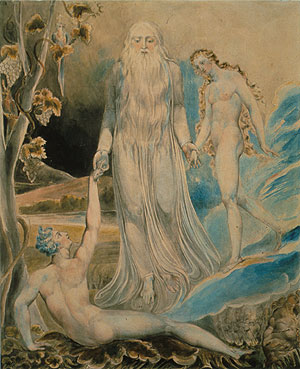
God then creates the animals for man, but man still needs a partner. So God caused man to fall asleep and then He operates on him, removing a rib and using that rib to create woman.

Aside from this being the second account of creation, notice the differences. First the order of creation is different. Man is created first and not last. Notice also that God doesn’t speak things into existence, He plants, He operates, He breathes. God is depicted as being anthropomorphic.

This is very different from the creator God of Genesis 1. This is a tangible God, a God that walks about in the Garden of Eden. This is a physical God, a God of substance. And I think the type of God that Christ called Abba.

And finally in verse 24 there is a little treaty about how man should cling to his wife after leaving his mother and father. Now this is really out of place. How can man leave his mother and father if there is only one man and one woman? There are no parents to leave yet.

Definitely odd indeed, unless this story is being used to explain the origins of the family unit, of sexuality and of an agrarian lifestyle?

All of that aside, I find this story striking for the obvious reason; there are two different accounts of creation. And since both are part of Holy Scripture and they seem to contradict each other, then perhaps we are not to accept these stories as factual or scientific and instead we are to see them as mythical stories about God that tell us a truth. Now whether that is a theological truth, metaphorical truth, allegorical truth, revelatory truth, etc. requires a lifetime of study, which I would certainly encourage.

But this opens us to an interesting thought and a debate that is hotly contested. Is the bible inherent truth? Is it historical? Is it an accurate account of the creation of the world, science and big bang aside?

We are two pages in, two chapters into our exploration of sacred scripture and already the looming question as presented itself…if some of the bible is just stories that tell a truth, how do we distinguish from factual truth and the other forms of truth?

I wish I had an answer right now, but alas I don’t. Hopefully scripture will glean us an answer as we continue…

The Lost Art of Discernment

The deployment of human resources in a large institution like the Anglican Church of Canada can be extremely difficult. In many ways the church, like any institution, sends new recruits out to smaller postings until they have obtained an adequate amount of experience and seniority. It is at that time that clergy begin the journey back to cities and larger parishes.

In conjunction with this traditional practice is the assumption that clergy are not supposed to stay in one place for too long. Most clergy spend 5-10 years at a posting before being moved along to another parish. I have heard many reasons for this, but none have ever struck me as particular valid or insightful.

In both cases the career track of the clergy seems to take precedence and be more important than an exercise in discernment. In many ways the clergy of the church are on a journey to Tarshish.

“I have done all I can do here, put my programs in place, it is time to move on.”

“I have been here for 5 years (or ten or fifteen for that matter), I need a change of scenery, new challenges and a better parish.”

“I see my time here as temporary. I’m planning to move soon.”

What is common amongst the above example is the amount of “I” statements, which I find to be incredibly ironic since we are called by God to serve. Caught in the western consumer mindset we have forgotten what vocational holiness looks like and instead have centered our call on a career in the church.

Would it not be better to ponder whether God has called us to that little country parish instead of a big city parish, or He wants us to stay in one place for 20 years because we may have done all we want, but we haven’t yet accomplished what God wants from us in that place?

It may not be pretty and it certainly is not easy, but vocational discernment is a necessity for ordained ministry. We go where we are called, whether that is Tarshish or Nineveh.

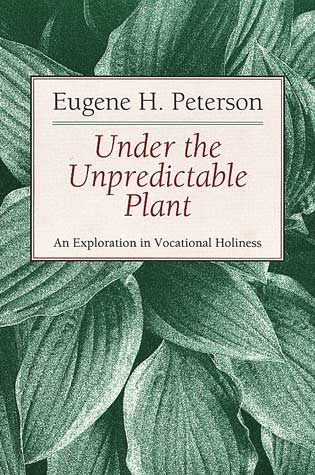
As a side note, a truly great book on discerning vocational holiness is “Under the Unpredictable Plant”, by Eugene Peterson.

Diocesan Web Strategy

Diocese of Huron Web Strategy

Prepared by: Rev’d Marty Levesque

August 1st, 2010

Rationale

Web presence is a vital component to the success of any company or organization. As today’s society uses the web to research businesses and organizations before even stepping foot in the door, first impressions are made online more than ever. For churches, the internet has become an increasingly common first moment of contact and the first opportunity of evangelism. The critical power of the first impression means that we must be just as conscious of what a website says about us as we do about the quality of our buildings and services.

Currently, the Diocese of Huron does not have a web strategy to ensure the quality and content of its parish websites. Each parish constructs its own web presence as it deems necessary and many have no presence at all. As a consequence, there is a huge inconsistency in the way the diocese is presented online. Some parish websites are well put together and informative, some are built by well-intentioned clergy or parishioners with little understanding for online conventions, accessibility or cross-browser compatibility, and some look to have been designed well over 10 years ago and are no longer current or fashionable.

The development and implementation of a diocesan web strategy will ensure that every parish has a professional web presence that meet a set of quality, accessibility and messaging standards. This plan will benefit the diocese in the following areas.

Diocesan Culture

Consistent messaging can create an outwardly-facing diocesan culture to help fight against the rise of congregationalism and re-enforce the Anglican culture. Every church in the diocese would have a web page with the same feel and standards of content while still allowing for individuality through customizable layouts and designs.

Response to changing needs

A standardize and centralized content management system will enable rapid creation of internal and external websites as needed. Websites for deaneries, special-initiatives and groups such as the ACW and Huron Church Camp could develop a greater sense of community within all of these structures and foster both internal and external communication for them

Communication and Outreach

Implementing a unified web strategy paves the road for a more centralized communication approach from the dioceses. By creating a web presence strategy, the stage is set for future diocesan communications initiatives such as a possible social media strategy.

Accessibility

While “508 web accessibility” is not law in Canada, it is an American law which has become the industry standard of web site design and development. 508 allows for screen readers and “search bots” to access the information on the screen for web readers for the visually impaired and to maximize analytic information for search engines.  A professionally developed and designed site would take these into account and ensure that our websites are as accessible as our front doors.

Professionalism and consistency

Web address and e-mail address for all diocesan employees will create a branding effect and a more professional web presence. Every church web address would end in diohuron.org – e.g. stgeorgeslondon.diohuron.org and every individual upon entering the diocese would be assigned an e-mail address – e.g. martylevesque@diohuron.org. This also allows for consistent communication throughout the diocese as church house does not need to update e-mail list each time clergy move from parish to parish, or switches services providers.

How and How Much?

The Diocese of Huron web strategy would be implemented by a local IT company in conjunction with a communications representative from the diocese of Huron. A framework for all diocesan sites would be built using a content management system that will allow for the creation of each parish website. Technically this means that one main website would be created for the entire diocese, and each parish would have its own child website created from the same mould.  Ideally there will be a number of choices for each site regarding functionality, visual design and layout that will allow each parish to customize their site within the given parameters.

Using a centralized content management system has the potential to decrease costs significantly.  The average cost for the design and development of a professional site for an organization is $3000-5000. If each of the 80 parishes in the diocese were to contract for the production of a professional quality website the cost would be approximately $250 000-400 000.

In addition, the average cost of domain names is $15 per year. Hosting services have a vast range is price, but an average plan for the storage capabilities of an average parish is $7 a month (this does not include additional storage requirements for podcast casting or video casting). Therefore each parish with a website and domain name is paying approximately $100 a year on web presence, at the very least.

The use of WordPress multi user sites or a content management system would drop the cost of initial development to 15-25 000 and the average maintenance and upgrade cost to approximately $50/year. An overall reduction of over 80% initially and 50% on an ongoing basis.

If each parish in the diocese were to pool their resources and each parish contribute $100 per year to the diocese web strategy, $8000 per year would be raised. Since the cost to design and develop a multi user site would be approximately 15- 25 000, the Diocese of Huron would sign 2 or 3 year contract with a local IT company, amortizing the cost over a 2 or 3 year period.

This web strategy would continue past the original development stage and parishes would be asked to continue to support the project each and every year as maintenance costs would need be taken into account, the development of new plug ins as they become available and the development of new skins for a fresh appearance are continually developed.

Execution

Three quotes would be sought from local companies and a decision would be made as to which company the diocese would use to implement this project.

A central person would be designated as the liaison between the IT company and the individual churches. This would allow for smooth communication between the company and the diocese and not over load the IT company with “80 clients” calling about their individual needs.

A training manual will be developed so that clergy, wardens or laity would be able to simply and effectively “design” their individual parishes’ websites from the choices of skins, color schemes and available plug ins.

Furthermore the centralized person would also be designated to provide deanery training sessions and help facilitate the development of the individual websites on the multi user platform and educate local clergy in the operation of the system.

Conclusion

In conclusion, this web strategy contained within this document is only a skeletal framework for a direction forward into the World Wide Web. It is both efficient and cost effective. It allows the diocese as a whole to raise its digital presence to a professional level that allows for effective communication and evangelism.

To demonstrate the need to implement this web strategy a brief website analyses could be conducted of randomly chosen parishes in each deanery. A complete website analysis of each parish in the diocese is beyond the scope of this and future reports. Therefore it was determined that a sampling would suffice. One website from each deanery will be randomly selected and tested for code errors that may cause it to improperly render on various browsers or indicate future maintenance issues. As well during the testing it will be determined whether the current websites are 508 accessible for those suffering from disabilities. Given the importance we have placed on making our buildings accessible, it is the opinion of the writer of this report that our websites should also be equally accessible.

If this initial report is accepted and the wish of the Bishops to proceed forward then a technical analyses will then be conducted as out lined above.

Genesis 1:1-2:4

Being raised in a scientific age and having attended secular institutions until my formation in seminary I have always struggled with creation Ex nihilo. There was nothing and then God spoke and creation came into existence. A creator God, as depicted here, is a very distant God, one who breathes life into the world and then sits back and watches from a distance. This is definitely Aristotle’s clock maker God, the prime mover; definitely not the close personal God that Christ refers to as Abba.

This passage, also, is from the P source in the Pentateuch and as we will see later it is but the first (really the second, but that is another story) story about creation. In case you are new to biblical studies, much like myself in many ways, there are four sources of material in the Pentateuch, the first five books of the bible. They are J, E, P and D. Each of the sources are from different time periods, J being the oldest and P the newest.

Scholars generally agree that the reason that this passage was edited into Genesis was to provide scripturally-based reason as to why the Sabbath must be observed. Since during the act of creation, God rested and blessed that day to make it holy, there is scriptural reason for Sabbath observance.

All that being said, there are a few things that strike me on which I want to focus.

In verse 26 when God creates humankind, he does so by saying “let us make humankind…”

Is this a royal we? Or are there others with God? Later in verse 27, God returns to speaking in the singular. Where did they go?

Another point of interest is verse 1 of chapter 1 and verse 1 of chapter 2. In each case heavens is referred to in the plurals. Is there more than 1 heaven or is this a reference to the stars of the sky?

And something I have always struggled with, why would God give dominion over all the earth over to humankind? After all the effort to create, well everything, why relinquish control to humankind? I mean, surely God must have known the ecological disaster that a decision like that would eventually cause? I think as we go through the rest of the bible we will eventually return to this theme of land. Perhaps this is the beginning of the development of a theology of land?

To be honest there is much more in this passage and many more questions, but to ask every question and attempt to answer each would be an endeavour that is well beyond my skill. We have, after all, just begun to scratch the surface and I am sure some of these questions will return to us as we continue through the bible. For now though, this should suffice to whet my appetite.

Why Blog the Bible

Have you ever read the bible cover to cover? Many people attempt this and it is easily done in a year. However I am afraid my endeavour will take a little longer than that.

The goal of the exercise is to not only familiarize myself better with the sacred scriptures, but also to get a better understanding of why we can’t touch the dead skin of a pig, or in what type of fish Jonah spent three days.

The bible is filled with many wondrous and bizarre stories. Sometimes comical, sometimes insightful and sometimes downright weird, my reflections on the bible, its stories and characters is one man’s attempt to gain a better understanding into the divine and how and why the divine operates in this world.

What is your because?

When was the last time you spontaneously tried a restaurant? No recommendation from a friend or even a review – you just saw a sign and said what the heck, let’s give that a try?

If you are like me, cold calls to restaurants are not high on the priority list. We often base our decision to go to a new restaurant because “we heard it was good” from a friend or colleague, or it received great reviews.

That being the case then why do we expect people to simply walk into our churches because we have a pithy quote on our sign and have painted our doors red? True, we will, on the odd occasion, have a cold call from a seeker, but these occurrences are far from the norm.

What’s far more common is a friend or colleague recommending their church to you, just like a restaurant. They do so because they know why they love their church, and they can articulate exactly what their church does well and what they particularly enjoy. It could be a good youth group, a strong music program or maybe their preacher is fantastic at liturgy and always provides inspiring and relevant sermons.

Whatever the reason is, if parishioners know exactly why their church is the best they will be willing to share their feelings with friends or colleagues.

So my question then is this: why would someone come to your church? What is your because?

Can you or your parishioners finish this statement quickly and concisely…

“You should come to my church, St Switham’s by the Swamp, because…”

If you or your parishioners can’t finish this statement to briefly and effectively describe your church, is it any wonder that few new people darkening it’s the doors? If people aren’t walking out on Sundays excited to share their experience with a friend, then why would we expect hundreds of people to flock to our churches on “bring a friend” Sunday or “back to church” Sundays?

The best and oldest form of evangelism is still our parishioner’s social networks. But to leverage these networks we must first inspire them, educate them and then give them permission to go out into the world and tell people that their church is the best because

Are fonts a big deal?

When choosing a font for church publications it is important to remember that your choice of font says much about you and your level of professionalism.  There are, after all, fonts appropriate for every job and every situation.

Far too many churches and pastors, although, do not take the time to properly choose fonts for their publications and instead rely upon their personal favorite.

An example of this that occurs far too often is the choice to use Comic Sans in all church publications. Most pastors do not realize that Comic Sans was originally created as a casual script typeface that was modeled on the fonts used in American comic books for several decades.  The purpose of the new font was to replace Times New Roman in the word balloons of cartoon characters in the beta version of Microsoft Bob.

So what? The font is meant to symbolize fun and youthfulness. An impression most pastors want to convey to the world in hopes of luring in new congregants and growing their churches.

Yet, using a font designed to emulate a comic book font does say something about your church. It says we are youthful and childish, which is perfectly appropriate for children’s ministries and Sunday school. But is it really appropriate for a wedding or funeral, or for the bulletin were the sacrament of the Eucharist is about to be celebrated?

What message are we trying to convey to the world when we use Comic Sans for a Eucharistic bulletin? Is the sacrifice of Christ childish and fun? Is it meant to represent playfulness of God in the redemption of the world? I am going to go out on a limb and say, probably not.

Pastors need to take the same time and dedication to font choices that they do for choice of vestments or liturgical space. Each of these choices says something about us, our churches and how we view ministry.